



- Food brands today are competing as much on culture as on cuisine. While working on Loud Mouth, what cultural insight did Ottoman identify that became the foundation of the brand?
Over the past few years, I’ve noticed a clear shift, food is no longer just about consumption; it’s about identity. Platforms like Instagram and TikTok have transformed meals into cultural statements. What you eat today says something about who you are.
For urban Gen Z and young millennials, food plays the role fashion once did. It signals belonging. It reflects personality. It becomes a form of self-expression.
While building Loud Mouth, I realised that taste is expected, it’s the baseline. What truly differentiates a modern food brand is how it performs socially and culturally. Food today lives in stories, not just on plates.
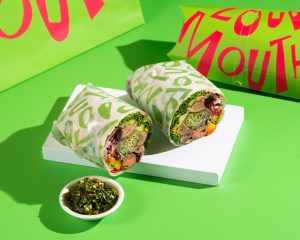
That’s why we didn’t set out to build just another QSR identity. We built a personality. Loud Mouth stands for bold choices, unapologetic expression, and big flavours. It mirrors how its audience wants to show up, confident, expressive, and unafraid.
- How did Ottoman design a brand system for Loud Mouth that could remain loud yet operationally viable as the business grows?

One thing I’ve learned is that personality without structure collapses quickly. If you want to scale a bold brand, you need discipline behind the drama. From day one, Gauri and Alya were clear that Loud Mouth had to function as a system, not just a visual mood. So we defined a controlled colour universe with flexibility for seasonal drops. We codified the tone of voice, expressive, yes, but with guardrails to maintain consistency.
Operationally, we knew the brand had to work across small-format outlets, cloud kitchens, and potential franchise environments. That meant simplifying execution while preserving distinctiveness. For me, that balance, a strong personality supported by strong systems, is what allows a brand to grow without losing itself.
- How does the Loud Mouth engagement illustrate Ottoman’s broader approach to building culturally resonant brands that connect with contemporary consumers beyond functional product messaging?
At Ottoman, I always insist that we study behaviour before we design identity. Consumers today are overwhelmed with product claims of faster, fresher, and premium ingredients. Those are expectations, not differentiators anymore.
What truly creates impact is cultural positioning. With Loud Mouth, I asked a simple question: what emotional role does this brand play in someone’s life? The answer wasn’t hunger. It was energy. Belonging. A slightly dramatic, expressive persona people see a version of themselves in.
That’s how we approach all brands. We define the emotional territory first. Then we align design, language, and experience around that territory. Strategy begins with meaning, not messaging.
- Black Cab has built a strong reputation as a marketing and branding agency. How does this project reflect the agency’s larger philosophy and approach to brand-building?
At Black Cab, my core belief has always been that brands should be built as long-term attitudes, not short-term campaigns. We focus on clarity of positioning and controlled complexity. I’m not interested in building surface-level aesthetics that fade with trends. I believe in building coherent worldviews that can scale across touchpoints and time.
Loud Mouth reflects that thinking. It isn’t just a design system, it’s a defined character with behavioural rules. That clarity makes it easier to expand into new formats, collaborations, or product categories without losing coherence, strong brands are assets. They’re not just communication bursts.
- Do you see personality-led, community-first branding becoming the new norm in the food and lifestyle space, and how does Loud Mouth reflect that shift?
From what I see across lifestyle sectors, consumers increasingly engage with brands that feel like reflections of their identity and values. Community-led growth, particularly through social platforms and micro-influencer ecosystems, is proving more sustainable than traditional broadcast advertising.
Personality-led brands naturally enable this because they give people something to attach themselves to. Something to belong to. In the food and lifestyle space, I believe this shift is structural, not temporary. The brands that feel human, expressive, and culturally aware will consistently outperform those that feel distant or corporate. Loud Mouth was built with that future in mind.
- How does Black Cab’s network model, with specialist studios like Ottoman, create more value for brands compared to a traditional agency setup?
The marketing landscape today is too complex for a generalist model to go deep in every area.
Our network structure allows for specialisation without fragmentation. At Ottoman, I focus deeply on brand thinking and cultural strategy. Other specialist units within Black Cab focus on performance, content, media, or digital systems. Each vertical builds genuine depth rather than stretching across disciplines.
For clients, this means sharper thinking and more precise execution. Instead of one large team doing everything moderately well, you get multiple focused teams delivering excellence within their domain, all aligned under one strategic vision.

