


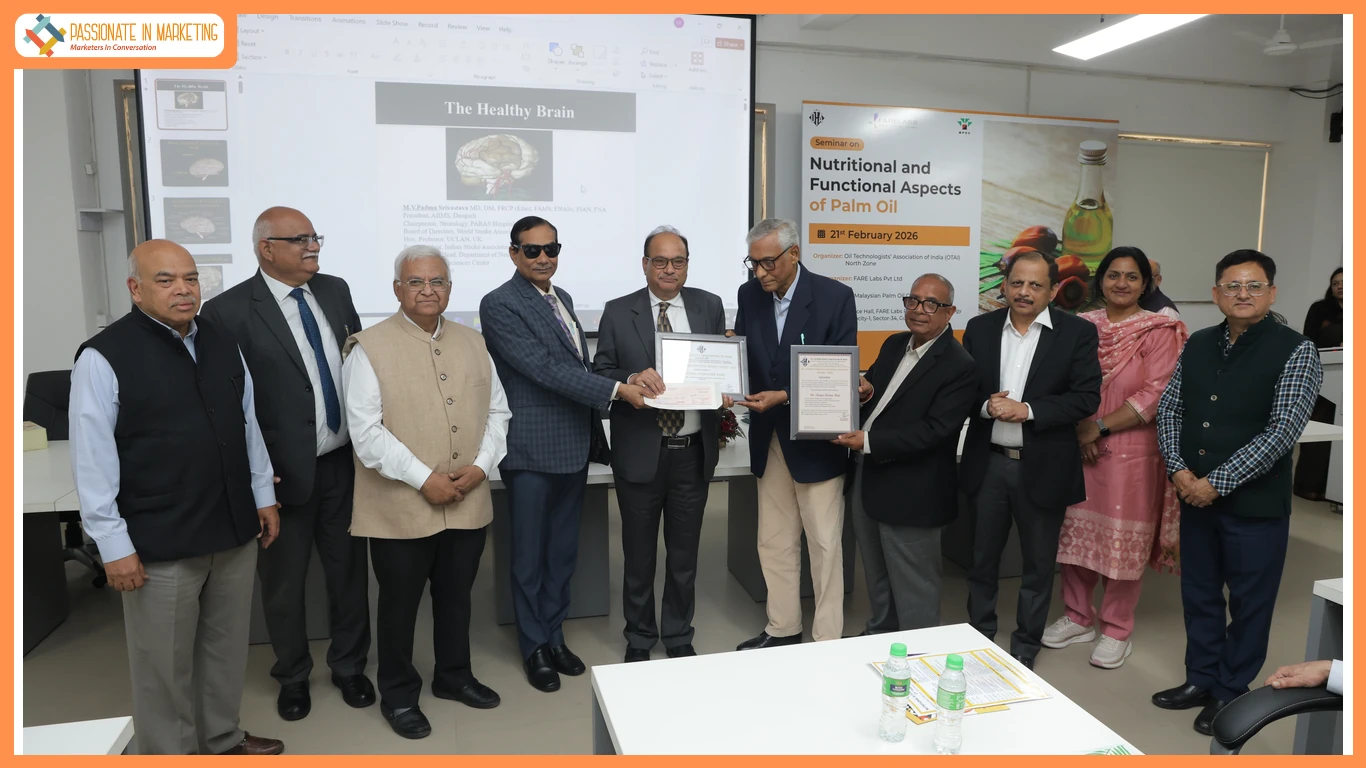
Haryana | 23rd February 2026: At a time when edible oils and dietary fats are widely discussed and often misunderstood, leading nutrition scientists, cardiologists, neurologists, food technologists and lipid experts gathered in Gurugram for a half-day seminar on “Nutritional and Functional Aspects of Palm Oil.”
The seminar was jointly organised by the Oil Technologists’ Association of India (OTAI) – North Zone and FARE Labs Pvt. Ltd., with support from the Malaysian Palm Oil Council (MPOC). The objective was to create a scientific platform for open and balanced discussions on the role of palm oil in India’s food and nutrition system.
Experts from academic, medical and research institutions shared insights on how palm oil performs from a health and functional perspective. Presentations covered topics such as cholesterol metabolism, heart and liver health, neurological aspects, stability during high-heat cooking, food safety testing and quality standards. Speakers highlighted that overall health depends more on balanced diets, lifestyle habits and moderation than on avoiding or focusing on any one specific edible oil.
During the technical sessions, experts explained that palm oil is naturally free from trans fats and contains a mix of saturated and unsaturated fatty acids. It also contains Vitamin E components such as tocotrienols and tocopherols, which have antioxidant properties. Because of its stability at high temperatures, palm oil is widely used in Indian cooking methods such as frying and sautéing. When used appropriately, it maintains consistency and performs well in both household and food service applications.
The seminar also discussed India’s edible oil situation. As the country works towards reducing import dependence by expanding oil palm cultivation, experts noted that oil palm is one of the highest-yielding oil crops in the world, producing more oil per hectare than most other oilseeds. Given India’s growing demand for edible oils, palm oil offers a practical and scalable solution for both nutritional use and food processing needs. Strengthening domestic oil palm cultivation through scientific farming practices and supportive policies was seen as an important step toward improving long-term edible oil self-reliance.
The seminar ended with a shared understanding that palm oil, like any edible oil, must be evaluated within the broader context of overall diet and lifestyle. Experts reiterated that informed decision-making depends on access to credible scientific information. The discussions highlighted the importance of keeping edible oil conversations practical, evidence-driven and aligned with India’s growing nutritional and food security priorities.

