


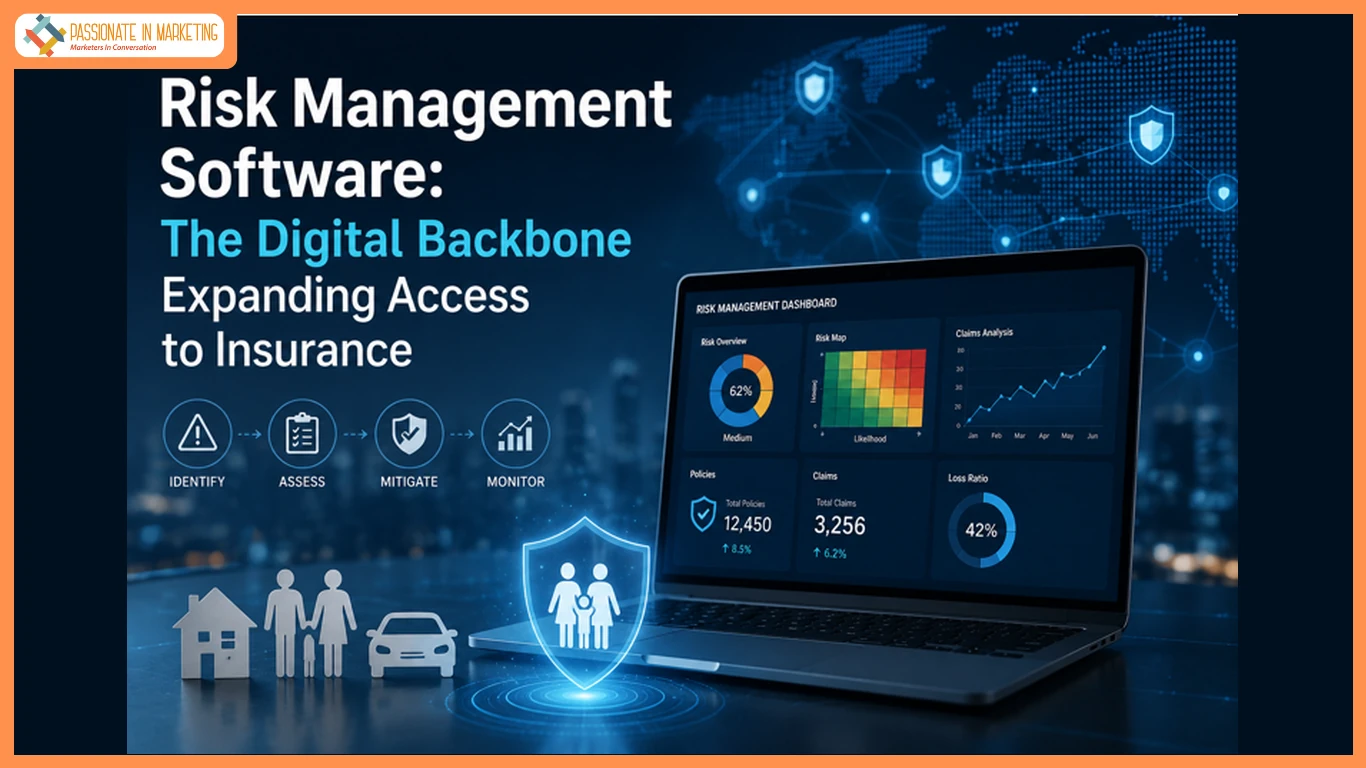
Insurance has always been built on one fundamental principle: understanding risk.
For decades, however, assessing it at scale remained one of the biggest constraints on expanding insurance access. Traditional underwriting relied heavily on manual documentation, limited customer data, and standardized risk models, making it difficult to profitably serve individuals and businesses that went beyond established customer segments and geographies.
This challenge has been particularly evident in emerging markets like India with significant income and psychographic diversity. Despite significant progress in financial inclusion, insurance penetration remains relatively low across several categories, especially health and life insurance. According to the Insurance Regulatory and Development Authority of India (IRDAI), increasing insurance coverage remains a national priority, supported by the broader vision of Insurance for All by 2047.
Achieving that vision requires more than new insurance products, it demands better technology. And this is where risk management software is quietly becoming one of the most important enablers of insurance inclusion. By combining intelligent data models, automated risk assessment, and real-time decisioning, these platforms are helping insurers expand coverage while maintaining underwriting discipline.
The Underwriting Model Is Increasingly Becoming Data-Led
Historically, underwriting was largely document-driven, where customer applications, medical declarations, financial records, and physical verification formed the basis of risk assessment. While effective, these processes were often time-intensive, expensive, and difficult to scale.
Modern risk management software is fundamentally changing this model.
Today’s platforms, curated by companies like EbixCash, can easily ingest structured and unstructured data from multiple sources, validate information through integrated APIs, and generate dynamic risk profiles in real time. Rather than relying on static evaluation frameworks, insurers can continuously refine risk models using historical claims data, behavioural patterns, demographic variables, and transactional insights on the go.
The result is faster underwriting, greater consistency, and improved decision accuracy.
Automation Is Making Insurance Economically Viable at Scale
One of the biggest barriers to insurance inclusion, till now, has always been operational cost. For low-ticket policies, manual underwriting and policy administration often makes them economically serviceable.
But the conversation is changing now as modern software platforms address this through intelligent automation with capabilities like workflow orchestration, rules engines, automated document verification, exception handling, and digital policy issuance that significantly reduce processing time while improving operational efficiency and simplicity.
For insurers, this lowers acquisition and servicing costs, translating into faster policy issuance, and a more seamless onboarding experience at the front.
Several technology providers, like EbixCash, are helping insurers modernize these operational workflows through integrated risk and compliance ecosystems.
Dynamic Risk Models Are Expanding Eligibility
Perhaps the most important evolution in insurance technology is the move away from static risk classification.
Traditional underwriting often grouped customers into broad categories, leaving many individuals either underinsured or excluded altogether.
Modern risk management software enables insurers to adopt far more granular risk assessment models. Machine learning algorithms today can continuously evaluate evolving datasets, allowing insurers to assess individual risk with greater precision rather than relying solely on generalized assumptions.
This creates opportunities to extend insurance access to customer segments that may previously have been difficult to evaluate through conventional approaches.
In markets with historically low insurance penetration, this capability has significant long-term positive implications for financial inclusion.
Risk Intelligence Extends Beyond Underwriting
Risk assessment does not end when a policy is issued, it many ways, one can say, that it rather begins.
Modern insurance ecosystems require continuous monitoring across multiple operational functions, including fraud detection, claims management, regulatory compliance, and portfolio performance.
This is where integrated risk platforms provide additional value, by combining:
- Predictive fraud analytics
- Claims anomaly detection
- Regulatory monitoring
- Portfolio risk dashboards
- Automated compliance workflows
within a unified framework, giving insurers greater operational visibility and governance.
Organizations investing in integrated platforms are therefore improving not only underwriting efficiency but also the long-term resilience of their insurance operations.
Technology Is Enabling More Inclusive Insurance Ecosystems
India’s insurance opportunity extends far beyond just increasing policy volumes.
The larger objective now lies in making insurance more accessible across income groups, geographies, and customer profiles.
That requires technology capable of reducing complexity while improving decision-making and modern risk management software is increasingly fulfilling this role by combining automation, analytics, API-led integrations, and intelligent risk models within a single ecosystem.
Several technology companies, including EbixCash, are actually accelerating this by developing digital risk and compliance platforms that help insurers operate more efficiently while expanding their ability to serve a wider customer base.
Conclusion
The future of insurance will depend as much on technology as it does on products.
As insurers work toward expanding health and life coverage across traditionally underserved markets, the ability to assess risk accurately, automate operations, and make faster underwriting decisions will become increasingly important and risk management software is emerging as a foundational layer in sustaining this transformation.
By combining intelligent risk assessment with scalable digital infrastructure, it is helping insurers move beyond traditional operating models toward more inclusive, data-driven ecosystems.
This in a market where millions remain outside the formal insurance network, the greatest impact of technology may not simply be improving operational efficiency, but making solutions available to those who were previously beyond it’s reach or view.
**’The opinions expressed in the article are solely the author’s and don’t reflect the opinions or beliefs of the portal’**

