


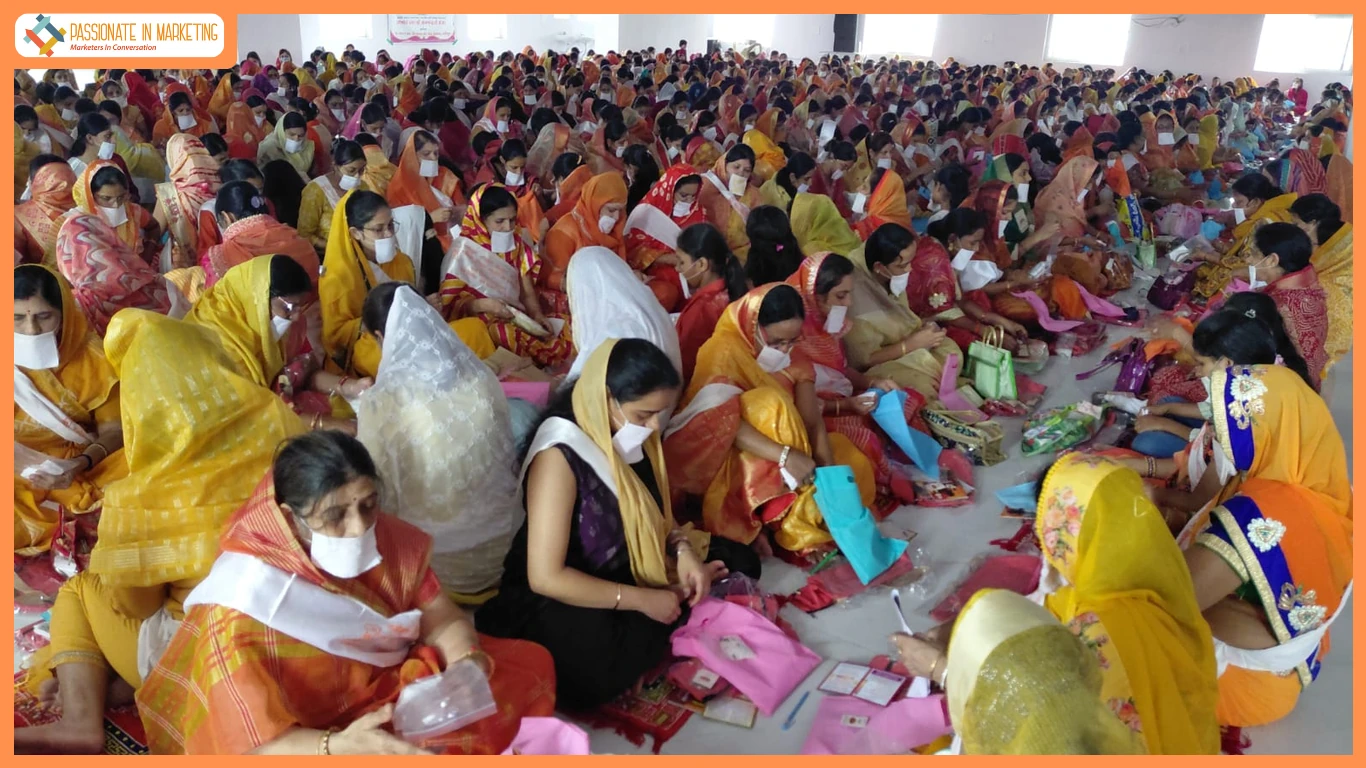
Hyderabad, August 17, 2026: A unique religious programme with a strong contemporary and social message was held in Hyderabad on Sunday and continued till late evening, where 1,008 Jain women came together to chant Namoththunam, an ancient Jain hymn of reverence.
The programme was organised at Uttaradi Math, Raghavendra Temple Road, Kachiguda.
While the collective chanting was a significant spiritual occasion, the organisers and participants also sought to highlight the deeper message of Namoththunam and its relevance to contemporary society—particularly to young people growing up in an age of celebrity and hero worship.
According to Swarup Chand Kothari, Chairman, Shri Vardhaman Sthanakvasi Jain Shravak Sangh, Greater Hyderabad, Namoththunam is an ancient Jain sutra and hymn of reverence.
“It is a prayer through which devotees offer obeisance to the Arihants and celebrate the qualities that make them spiritually elevated. In simple language, Namoththunam teaches us whom to admire—and, more importantly, why,” he said.
The deeper idea behind the prayer, participants explained, is that reverence is not merely about admiring an individual but about recognising the qualities that make that person worthy of admiration.
Raksh Jain, one of the 1,008 participants, said that in an age of celebrity worship and hero worship, Jain philosophy offers a different perspective on whom we should admire.
“True greatness lies in conquering one’s inner weaknesses—anger, ego, greed, attachment and other passions. Before we choose our heroes, perhaps we should first understand the qualities that make someone worthy of being a role model,” she said.
Most people pray for something—good health, success, the well-being of their children, peace, prosperity or happiness.
“But Namoththunam makes us pause and think differently,” said Supriya Bhalgat, a Data Scientist. “Instead of asking, ‘What can I get?’, it encourages us to ask, ‘What qualities can I learn and develop?’”
She explained that the prayer celebrates qualities such as self-control, wisdom, humility and freedom from negative passions.
“To understand this in simple terms, imagine a child saying, ‘I want to become like my teacher because my teacher is patient, honest and helpful.’ The child is not asking the teacher to give him or her something. The child is recognising good qualities and wanting to develop those qualities. That is one way of understanding the deeper spirit of Namoththunam,” she added.
Smitha Jain, a Nutritionist, said the same principle can be understood through everyday role models.
“When we admire a sportsperson, we may admire the discipline behind the achievement—not merely the medal. When we admire a soldier, we admire courage and sacrifice—not merely the uniform. When we admire a social worker, we admire compassion and service—not merely the recognition received,” she said.
“Namoththunam takes this idea of admiration to a spiritual level. It teaches us to bow before those who have conquered their inner enemies.”
Explaining its relevance today, Dr. Roshni Jain, an Endodontist, said that young people today are surrounded by celebrities, influencers, sportspersons, entrepreneurs and public figures.
“There is nothing wrong with having role models. But an important question is: What exactly are we admiring? Is it wealth? Fame? Power? Or character? Namoththunam provides a different way of looking at role models. It tells us: Admire the quality, not merely the person,” she said.
A successful entrepreneur can inspire us through perseverance. A teacher can inspire us through patience. A sportsperson can inspire us through discipline. A social worker can inspire us through compassion. A spiritual teacher can inspire us through self-control and humility.
Sheetal Jain, a teacher, described this as one of the most beautiful messages of Namoththunam.
“It takes us from ‘I want’ to ‘I want to become’,” she said.
Elaborating on this thought, Shwetha Agarwal, a Lecturer, said the prayer can become a reminder for personal improvement.
“I want to become more patient. I want to control my anger. I want to be less egoistic. I want to be more compassionate. I want to live a more disciplined life. In that sense, Namoththunam is more than a recitation. It can become a daily reminder for self-improvement,” she said.
Mrs. Geeta Krishnamachary, a retired Professor, who has been exploring ways of taking India’s cultural and traditional wisdom to younger generations, said:“We often teach children whom to admire, but rarely teach them what qualities to admire. Namoththunam offers a beautiful lesson: don’t just admire a person—understand the qualities that make that person worthy of admiration.”
At a time when India is looking towards its Gen Z and younger generation to build a better society, ancient traditions such as Namoththunam can offer simple lessons with contemporary relevance, said Priyanka Jain, a Lawyer.
“Perhaps that is the most beautiful message behind it. It is a prayer that does not ask, ‘What will I get?’ but quietly asks, ‘What can I become?’”
With the successful organisation of the programme, the organisers are now looking at conducting a similar collective programme for couples later this month.

