


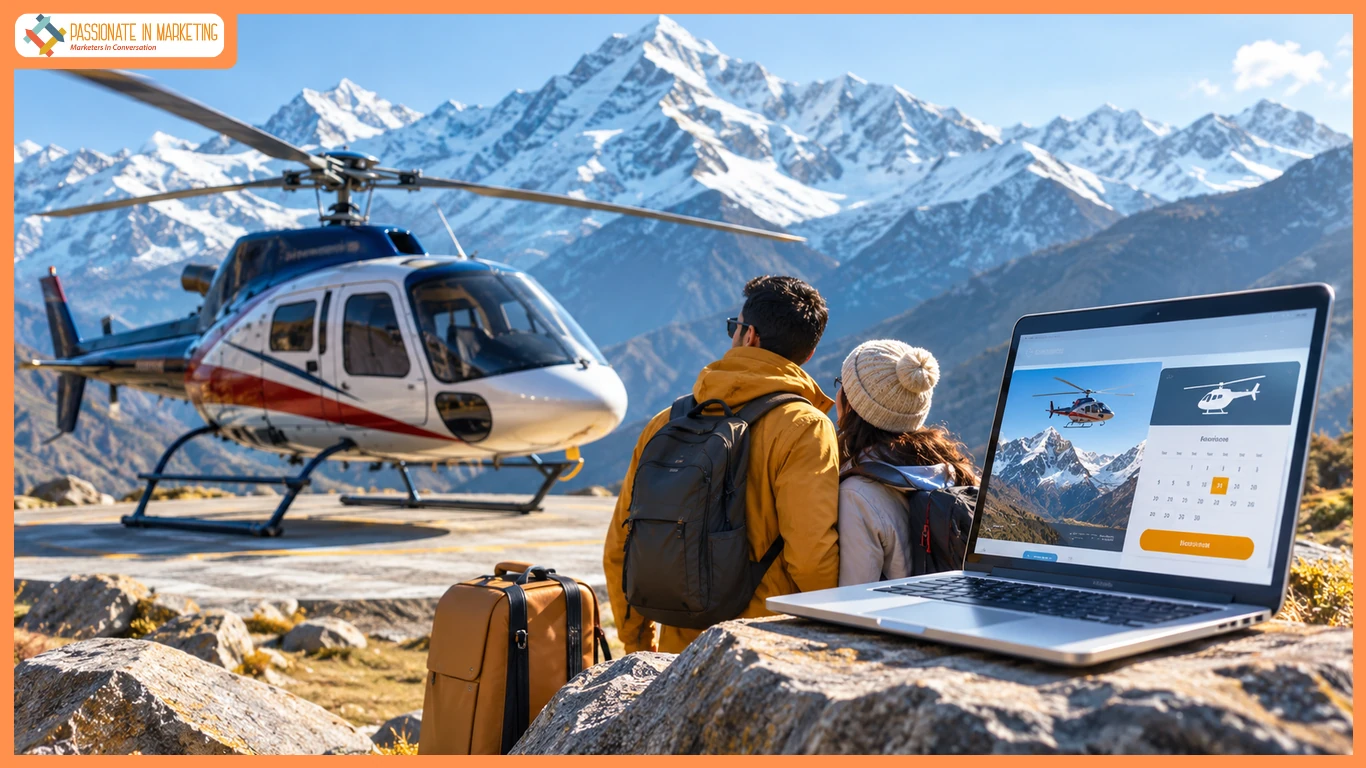
It’s 11 p.m. and a traveler has twelve browser tabs open. She’s wanted to see Everest since she was a teenager, but one question keeps stopping her: what if I pay and something goes wrong?
Will the weather ground the flight? Who actually operates it? Is the price final? What happens to her money if the helicopter can’t take off? She’s trying to evaluate an unfamiliar service in an unfamiliar country, with no way to try it first.
This is the high-ticket, high-anxiety purchase. Helicopter booking platforms in Nepal live inside it, and the ones that win understand that they’re selling reassurance before they sell the view.
Why Booking a Himalayan Helicopter Flight Is Different
Booking a rafting trip or a city tour is a low-stakes decision. If it disappoints, you’ve lost an afternoon and a modest sum.
A Himalayan helicopter tour is different on every axis:
- The cost is significant, often one of the largest single spends of a trip.
- The environment is unpredictable. Mountain weather decides whether and when you fly.
- The logistics are layered. Departure points, landing arrangements, group size, and itinerary changes all matter.
- The buyer is often far away, researching from another continent, with no one to ask in person.
Customers aren’t just buying a flight. They’re buying an experience while taking on financial, logistical, and safety risk. Trust is the real product, and the helicopter ride is what trust unlocks.
Understanding the High-Ticket, High-Anxiety Purchase
The two halves of the phrase reinforce each other.
High-ticket means the stakes of a wrong decision are high. Travelers slow down, scrutinize details, and compare more providers than they would for a cheaper activity.
High-anxiety means the fear isn’t only about money. It’s about:
- Flight safety and operator reliability
- Weather-related cancellations
- Hidden fees
- What happens if plans change
Together they produce long research cycles, many open tabs, and a strong tendency to abandon the booking if anything feels vague. A platform that treats this hesitation as irrational will lose customers. A platform that treats it as reasonable, and designs for it, will convert them.
Why Travelers Hesitate (and What a Platform Can Do About It)
Every concern below is a source of friction. Each also has a straightforward answer.
“What’s the real price?” Unclear inclusions make people suspect hidden fees. The fix: state exactly what’s included and what isn’t, up front.
“Who is actually flying me?” Travelers want to know about operators, pilots, and aviation standards. The fix: name the operating partners and share verifiable information about them, not vague claims of “certified professionals.”
“What if the weather turns?” This is the most Himalaya-specific fear. The fix: explain openly how weather affects schedules and what happens next.
“Where do I go, and when?” Confusion about departure points, itineraries, and landing arrangements creates doubt. The fix: give clear, plain-language itineraries with realistic timing.
“What if I need to cancel or reschedule?” Vague refund terms are a top reason people leave. The fix: publish the policy in full, in plain English, before checkout.
“Is this a scam?” Travelers know intermediaries can be unreliable. The fix: show real people, real contact details, and a real company behind the platform.
“I can’t find reliable information.” Many travelers research before arriving in Nepal and find thin, inconsistent content. The fix: become the most useful source on the topic. Helpful content is itself a trust signal.
Selling Trust Before Selling the Experience
A platform shouldn’t ask for payment until it has earned credibility. In practice, that means making the following visible and easy to verify:
- Clear company information and contact details: a real business name, registration details where applicable, an address, and multiple ways to reach a human.
- A transparent booking process: what happens after you click “book,” step by step, including what confirmation looks like and when.
- Accurate tour and transfer descriptions: honest flight durations, landing details, and what you will and won’t see.
- Genuine reviews and testimonials: real, attributable, and including balanced feedback. A page of flawless five-star praise looks manufactured.
- Verifiable information about operating partners: who operates the flight and what that partner’s role is.
- Clear payment procedures: accepted methods, currency, deposit versus full payment, and what the traveler receives as proof.
- Responsive support before and after booking: fast answers to pre-sale questions are the best preview of how a company behaves when something goes wrong.
For a traveler spending a large sum on a service they can’t sample, each of these removes a small piece of doubt. Together they change the decision from “can I trust this?” to “which option do I choose?”
Pricing Transparency: Making an Expensive Purchase Feel Understandable
Vague pricing is one of the fastest ways to lose a nervous buyer. “Contact us for a quote” can feel like a hidden-fee warning, even when it’s innocent.
Confidence comes from answering these questions before the traveler has to ask:
- What does the price include? Flight, landing, permits, ground transfers, meals, if applicable.
- Is it per person or per helicopter? This single distinction is a common source of confusion.
- Private charter or shared flight? Explain how each is priced and what trade-offs come with them.
- Which taxes, fees, and extras apply?
- Are there group-size or weight requirements? Helicopters have real payload limits, and explaining them honestly prevents unpleasant surprises.
- What costs might arise from itinerary changes or weather disruptions?
Consider two platforms. One shows a headline figure and reveals extras at checkout. The other shows a breakdown: what’s covered, what isn’t, and what could change. The second may look less “cheap,” but it feels safer, and in a high-anxiety purchase, feeling safe converts better than feeling discounted.
Clear pricing lets the customer understand the value of the flight (the logistics, the aircraft, the skilled crew, the access to terrain few people ever see) without the platform leaning on aggressive discounts that can cheapen a premium experience. (Use only verified, current figures when publishing actual prices, and confirm them with operating partners.)
Addressing Safety and Weather Concerns Without Overpromising
This is where many platforms go wrong. The instinct is to reassure with absolutes: “100% safe,” “guaranteed views.” In Himalayan aviation, that’s both inaccurate and damaging to trust.
A better approach is honest, specific, and calm:
- Say plainly that mountain weather can change flight schedules. Travelers already know this. Pretending otherwise signals either ignorance or dishonesty.
- Set realistic expectations on timing. Explain that departure times and itineraries may shift, and why. Early-morning flights are often favored because conditions tend to be better, but never present that as a guarantee.
- Explain what happens when flights are delayed or canceled. Cover the sequence of events: who decides, how the traveler is informed, and what the options are.
- Spell out the refund or rescheduling process. The clearer this is, the less weather feels like a threat to the traveler’s money.
- Share verified information about operating partners and applicable safety procedures. Stick to what can be confirmed, and let travelers verify it themselves.
Never promise perfect weather, risk-free flights, or uninterrupted itineraries. The goal isn’t to remove uncertainty with marketing. It’s to help travelers make an informed decision with eyes open. Paradoxically, honest limits make a platform more believable.
Designing a Booking Journey That Reduces Anxiety
Even a trustworthy company can lose customers to a confusing website. The booking journey should feel like a calm, knowledgeable guide walking beside the traveler.
- Clear tour and transfer pages. Each should show the route, typical duration, departure point, what’s included, and an honest note on weather variability, all above the fold or easy to find.
- A comparison view. Let travelers compare options (shared versus private, Everest Base Camp versus other routes, one-way transfer versus return) side by side.
- Plain-language policies. Place cancellation and rescheduling terms next to the price, not buried in the footer.
- An FAQ built from real questions. Cover safety, weather, weight limits, altitude, and what to bring.
- Low-friction inquiry options. Some travelers aren’t ready to pay online. A visible chat, WhatsApp, or email option, with a stated response time, keeps them in the funnel.
- A staged process. Break the journey into short steps with a visible progress indicator, so it never feels like a leap.
- Immediate, detailed confirmations. After booking, send a confirmation that restates what was purchased, what happens next, and who to contact. Post-purchase silence is a major source of buyer’s remorse.
- Mobile-first design. Many travelers research on their phones, often on slow connections, so pages need to load quickly and read well.
- Support for planners and tour operators. Travel agents arranging flights for clients need quick quotes, clear terms, and dependable communication, so a dedicated inquiry path for them is worth having.
Every unnecessary click, vague label, or hidden detail adds a little anxiety. Every clear answer removes some.
Conclusion: Sell Confidence, and the Booking Follows
A Himalayan helicopter flight will always be a considered decision. That isn’t a problem to be solved. It’s a reality to be respected.
Platforms like Aero Connect Nepal succeed when they treat the traveler’s hesitation as legitimate: show who they are, explain how things work, price honestly, speak candidly about weather and risk, and make the path to booking simple. When customers feel informed, they feel safe, and when they feel safe, they book.
The mountains do the work of making the experience unforgettable. The platform’s job is to make the decision feel like a good one.
Ready to plan your Himalayan flight? Explore transparent options, ask us anything before you commit, and get clear answers on pricing, weather, and policies.
**The opinions expressed in the article are solely the author’s and don’t reflect the opinions or beliefs of the portal**

