


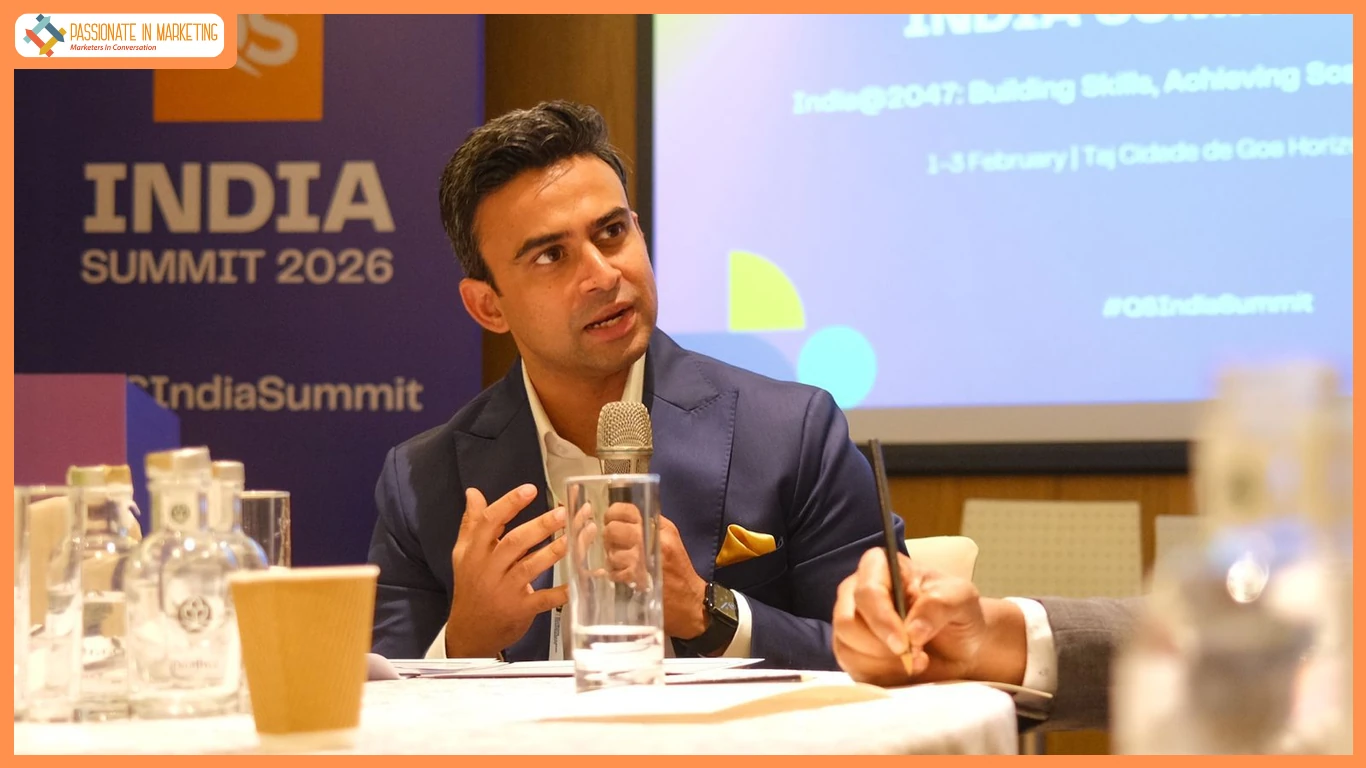
Greater Noida, 4th February, 2026: Reinforcing India’s growing influence in shaping global higher education discourse, Dr. Dhruv Galgotia, CEO, Galgotias University, chaired and moderated an international panel at the QS Quacquarelli Symonds India Summit 2026, examining how Gen Z is emerging as a co-architect of AI-enabled learning cultures worldwide.
The panel featured leading voices from global higher education, including Dr. Ashwani Kumar, Vice-Chancellor, SAVEETHA Institute of Medical and Technical Sciences (SIMATS), Chennai; Prof. Koen Lamberts, President and Vice-Chancellor, The University of Sheffield, United Kingdom; Dr. Randy McCrillis, Senior International Officer, University of Utah, United States of America; and Prof. Dr. Dishan Kamdar, Vice-Chancellor, FLAME University, India.
The discussion explored how universities must evolve beyond traditional teaching frameworks to meet the expectations of a generation that is digitally native, socially conscious, and increasingly outcome-driven. Panelists emphasised that artificial intelligence, when applied responsibly, has the potential to transform pedagogy by enabling personalised learning, adaptive assessment models, and data-informed student support systems.
Moderating the dialogue, Dr. Dhruv Galgotia, CEO, Galgotias University highlighted, “Gen Z learners are no longer passive consumers of education but active participants in shaping academic environments. The conversation focused on reimagining curricula, fostering interdisciplinary thinking, and creating institutional cultures where students collaborate with faculty to co-design learning journeys aligned with future workforce and societal needs.”
The panel’s insights closely aligned with the broader thought leadership presented at the Summit by Jessica Turner, Chief Executive Officer, Ben Sowter, Senior Vice President, and Dr. Ashwin Fernandes, Executive Director – AMESA, at QS Quacquarelli Symonds. Their emphasis on quality-led outcomes, analytics-driven decision-making, and student-centric institutional strategies provided a global context for the discussion.
Concluding the session, panelists agreed that empowering Gen Z as co-creators of knowledge is central to building agile, resilient, and future-ready universities. As higher education navigates rapid technological and societal change, collaborative learning cultures supported by responsible AI were identified as critical to sustaining relevance and impact.
The QS Quacquarelli Symonds India Summit 2026 reaffirmed its role as a key global forum for shaping discourse on the future of higher education, bringing together leaders committed to innovation, quality, and student success.

