


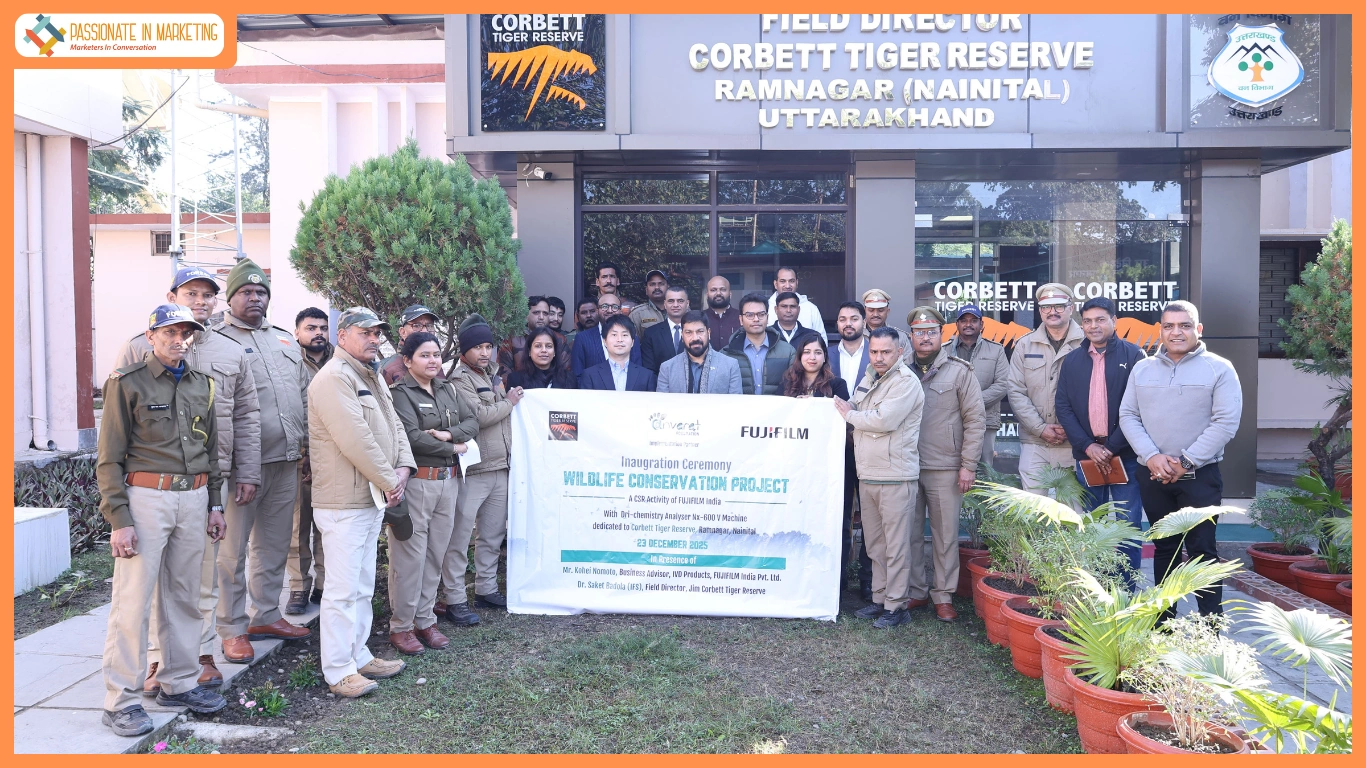
Uttarakhand, December 23, 2025: FUJIFILM India, a leading company in Healthcare, Electronics, Imaging and Business Innovation, has strengthened its commitment to community wellbeing and environmental sustainability with the launch of its latest CSR initiative, the Wildlife Conservation Project at Corbett Tiger Reserve, Ramnagar, Uttarakhand. Implemented by Anvarat Foundation, this initiative focuses on improving the healthcare support available for rescued and rehabilitated wild animals by setting up a dedicated diagnostic laboratory at the Dhela Rescue, Rehabilitation and Conservation Centre. This facility will help veterinary teams identify illnesses faster and provide better medical care to vulnerable species.
As part of the initiative, FUJIFILM India is equipping the centre with modern, easy-to-use diagnostic systems that can test and monitor the health of various wildlife species on the spot. A trained lab technician will support the operations of the activity by maintaining health records, operating the lab equipment and supporting the day-to-day diagnostic needs of the Corbett Tiger Reserve. By bringing these services directly inside the rescue center, the program will significantly reduce delays in treatment and improve the chances of recovery for animals that require urgent care.
The initiative also extends its impact beyond the National Park. Through regular community awareness sessions in nearby villages, the program will help residents understand how to coexist safely with wildlife, reduce risks associated with human-wildlife conflict, and promote better environmental practices. These sessions will play an important role in strengthening the relationship between communities and conservation efforts.
Aligned with the UN Sustainable Development Goal 15, Life on Land, the initiative reflects FUJIFILM India’s focus on creating long-lasting environmental and social impact. By supporting stronger wildlife health systems and empowering communities, the company continues to take meaningful steps toward protecting India’s biodiversity and natural ecosystems.
Mr. Koji Wada, Managing Director, FUJIFILM India, said, “At FUJIFILM India, our CSR efforts are rooted in our Group purpose of ‘Giving Our World More Smiles.’ Through this initiative, we are proud to extend our technological capabilities to support wildlife conservation, an area deeply connected to ecological balance and long-term sustainability. By empowering forest authorities we aim to strengthen early detection, improve treatment outcomes for vulnerable species, and contribute to preserving India’s rich biodiversity for future generations.”
Mr. Abhi Shekhar Singh, Vertical Head, Corporate Communications & CSR, FUJIFILM India, added, “India is home to approximately 75% of the world’s tiger population, and it is now the responsibility of both the nation and the brands thriving within it to contribute to this success story. As a dominant player in Blood Chemistry Analyzer technology, which can be seamlessly deployed for veterinary use, this project idea came to us organically. With the constant support and enthusiasm of the authorities at the Corbett Tiger Reserve and our implementation partner, the Anvarat Foundation, I am hopeful that this initiative will bolster the incredible hard work the authorities are already doing.”
This initiative forms a part of FUJIFILM India’s broader strategy to enable sustainable, technology-supported social impact across communities, aligning with the company’s Sustainable Value Plan 2030. By integrating innovation with environmental responsibility, FUJIFILM India continues to invest in initiatives that create long-term value for society while contributing to the protection of India’s ecological and wildlife ecosystems.

