National, 27 June 2025: India’s online higher education and upskilling sector is witnessing a seismic shift. Valued at ₹3 lakh crore in FY 2023, the market is expected to grow nearly threefold to ₹8.5 lakh crore by FY 2028, according to a report by Technopak Advisors. Clocking a CAGR of 23.1 per cent, this growth is being fuelled by a combination of rising disposable incomes, policy reforms, digital infrastructure expansion, and a young, tech-savvy workforce.
Jaro Education, a key player in the online upskilling landscape, has been instrumental in bridging the academic–industry gap by offering executive programmes in partnership with premier institutes such as IIMs, IITs, and leading global universities. The company’s focus on outcome-based learning and career-relevant certifications is helping drive enrollment among early- and mid-career professionals.
YOUNG INDIA IS READY TO SKILL UP
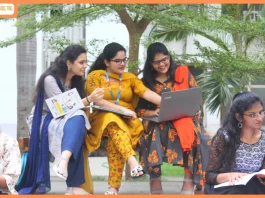
With over 68 per cent of Indians between 15–65 years of age and a median age of 29.5 years, India’s population is among the youngest globally and digitally native. Not surprisingly, nearly 70 per cent of online education enrolments in FY 2021 came from professionals with less than three years of experience. They are actively seeking certifications in trending domains such as AI, data science, digital marketing, and machine learning.
India’s nominal GDP is projected to hit USD 5.8 trillion by FY 2028, moving it to the third-largest economy spot globally. This economic growth is tightly linked with rising educational spending, as per capita income surged from ₹1,28,718 in FY 2018 to ₹1,92,201 in FY 2023. As incomes rise, so does the appetite for flexible, online learning pathways.
The Technopak report underscores a strong correlation between rising incomes and educational spending. India’s education market, currently valued at ₹146 lakh crore, is projected to grow at a CAGR of 11.4 per cent to ₹250 lakh crore by FY 2028. Online education is one of the fastest-growing segments within this.
CERTIFICATION, DEGREES, AND K–12: HOW ONLINE EDUCATION BREAKS DOWN
The online education and upskilling sector spans multiple domains. In FY 2023, skilling and certification accounted for 30 per cent of the online education pie, while online degrees comprised 10 per cent, test preparation 22 per cent, and K–12 about 34 per cent. By FY 2028, skilling and certification are projected to take a larger share at 34 per cent, while online degrees will grow to 12 per cent, driven by demand for flexibility and employer recognition.
One of the biggest contributors to this growth is the equivalence now granted to online and offline degrees. In September 2022, the University Grants Commission (UGC) announced that degrees earned via online and distance learning (ODL) modes would be treated as equivalent to conventional degrees. This move has encouraged top universities to launch online graduation and postgraduate programmes, making them accessible to learners across the country.
This shift has encouraged institutes and platforms, including Jaro Education, which partners with institutions like IIMs, IITs, and international universities, to scale up their online offerings. These collaborations have made top-quality education more accessible and employer-recognised.
POLICY SUPPORT AND INSTITUTIONAL MUSCLE POWER THE BOOM
The National Education Policy (NEP) 2020 has played an important role in mainstreaming online education. It supports lifelong learning, flexibility in degree formats, and the integration of online tools and blended learning models. The government has also launched initiatives such as the Digital India campaign, Samagra Shiksha Scheme, and Skill India Mission, which collectively promote digital infrastructure, teacher training, and vocational education.
The FY 2025 budget allocation for education stands at ₹1.206 lakh crore, with ₹47,619.8 crore set aside for higher education. This boost comes at a time when the higher education market itself is projected to grow from ₹49 lakh crore in FY 2023 to ₹90 lakh crore by FY 2028.
SERVICES SECTOR DEMANDS NEW-AGE SKILLS
India’s shift toward a services-driven economy is creating massive demand for job-ready, digital-first skillsets. The skilling and certification market, currently valued at ₹11.5 lakh crore, is set to touch ₹14 lakh crore by FY 2028. While 91 per cent of this segment remains offline, online skilling is expected to double from 9 per cent to 20 per cent during this period.
Courses in artificial intelligence, machine learning, data science, and digital marketing are witnessing a surge in demand. This is complemented by increased participation from employers, who are sponsoring certification courses to improve workforce capabilities. Institutions like IITs and IIMs are also offering regular online executive education programmes, adding further credibility to online upskilling platforms.
Institutions such as Jaro Education are actively catering to this demand by offering curated executive programmes that blend academic rigour with real-world relevance, helping professionals stay ahead of the curve in fast-evolving industries.
INCLUSION AT SCALE: WOMEN AND SMALL-TOWN LEARNERS JOIN IN
Online learning is also enabling geographic and gender inclusion. Students in Tier 2 and Tier 3 towns can now access high-quality programmes from top universities. Government efforts to raise the Gross Enrolment Ratio (GER) in higher education to 50 per cent by 2035 will further accelerate online adoption.
Women, in particular, are benefiting. Female labour force participation rose to 37 per cent in FY 2023, up from 32.8 per cent the previous year. Online education gives them the flexibility to learn while managing household responsibilities, making it a key lever for empowerment.
ROADBLOCKS REMAIN—BUT THE DIRECTION IS CLEAR
Despite the promising growth, the sector faces significant hurdles. These include inconsistent internet access in rural areas, a lack of awareness about quality content, and the need for better standardisation and regulation. Additionally, as more players enter the market, ensuring the quality and credibility of courses and certifications will become a priority.
With India’s digital ecosystem maturing, online education is moving from the margins to the mainstream. From working professionals to school students, millions are logging in to skillup. Backed by economic trends, favourable policy, and institutional innovation, India’s online upskilling sector is not just evolving—it is exploding.
The next five years will likely define the long-term trajectory of online education in India, determining whether it becomes a supplementary tool or a central pillar in the country’s learning and employment landscape.