


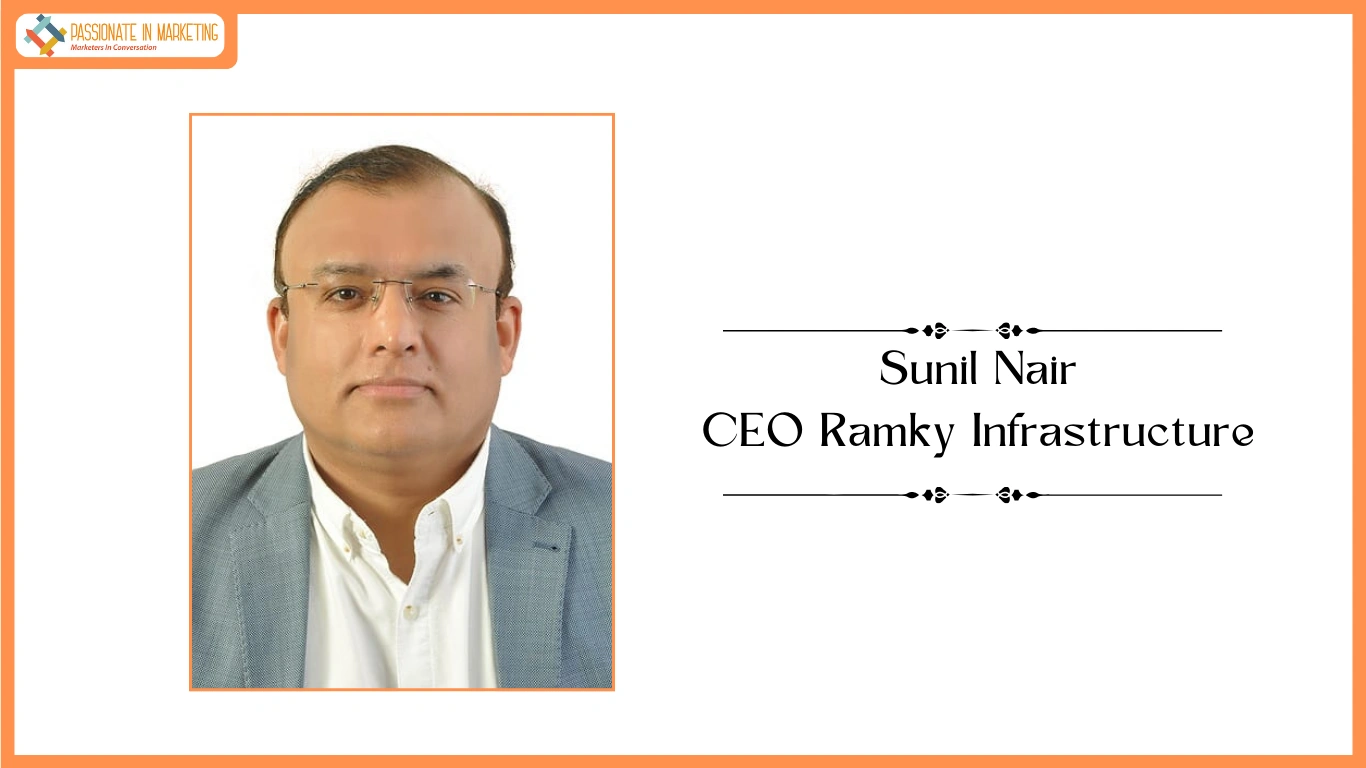
National, December 23, 2025: Ramky Infrastructure Limited, a leading company operating in the infrastructure space with niche expertise in Industrial Parks including infrastructure Solutions, Water and Wastewater management, and Urban Solutions, issued a year-end business update, summarising how 2025 strengthened the company’s operating fundamentals and sharpened its strategy for the next cycle of infrastructure growth. The company’s selection through 2025 reflected a highly selective, risk-aware approach, favouring larger opportunities aligned to the company’s execution strengths.
The company has indicated that it targets reliable opportunities with project sizes ranging from ₹1,000 crore to ₹2,000 crore. This approach is aimed at reducing fragmentation across multiple small projects and supporting tighter delivery controls on complex jobs. As of the year-end update, the company’s order book stands at around ₹10,000 crore, offering visibility of about 2 years to 2.5 years. The company has also indicated a strong domestic pipeline of approximately $ 1 billion, alongside an international pipeline close to ₹1,000 crore. Overseas focus remains limited to Industrial Parks and Water projects. Work is split across Engineering, Procurement, Construction (EPC (~40%)), Hybrid Annuity Model (HAM (~30%)) and Operation & Maintenance (O&M (~30%)), balancing execution-led revenues with long-tenure operating cash flows. The company shared that it is also the lowest bidder in a further pipeline of approximately ₹3,000 crore of projects, which it expects to secure over the coming quarters.
The company has strengthened and scaled its in-house execution systems
Ramky Infra has reiterated execution as a core delivery capability, with end-to-end work executed largely in-house and supported by structured project monitoring. With many projects running in parallel across regions and verticals, the company has indicated that it relies on standardised delivery processes to maintain predictability on timelines and quality.
In Water and Wastewater, the company’s scope includes design-build projects, transmission pipelines, pumping stations, sewage treatment plants, and associated infrastructure. The company has delivered several sewage treatment plants in 18 to 20 months, in models including EPC, HAM, Public-Private Partnership (PPP), and O&M. Completion and handover of a large STP that was a key revenue contributor led to a near-term dip in visible execution run-rate, with the focus now on converting new awards from mobilisation to full-scale delivery.
Alongside infrastructure delivery, the company’s Buildings vertical continues to remain active. Management indicated that it has built about 15 million sq ft so far, with another 15 million sq ft under construction, largely for a group developer entity, alongside external client projects.
Ramky Infrastructure commissioning as a managed transition into operations
In 2025, the company placed a significant emphasis on ‘Commissioning as a controlled transition point’. The company’s model seeks to minimise handover gaps by treating commissioning as a managed continuity event, ensuring operational responsibilities during transition are integrated into the action plan. This is particularly relevant in the company’s sewage treatment projects and water systems, where it evaluates performance through outcomes after commissioning, alongside construction completion. In such long-tenured projects, the company aligns design decisions, equipment selection, and commissioning standards to operational sustainability over a 15 to 20-year period.
Ramky Infra is focusing on O&M as one of the core line of business
Ramky Infra has articulated two major O&M engines during 2025. The first is Water and Wastewater, where sewage treatment plants, once built, are operated typically for 15 to 20 years. The second is Industrial Parks, where the company’s operating role extends to utilities and ecosystem services, including steam supply, wastewater treatment, water treatment and resale, and maintenance of internal infrastructure such as roads.
The company’s operating capability is improving eligibility and scoring for future tenders, and embedding institutional learning that strengthens delivery on subsequent projects. Operational inputs are being fed back into design, equipment selection, and execution planning, supporting a shift towards lifecycle infrastructure operations.
In 2025, this lifecycle view has also shaped how Ramky Infra treats new industrial park opportunities. The company has indicated that two large industrial park orders in the near-term pipeline are domestic, located in Maharashtra, with one already receiving a conditional Letter of Intent (LOI) and another expected to receive an LOI. The planned new park is described as a Life Sciences park and expected to operate under a build-operate model, a structure that increases the relevance of operating capability and long-term service delivery.
Pursuing international Industrial Parks and Water opportunities with controlled risk
Oman, and active engagement in opportunities linked to industrial ecosystem development in regions including Saudi. The company has indicated an expectation of one meaningful tender win in Q4 in the range of ₹500 to ₹600 crore, with another larger win targeted in FY27.
Ramky Infra is enabling growth through capital recycling and asset-backed monetisation
Ramky Infra stated that it has moved past the restructuring phase, and management indicated that the restructuring exercise is about five years old. The company indicated there is no standalone term debt, with facilities primarily comprising working capital and non-funded limits such as bonds and guarantees. Any debt visible at the consolidated level is described as project-specific borrowing linked to a completed HAM asset, amounting to about ₹160 crore.
The company also indicated it has operating assets with annuity-style cash flows for 10 to 15 years and is exploring monetisation approaches that use assured revenues as collateral. Management referred to potential leverage of ₹800 to ₹900 crore, with total leverage possible exceeding ₹1,000 crore, alongside expectations of meaningful claims realisation in the next years.
Growth momentum reflected in Ramky Infra’s Q2 FY26 performance and outlook
The company’s Q2 FY26 performance was positioned as reflecting sustained growth momentum and improved stability after the restructuring exit. For the quarter ended September 30, 2025, revenue from operations stood at ₹4,716 million on a consolidated basis, with consolidated EBITDA at ₹1,420 million and consolidated PAT at ₹778 million. On a standalone basis, revenue from operations stood at ₹4,448 million, EBITDA at ₹1,172 million, and PAT at ₹679 million. The company also indicated expectations for FY26 of 25 to 30% revenue growth, EBITDA in the range of 22 to 23%, and PAT in the range of 13 to 15%. A longer-term target of 5x growth over 5 years has been proposed, linked to backlog conversion into execution.
Commenting on the year-end update and the quarter performance, Mr. Sunil Nair, CEO, Ramky Infrastructure Ltd, said, “Our Q2 results reflected the successful realization of the strategic goals we set earlier this year and the enhanced stability we have achieved since the restructuring exit. This performance confirms that our company is well-positioned for sustainable growth, consistent performance, value creation, and long-term stakeholder confidence. The foundation is now strong, and we are ideally positioned to capture the significant opportunities emerging in the Industrial Infrastructure, Water, and Urban Solutions areas. Looking ahead, we remain focused on disciplined bidding for government-backed projects, capital recycling, and sustainability-led growth.”
- Sravanth Rayapudi, CFO, Ramky Infrastructure Ltd, said, “The Company reported steady revenue growth driven by progress in key EPC and HAM projects, with healthy EBITDA supported by cost control and efficiency gains. With a nil debt position, our balance sheet remains robust and well-balanced. The strong cash flow generation from EPC operations continues to be a key strength, enabling financial flexibility and supporting future growth plans. During the quarter, we secured new orders worth ₹2,085 crore under the HAM model, taking our order book to over ₹9,000 crore. Execution too across ongoing projects remained strong, with continued emphasis on timely delivery and quality.”

