


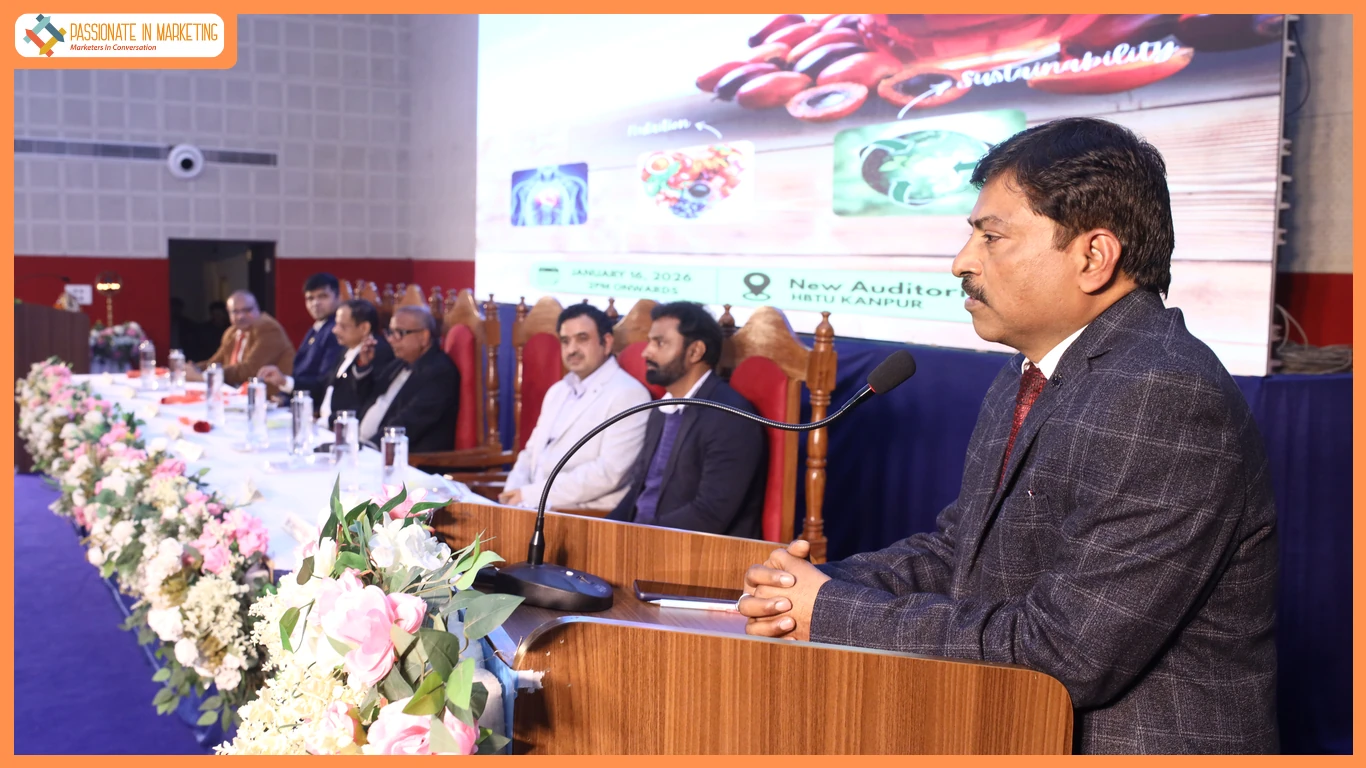
Mumbai, January 17, 2026: Leading experts in nutrition science, food regulation, cardiology and oil technology called for a science-led conversation around palm oil and its role in human health, nutrition and sustainability unfolded at Harcourt Butler Technical University (HBTU), Kanpur, during a half-day seminar entitled “Palm Oil’s Role in Human Health, Nutrition, and Sustainability: The Balanced Truth.”
Jointly organised by the Department of Oil Technology, HBTU Kanpur, and the Oil Technologists’ Association of India (OTAI), Central Zone, the seminar brought together experts from nutrition science, medical research, food regulation, sustainability and oil technology to cut through long-standing myths and present evidence-based perspectives on palm oil.
The seminar served as a platform for constructive, science-driven dialogue on one of the world’s most widely consumed edible oils. Palm oil plays a vital role in India’s food system due to its affordability, functional versatility and reliability across a wide range of cooking and processing applications. Its stable supply and wide usage contribute significantly to meeting the country’s edible oil demand, supporting food security for households, food service operators and the packaged food industry alike.
Scientific insights shared during the seminar highlighted that palm oil is a balanced mix of saturated and unsaturated fatty acids, making it suitable for everyday cooking when consumed as part of a balanced diet. Its high oxidative stability allows it to perform well under high-heat cooking conditions, helping preserve food quality and reduce the formation of harmful compounds compared to other vegetable oils.
Palm oil is also a natural source of Vitamin E tocotrienols, known for their antioxidant properties. Discussions emphasised that overall dietary patterns, lifestyle choices and moderation play a far greater role in health outcomes than the exclusion of any single cooking oil.
The discussions also aligned with the objectives of the National Mission on Edible Oils – Oil Palm (NMEO-OP), launched by the Government of India in 2021 to strengthen domestic edible oil production and promote sustainable agricultural practices. Speaker during the seminar highlighted the efficiency of oil palm as a crop, noting that it delivers higher yield per hectare compared to other major vegetable oil crops. When supported by responsible cultivation methods, scientific research, and sustainability frameworks, oil palm farming can contribute to rural livelihoods, economic development, and long-term food security.
Speaking on the significance of the seminar, Prof. Praveen Yadav, Dean, School of Chemical Technology Harcourt Butler Technical University, Kanpur said, “Palm oil often finds itself at the centre of polarised debates. What forums like this achieve is balance, grounding opinions in science, context and responsibility. When we look at health, nutrition and sustainability together rather than in isolation, we are better equipped to make informed choices, both as professionals and as consumers.”
The seminar highlighted the importance of science-based communication in shaping perspectives on palm oil in India and promoting balanced, responsible dietary practices.

