



You’ve crafted the perfect campaign. Your messaging resonates, your creative is stunning, and your targeting is laser-focused. The launch goes well, leads pour in, and then… everything falls apart. Orders get delayed. Inventory numbers are wrong. Customer service is overwhelmed with fulfillment questions. By the time your prospects become customers, the experience is so broken that your beautiful marketing campaign becomes irrelevant.
This scenario plays out thousands of times daily across B2B companies. Marketing teams invest enormous energy into acquisition while the operational infrastructure behind the scenes sabotages their efforts at every turn. It’s like building a gorgeous storefront on a foundation of quicksand. No matter how good your marketing is, operational friction destroys customer experience and kills the lifetime value your campaigns were designed to create.
The disconnect between marketing promises and operational reality represents one of the most overlooked problems in B2B marketing today. We obsess over click-through rates, conversion optimization, and attribution models while ignoring the fact that our backend systems actively work against the experiences we’re promising prospects. The solution isn’t better marketing tactics. It’s recognizing that modern marketing effectiveness depends on operational excellence.
This article explores why backend operations have become a marketing problem, how operational friction undermines even the best campaigns, and what forward-thinking marketing leaders are doing to ensure their infrastructure can actually deliver on the promises their campaigns make.
The Hidden Cost of Operational Friction on Marketing ROI
Every marketing leader tracks cost per acquisition, but how many calculate the cost of customers lost due to operational failures? When you spend $500 acquiring a B2B customer only to lose them after the first order because fulfillment was a nightmare, your actual customer acquisition cost is infinite. The customer never became profitable, but you still paid for the marketing that brought them in.
This operational tax on marketing ROI is massive and largely invisible. It doesn’t show up in your marketing dashboards. Your attribution models don’t capture it. Your campaign reports look fine because they stop measuring at the point of conversion. But your finance team sees it clearly in customer lifetime value numbers that never materialize and retention rates that make your CFO question marketing’s entire contribution.
This dynamic explains why some companies with mediocre marketing consistently outperform competitors with superior campaigns. Their operational excellence creates customer experiences that generate retention, expansion, and referrals. Marketing just needs to get people in the door. Operations takes it from there and makes customers successful. Without that operational foundation, even brilliant marketing becomes expensive customer acquisition that never pays off.

The Integration Infrastructure Modern Marketing Requires
If operational excellence has become a marketing imperative, what does that actually mean in practice? For most B2B companies, it means addressing the integration gaps between systems that create operational friction and undermine customer experience. These technical challenges might seem outside marketing’s domain, but they directly impact everything marketing tries to accomplish.
Electronic Data Interchange (EDI) has long been the standard for B2B transaction automation, but traditional EDI implementations were complex, expensive, and required specialized technical expertise. They worked for large enterprises with dedicated IT teams but were impractical for mid-sized companies. This created a competitive advantage for large companies that could afford robust integration infrastructure while smaller competitors struggled with manual processes.
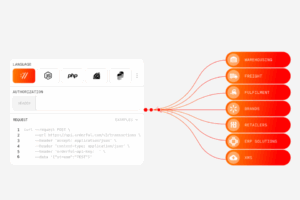
The evolution toward cloud-based integration platforms has fundamentally changed this dynamic. Modern solutions handle the complexity of EDI and other integration protocols while providing simple interfaces that business users can work with. Instead of building custom integrations between every system, you connect each system to the platform once, and the platform manages all the translation and routing between systems.
For B2B companies looking to modernize their operational infrastructure to support better customer experiences, platforms like Orderful cloud EDI software represent the new generation of integration solutions that make enterprise-grade capabilities accessible without requiring massive IT investment or specialized technical expertise. These cloud-native approaches reduce implementation time from months to weeks and convert large capital expenditures into predictable subscription costs that scale with usage.
What makes modern integration platforms particularly valuable for marketing-focused organizations is how they enable the real-time data flow and operational responsiveness that customers now expect. When your systems communicate automatically, you can provide accurate order status, proactive problem resolution, and the transparency that builds trust. These capabilities directly support marketing’s goal of creating customer experiences that drive retention and advocacy.
The Competitive Advantage of Operational Excellence
In increasingly commoditized B2B markets, operational excellence represents one of the few remaining sustainable competitive advantages. Products can be copied. Pricing can be matched. But operational capabilities that deliver superior customer experiences are difficult to replicate because they require infrastructure investment, process discipline, and organizational alignment that take years to build.
Marketing can leverage operational excellence as a positioning differentiator when it exists. If your company can guarantee next-day shipping while competitors take a week, that’s a marketing message. If you provide real-time order tracking while competitors send vague email updates, that’s a competitive advantage. If your order accuracy rate is 99.5% while the industry average is 94%, customers will notice the difference.
The challenge is that many B2B companies have operational advantages they’re not marketing because marketing doesn’t know about them or understand their customer value. Creating communication channels between marketing and operations helps identify these differentiators. Regular meetings where operations shares metrics and marketing shares customer feedback creates mutual understanding that benefits both teams.
Some companies treat operational excellence as table stakes not worth marketing. This is a mistake. B2B buyers increasingly care about ease of doing business, reliability, and overall experience beyond just product features. When you can demonstrate operational superiority, it becomes a compelling marketing message that attracts customers tired of poor experiences with competitors.
Taking Action: Marketing’s New Mandate
Marketing’s role in B2B has expanded whether we’ve acknowledged it or not. We’re no longer just responsible for generating awareness and leads. We’re accountable for customer lifetime value, which depends heavily on operational excellence and customer experience beyond the acquisition funnel. This expanded mandate requires new skills, new relationships, and new thinking about what makes marketing effective.
The path forward starts with honest assessment of your operational gaps. Where do customers experience friction? What processes are manual that should be automated? Which system integrations are missing or unreliable? Marketing leaders should be asking these questions and pushing for answers even though they’re traditionally operational concerns.
The B2B companies winning today are those where marketing and operations work as partners toward shared customer experience goals. Marketing can no longer succeed in isolation, focused only on the top of the funnel. The entire customer journey is marketing’s responsibility now, and delivering on that responsibility requires operational excellence.
Your marketing is only as good as your ability to deliver on the promises it makes. No amount of creative brilliance or targeting sophistication overcomes operational friction that destroys customer experience. The winning move is recognizing that backend infrastructure and operational excellence are marketing problems and taking ownership of ensuring your company can actually deliver the experiences your campaigns promise.
**’The opinions expressed in the article are solely the author’s and don’t reflect the opinions or beliefs of the portal’**

