


Omar Chihane, Global General Manager of TOEFL, ETS
 “ As 2025 comes to an end, we are seeing global education and international study choices evolve in a more intentional and strategic direction. Traditional destinations such as the United States, the United Kingdom, Canada and Australia continue to attract strong demand, while interest across Europe, the Middle East and parts of Asia is steadily growing. Students are assessing opportunities more carefully, taking into account factors such as affordability, stability, post study options and long term academic outcomes. The focus is moving beyond prestige alone to programmes that develop subject knowledge and academic skills, particularly in areas such as AI, engineering, healthcare, cybersecurity and sustainability. This momentum is expected to continue in the year ahead, with learners exploring multiple destinations and pathways with greater clarity and purpose. Within this landscape, academic English proficiency is becoming increasingly central. As education becomes more global and digitally connected, English remains the primary language of instruction, research and academic collaboration worldwide. For Indian students, who represent one of the largest internationally mobile student populations, the ability to demonstrate reliable and widely accepted academic English proficiency is essential. Trusted assessments such as the TOEFL iBT play a critical role by providing universities with a consistent and credible measure of a student’s readiness for academic study, while offering test takers a fair and transparent way to demonstrate their skills. In an increasingly interconnected global education system, such assessments continue to support access, confidence and integrity in international admissions.”
Pushkar Saran, Executive Director – Southeast Asia and South Asia, Institutional Products, TOEIC, ETS :
 “In 2025, global workforce dynamics made one thing clear: organisations are looking beyond degrees and job titles to understand what people can actually do. The latest ETS Human Progress Report shows rising global interest in skills verification and lifelong learning as essential drivers of human progress, with employers and employees alike recognising that measurable communication and workplace skills matter just as much as technical knowledge.
For India, where the workforce is both young and globally mobile, this shift has significant implications. English proficiency has become a foundational workplace skill that influences collaboration, decision-making, and performance in diverse teams. In HR conversations across sectors, the ability to communicate clearly and work confidently with global partners is increasingly linked to talent competitiveness and career mobility.
Looking ahead into 2026, assessments will continue to play a strategic role in talent development and workforce planning. Employers are seeking reliable ways to benchmark capabilities, not just credentials, and professionals are actively building skills that are observable, verifiable and relevant to evolving roles. In this context, thinking about how we measure and signal workplace readiness, including communication skills, is central to building a workforce ready for the interconnected demands of tomorrow’s economy.”
Tadas Lavickas- Head of International Recruitment, University of Worcester–
 “After a dip in international student numbers in 2024, the UK higher education sector has shown clear signs of recovery in 2025. Universities have responded by strengthening their employability focus and enhancing the overall student experience, ensuring international students receive stronger value from their investment. This renewed emphasis has helped restore confidence in the UK as a leading study destination, particularly for students seeking quality education combined with career readiness.
“At the University of Worcester, we are seeing a noticeable shift towards professional and specialist programmes, especially in areas such as healthcare and teaching, as students increasingly value clearly defined qualifications over more generic degrees. Employability has become a decisive factor, with many programmes now offering substantial placement components that account for a significant portion of course content. Looking ahead to 2026, as global competition intensifies with emerging education hubs across Europe, East Asia and the Middle East, this focus on practical learning and outcomes-driven education will be key to delivering greater value for international students.”
Anna Audhali, Senior Regional Manager, Nottingham Trent University:
 “As we moved through 2025, we saw students approach higher education at Nottingham Trent University with far more clarity and purpose. Interest is now coming from a wider range of cities across India, and students are looking beyond traditional subjects such as business, science and technology to newer and fast-growing areas like psychology, luxury brand management and creative industries. Their choices show a clear shift towards degrees that offer relevance, resilience and a direct connection to future careers.
“A defining priority for Indian students this year has been employability. They want academic learning supported by real practical exposure, placements and opportunities to build strong workplace skills. Employers continue to value communication, adaptability and cross-cultural awareness, and students are responding by seeking environments where they can develop these strengths.
“As we look ahead to 2026, this outcomes-driven mindset will only grow stronger. Students will increasingly prioritise universities that provide meaningful industry engagement, practical learning and clear pathways into global careers. We see this as a positive trend, as it aligns higher education choices with long-term professional success.”
Meenakshi Kachroo Chatta, Senior Director & Regional Head at College Board – India, South & Central Asia
 Over the past year, Indian students have approached international admissions with much greater clarity around their preferred destinations and academic pathways. The United States continues to lead in SAT score sends, while Australia has shown the fastest year-on-year growth. Among SAT test takers in the 2025 cohort, interest remains concentrated in engineering, computer and information sciences, business and management, engineering technologies, biological sciences, and mathematics. This reflects a sustained preference for academically rigorous disciplines that provide strong long-term career opportunities.
As we look toward 2026, one of the most noteworthy shifts is the broadening participation base across India. Engagement with the SAT and AP is expanding beyond traditional metros to smaller and less populous cities such as Amritsar, Gurugram, Noida, Kanpur, Vadodara, and Greater Noida, with growing participation across states including Uttarakhand, Maharashtra, Gujarat, Rajasthan, Punjab, Assam, and the Delhi–NCR region. This points to deeper awareness, stronger preparation, and more equitable access for students from a wider range of educational backgrounds.
In a globally competitive admissions environment, assessments like the SAT and AP will continue to play a central role. They offer universities a consistent and comparable academic benchmark while enabling students across regions and curricula to demonstrate readiness for college-level study in a fair and transparent manner.
Mr. Sripal Jain, CA/US CPA, Co-founder Simandhar Education
 “2025 was a turning point for the accounting and finance profession. Automation and AI took over much of the routine work that young finance professionals traditionally started their careers with. This shift has made one thing clear: the roles that are growing today are the ones that require stronger judgment, analytical thinking and an understanding of global standards. For many commerce students in India, this has also highlighted the limits of traditional pathways that offer very few career routes and little international mobility.
As we move into 2026, the demand for professionals with globally recognised accounting qualifications will continue to rise. These programmes give students both strong fundamentals and the ability to work with modern, tech-enabled finance systems. More importantly, they open doors to careers in audit, finance, consulting and analytics across markets. For a generation of Indian learners looking for stability, relevance and global opportunities, this combination of technical depth and international recognition will matter more than ever.
The larger opportunity now is to help students see that accounting and finance careers are evolving, not shrinking. With the right global qualifications and the ability to work alongside new technologies, commerce students can build careers that are future-ready and not limited by geography or legacy role definitions.”
Ganesh Kohli, Founder, IC3 Movement
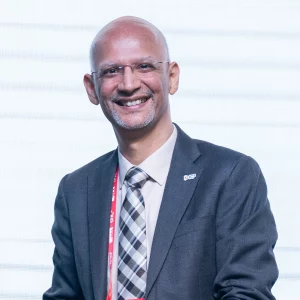 As 2025 comes to an end, one theme has become impossible to ignore: a student’s success depends on much more than academic performance. Across schools in India and globally, there is growing recognition of the emotional pressure, uncertainty, and complex choices young people face, particularly during key transition years. Increasingly, students are seeking not just academic guidance, but clarity of direction and purpose as they navigate these decisions.
Schools that treated counselling as a structured, school-wide responsibility, rather than an occasional intervention, were better positioned to support students, parents, and teachers through this complexity. This shift reflects a broader understanding that guidance plays a critical role in helping students align their abilities, interests, and aspirations in a rapidly evolving education landscape.
Policy frameworks such as the National Education Policy have reinforced this thinking by emphasising holistic development and more student-centred practices. The message is clear: academic learning must be supported by emotional well-being and purpose-driven guidance if students are to thrive.
Looking ahead to 2026, the focus must move from recognition to readiness. Building effective counselling systems will require trained professionals, committed school leadership, and families who view guidance as an ongoing process, not a one-time decision. As pathways become more diverse and outcome-driven, early and consistent counselling will help students make informed choices with confidence, reduce stress, and develop a stronger sense of identity and purpose. Schools that embed guidance and well-being into their core culture will be preparing students not just for the next exam, but for life beyond it.
Mr. Siddharth Iyer, COO, OneStep Global
 In 2025, we saw Indian families approach overseas education with a level of clarity and discipline that was not as visible a few years ago. Decisions today are shaped by a sharper understanding of employability, affordability, safety, and long-term career outcomes. It is no longer about simply choosing a known destination or a well-ranked university. Families are asking harder questions about return on investment, the relevance of programmes, and how effectively institutions support students from admission to employment.
As we move into 2026, this shift will only deepen. Students and parents are looking closely at graduate outcomes, total cost of education, pathways to work experience, and the strength of campus support systems. They are evaluating whether a programme helps build the skills, networks, and confidence needed to navigate global careers. This is a significant change and a positive one, because it pushes the entire ecosystem toward transparency and accountability.
For universities, the message is clear. India’s demand for international education remains strong, but expectations are evolving. International education is increasingly reaching students onshore through transnational education partnerships, India-based hubs, and branch campuses that bring global curricula closer to home. At OneStep Global, we are consulting with leading international universities to help them map the right courses for Indian students and design programmes that build future-ready skills for graduates to succeed in the global workforce. Institutions that invest in localisation, communicate outcomes clearly in the Indian context, and engage meaningfully with students and partners will be best positioned to succeed in this next phase of international education. International education is becoming a strategic choice, not a leap of faith and that creates an opportunity for more purposeful, long-term collaboration.
Mr. Amit Baveja, Managing Director- India & Southeast Asia at Burlington English India
 In 2025, India’s skilling and education landscape continued to evolve at an encouraging pace. Enrolment and graduation levels reached new highs, and several policy efforts helped widen access and bring more learners into the system. The Economic Survey 2024–25 notes that the percentage of employed individuals in the population has increased to 47.2%. However, with 90.2% of the workforce currently at a low skill level, with 88.2% confined to low-competency and, consequently, low-income roles. The conversation must now shift from access alone to ensuring that learners acquire skills with genuine workplace value, a direction in which industry, institutions, and policymakers are already moving in unison.
As we look toward 2026, English communication is emerging as a key capability that strengthens this momentum. It consistently acts as the bridge between technical learning and workplace performance. Whether it is interviews, client engagement or collaborative work in diverse teams, strong communication builds confidence and accelerates career readiness. We are seeing this need across sectors and across learner segments, including in smaller cities where participation and aspirations continue to rise.
India is well-positioned to take the next step. Policymakers have propelled the system forward, training institutions are responding, and industry is more engaged than ever before. By synchronising these efforts and weaving communication skills into skilling programmes in a seamless and consistent manner, we can create a transformative impact. This will empower learners to feel more confident, enable employers to find workplace-ready talent, and ultimately strengthen the national workforce for the long term. The momentum exists; the challenge now is to build upon it in a practical and sustained way.

