


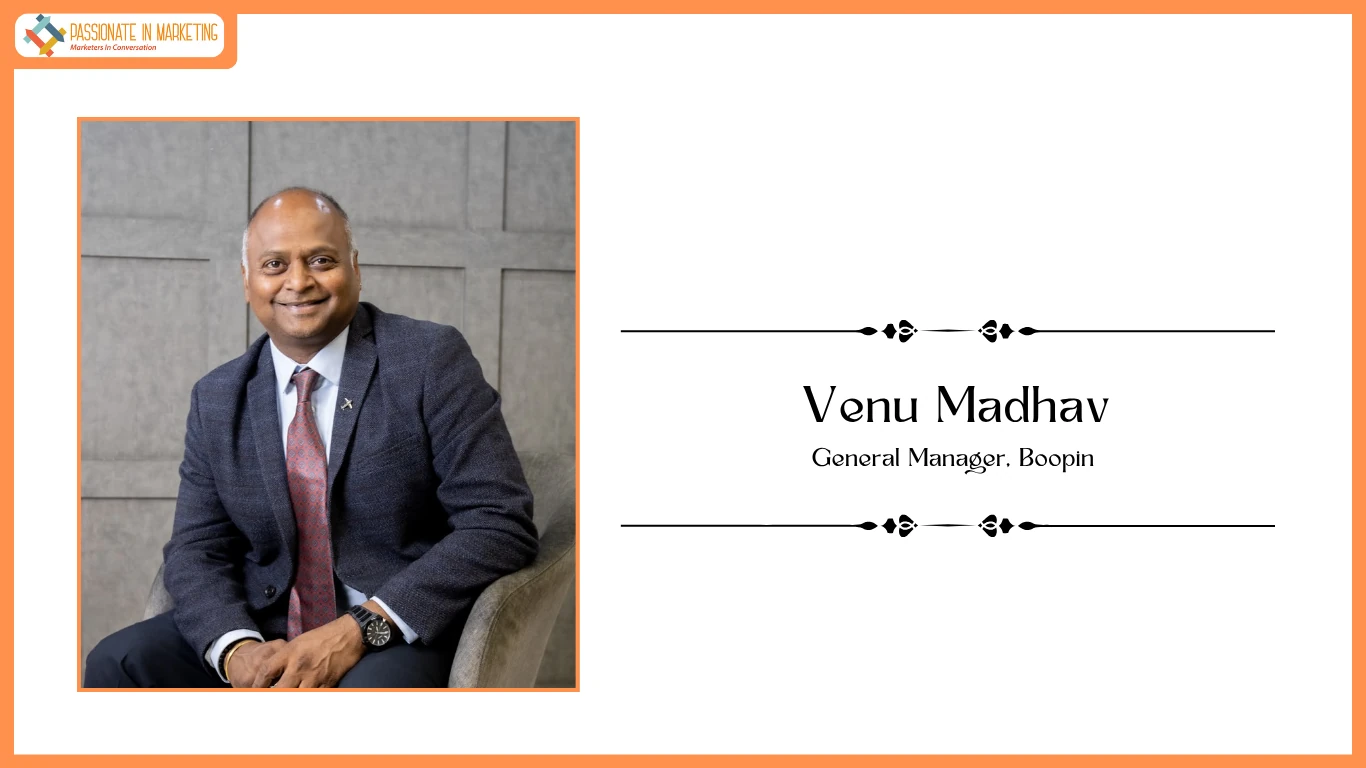
- You’ve worked across marketing strategy, brand management, client leadership, and business growth. What is the biggest shift you’ve seen in how Indian brands think about marketing today?
Indian brands have moved from treating marketing as a cost to treating it as a growth engine. A decade ago, the conversation centred on reach and visibility. Today, CMOs and founders ask what marketing is doing for revenue, retention, and lifetime value. That shift has pulled strategy, brand, and performance into one conversation. Brands no longer separate “brand building” from “performance” because consumers don’t experience them separately. There is also far more confidence in building distinct brand identities rather than copying global templates. The brands winning right now are those that pair long-term brand thinking with the discipline of measurable outcomes, and they expect their agency partners to do both.
- Boopin has been expanding its presence in India, including Bengaluru and Delhi-NCR. What are you seeing in these markets that is changing the way brands approach advertising and consumer engagement?
Bengaluru and Delhi-NCR are two of India’s most demanding markets, and they push brands in different ways. Bengaluru is home to start-ups, tech-first consumers, and a high comfort with new formats, so brands there experiment faster and expect agility. Delhi-NCR brings scale, a strong consumer economy, and a close proximity to decision-makers across sectors. What connects both is a more informed consumer who compares, researches, and expects relevance. Brands can no longer rely on one-way messaging. They are investing in community, content, and conversations that feel useful rather than interruptive. Being present in these markets helps us stay close to how that expectation is evolving and respond to it in real time.
- Boopin operates across markets including India, the UAE, Saudi Arabia, Singapore, and China. What changes when a campaign has to travel across markets where the same consumer insight can produce very different cultural responses?
A universal insight is only a starting point. What changes is everything built on top of it: language, humour, symbols, platforms, and even what a brand is allowed to say. The same idea about family or aspiration can land warmly in India, and with an entirely different tone in China, where the platform ecosystem itself is distinct. The discipline lies in separating what must stay consistent, the brand’s core idea, from what must flex locally, the expression. That requires local teams and real cultural understanding, not just translation. Our presence across these markets helps us localise with intent, so a campaign feels native wherever it appears.
- Brands have access to increasingly granular audience data, yet consumer attention remains difficult to predict. Where do you see marketers misreading data when making media decisions?
The most common error is confusing what is measurable with what is meaningful. Granular data tells us what people clicked, watched, or bought, but not always why. Marketers often over-optimise for short-term signals such as click-through rates or cost per lead and overlook the brand effect that made those conversions possible. Another mistake is treating audience segments as fixed, when attention shifts with context, mood, and moment. Data is a powerful guide, but it describes the past. Good media decisions combine data with an understanding of human behaviour, and they leave room for testing and for questioning the numbers rather than simply following them.
- AI is rapidly changing how agencies create, target and optimise campaigns. What part of advertising do you think technology will transform completely, and what part will remain deeply human?
Technology will transform the mechanics: audience targeting, media optimisation, content versioning, reporting, and much of production. Tasks that are repetitive, data-heavy, or dependent on speed will increasingly be handled by machines, and that is a good thing because it frees teams to think. What will remain deeply human is the original idea, the instinct for culture, and the ability to understand why something moves people. AI can generate options at scale, but it cannot tell you which idea carries meaning for a particular audience at a particular moment. Taste, empathy, and judgement will stay with people, and they will matter more as everything else becomes easier to produce.
- The digital consumer rarely follows a clean path from awareness to purchase. How should marketers rethink attribution when a consumer may see an Instagram Reel, search on Google, watch a review, and purchase weeks later?
Marketers need to stop looking for a single touchpoint to credit. The journey is messy, and last-click attribution rewards the final step while ignoring everything that built the intent. A better approach is to look at the role each channel plays, whether it creates awareness, builds consideration, or closes the sale, and measure it against that role. Combining multiple methods helps: marketing mix modelling for the broad view, incrementality tests for causality, and platform data for tactical decisions. The goal is not perfect attribution, which doesn’t exist, but a reliable enough picture to allocate budgets with confidence and to protect the upper-funnel work that quietly drives results.
- When media buying becomes increasingly automated, and performance can be optimised by algorithms, where does human judgement create the biggest difference in an agency-client relationship?
Algorithms optimise toward the objective they are given, and humans decide whether it is the right objective. That is where judgement matters most. An agency’s value lies in asking the questions the platform won’t: Is this the right audience? Are we chasing cheap conversions at the cost of brand health? Does this align with the client’s larger business goals? Human judgement also shows up in context, such as knowing when a market is shifting, when a creative is wearing out, or when a client needs a different conversation altogether. Automation handles the execution. The partnership depends on the people who interpret, challenge, and guide the direction.
- What is one assumption about digital marketing that you think the industry needs to rethink?
The industry needs to rethink the assumption that digital is automatically accountable and therefore always right. Because dashboards show numbers in real time, there is a belief that everything is being measured accurately. In reality, many metrics reflect platform-reported performance that may overstate impact or miss the bigger picture. This has led some brands to over-invest in the bottom of the funnel while neglecting brand-building. Digital is a powerful tool, but it is not inherently more truthful than any other medium. Marketers should apply the same critical thinking to digital data that they would to any other source and look at outcomes that genuinely matter to the business.
- How does Boopin adapt global marketing thinking to India’s highly fragmented consumer landscape?
India is not one market but many, differing by language, income, region, culture, and digital behaviour. Global frameworks give us a strong foundation, yet they only work when interpreted through local realities. At Boopin, we begin with the consumer rather than the template, understanding how a shopper in a metro behaves differently from one in a tier-two city, and tailoring content, platforms, and messaging accordingly. Regional language, local influencers, and community-led content often do more than a single national campaign. Our experience across multiple international markets helps us bring structure and best practice, while our teams on the ground ensure the thinking stays relevant to India’s diversity.
- If you imagine the digital marketing landscape in 2030, what is one practice that feels essential today but may become irrelevant, and what capability do you think will replace it?
Manual campaign management, including constant bid adjustments, audience building, and basic reporting, feels essential today but is likely to fade as automation handles it far more efficiently. Even the habit of measuring success through last-click metrics may look outdated. What will replace it is strategic orchestration: the ability to design a connected consumer experience across channels, guide AI systems with the right goals and creative inputs, and interpret signals in a world with fewer third-party identifiers. The agencies and marketers who thrive will be those who combine strong first-party data, sharp creative thinking, and the judgement to direct technology rather than simply operate it.

