


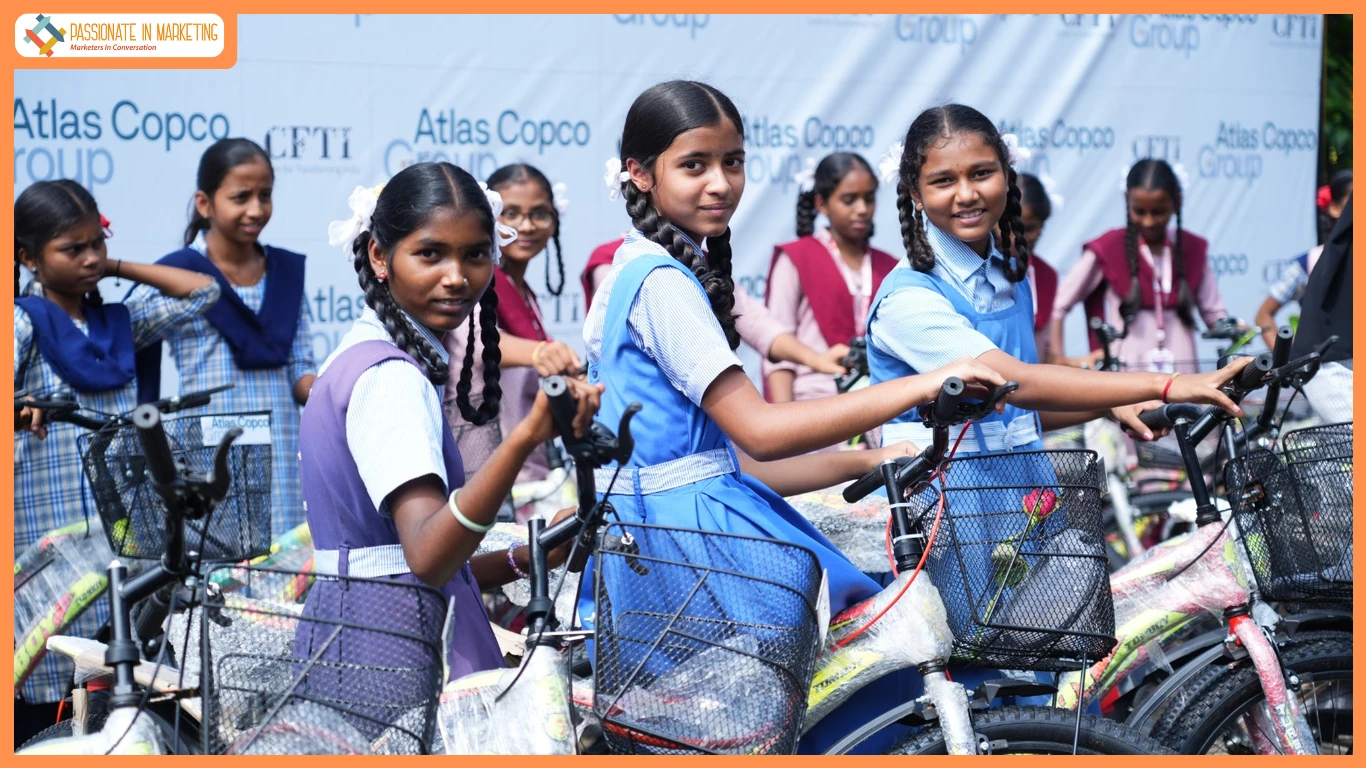
Mumbai, January 23rd, 2026: As India observes National Girl Child Day, the Centre for Transforming India (CFTI) is drawing attention to the role of safe school mobility through its Savitrichya Leki Chalalya Pudhe initiative, which identified underprivileged girl students who travel long distances to school and supported them with a total of 35,000 bicycles pan India. It is supported by self-defense training and local follow-ups that aim to increase the literacy rate and encourage safer commutes. The conversations around girls’ education increasingly point to a reality that goes beyond enrollment figures. For many girls in rural and tribal regions, simply reaching school remains a daily challenge. An estimated 10–15 percent of school-going children in India walk more than three kilometers each day, with the burden falling disproportionately on adolescent girls due to safety concerns, fatigue, and difficult terrain.
India has an estimated 250 million school-going children, many of whom face long and challenging daily commutes to reach school, particularly in tribal, rural & hilly regions where public transport is limited or nonexistent. UDISE+ 2022–23 data shows that over 40 percent of rural students travel more than one kilometer to attend school, while 15–20 percent in remote tribal areas walk over three kilometers, often navigating isolated terrain, forests, rivers, or flood-prone routes. These conditions disproportionately affect adolescent girls and contribute to rising dropout rates in Maharashtra; girls’ dropout has increased from 2.4 percent to 2.9 percent, driven by safety concerns, fatigue, and seasonal migration.
“Girls’ education cannot be strengthened by enrollment alone; it requires us to remove the everyday barriers that quietly push girls out of the system,” said Amit Deshpande, Chief Operating Officer, Centre for Transforming India (CFTI). “Through this initiative, we are addressing the challenge at its root, ensuring that distance, safety, and access no longer determine a girl’s future. When girls can reach school with dignity and confidence, education stops being fragile and starts becoming irreversible.”
As India marks National Girl Child Day, CFTI’s work underscores the need to view education outcomes through a wider lens, one that recognizes infrastructure, safety, and dignity as essential conditions for learning. Ensuring that girls can travel to school without fear remains a critical step toward equitable and uninterrupted education in rural India.

