


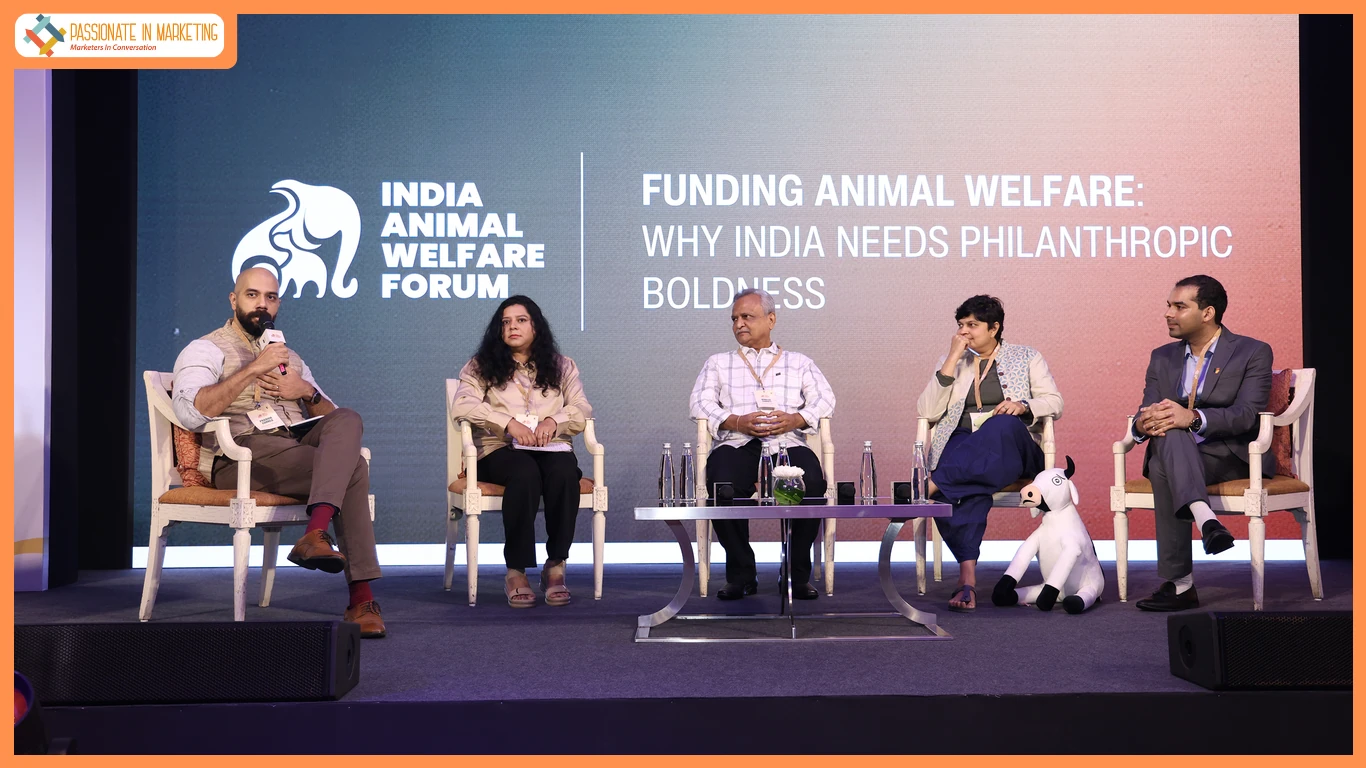
Mumbai, 31 January 2026: With animal welfare accounting for only 1.5% of India’s CSR funding, the India Animal Welfare Forum (IAWF) on Saturday launched the country’s first collaborative Animal Welfare Funding Circle, backed by an initial ₹14 crore from Upadhyaya Foundation, India Animal Fund, Caring Friends, Mela Foundation and Coefficient Giving to address long-standing funding gaps in the sector. The national convening brought together policymakers, philanthropists, NGOs, researchers, legal experts, sector leaders and conservation leaders to deliberate on critical challenges facing animal welfare in India, including chronic underfunding, policy implementation gaps and the need for coordinated, policy-aligned action to position animal welfare as a development priority.
The Funding Circle will function as a collaborative platform to channel philanthropic capital towards scalable, evidence-based animal welfare initiatives, with a focus on long-term impact, accountability and systemic change across regions and species.
Led by the family philanthropy Upadhyaya Foundation, the Forum facilitated cross-sector collaboration and dialogue, positioning animal welfare not as a peripheral charitable cause but as a critical development and policy priority intrinsically linked to public health, climate resilience, livelihoods and urban resilience.
The agenda reflected the breadth and complexity of the sector, with sessions including
- Funding Animal Welfare: Why India Needs Philanthropic Boldness
- Building India’s Animal Welfare Narrative: From Compassion to Development Priority (in partnership with FIAPO)
- From Conflict to Coexistence (with WWF India)
- Policy in Action: The Supreme Court Street Dog Case (with People for Animals Public Policy Foundation)
These discussions examined the intersection of law, on ground research, public safety, and animal welfare, particularly in urban India.
The Forum also marked the launch of a first-of-its-kind Snake Conservation Coalition in the Western Ghats, bringing funders, Researchers, Herpetalogist, Conservation specialists, Venom Experts and NGOs onto a shared platform to advance snake conservation, an often overlooked and underfunded area within the animal welfare and conservation ecosystem.
Additional sessions focused on coalition-led approaches to conservation, the role of collaboration versus independent action in driving impact, the use of technology and AI in animal welfare, and shifting public narratives around farmed animals through advocacy. To enable deeper engagement and potential partnerships, closed-door sessions were organised between NGOs and funders, allowing selected organisations working across community animal welfare, policy and advocacy, wildlife conservation, and habitat protection to present their work and engage in focused discussions.
Speaking about the Forum, Brinda Upadhyaya, Co-founder, Upadhyaya Foundation, said, “The Indian animal welfare forum was an attempt to highlight animal welfare as a key issue in philanthropy and community service. Animals play a vital role in human life and their conservation and well-being is important for public health and environmental sustenance.
Despite this, their needs and rights have been ignored and their suffering, largely unaddressed. At this forum, we tried to provide a coordinated ecosystem to ensure the wellbeing of animals across all spectrums, we aimed at bridging gaps in strategic funding by encouraging philanthropic support for groups working hard towards the cause.”
By convening stakeholders who rarely intersect and amplifying underrepresented voices, the India Animal Welfare Forum sought to shift animal welfare from the margins of philanthropy to the mainstream, encouraging informed, intentional, and sustained investment across funding, policy engagement, and public discourse.
“A forum like this is vital because it brings together diverse voices working toward a shared goal: improving the lives of animals,” said Sethu Vaidyanathan, a seasoned entrepreneur with leadership experience across more than 20 companies and an animal welfare advocate. “It creates space to share knowledge, align strategies, and build partnerships that can lead to more effective, coordinated action. By learning from one another, the sector can adapt, innovate, and have a greater collective impact.”
The Forum concluded with a shared recognition that long-term capital, coordinated action, and policy-aligned approaches are essential to addressing India’s growing animal welfare challenges in an increasingly urbanised and climate-sensitive landscape.

