


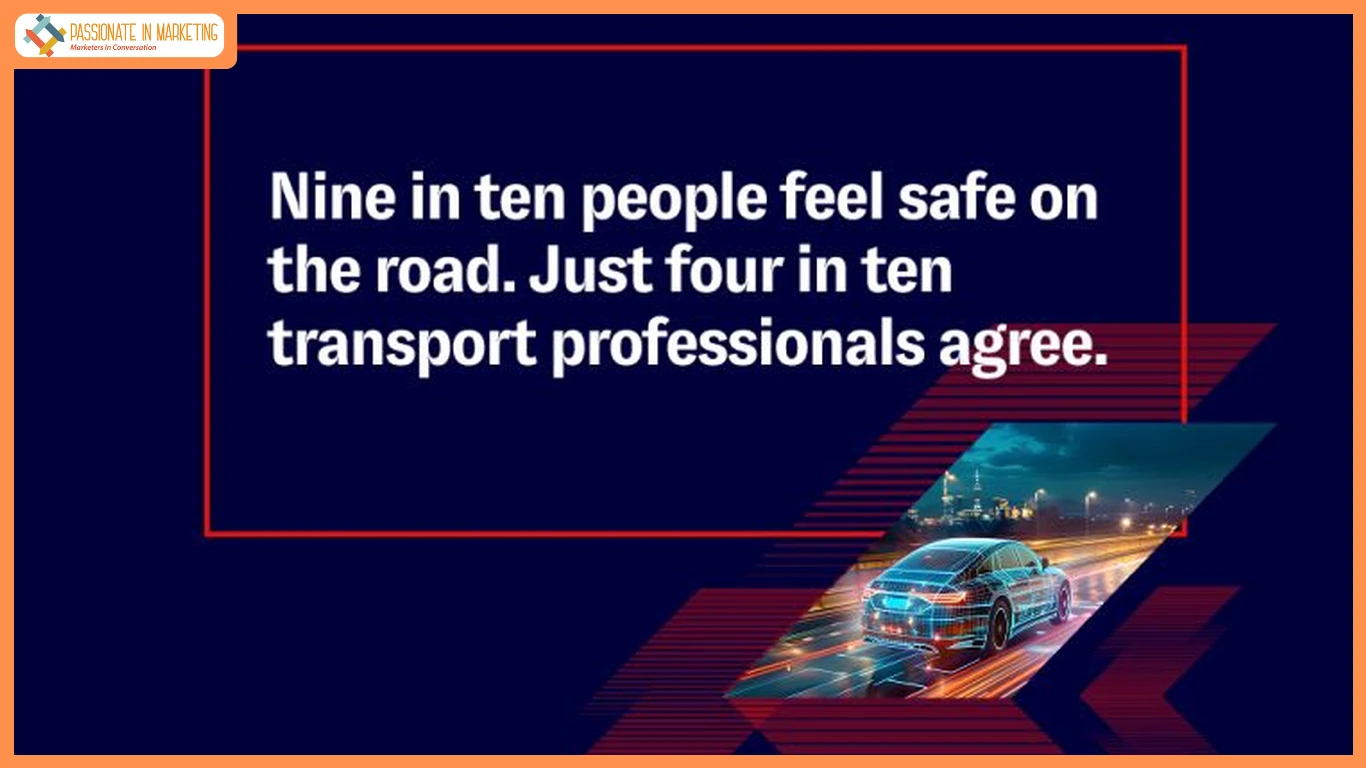
Chennai — Nine in ten people say they feel safe in their day-to-day road travel. Less than half (45%) of the transport professionals who design, build and operate mobility systems agree. New research from Economist Enterprise, supported by Brembo, reveals a striking “trust gap” between public confidence and expert assessment—which is widest in the markets with the poorest road safety records.
The study, Safety in motion: Driving trust in modern mobility, surveyed road users and transport professionals across ten major vehicle-producing markets—Brazil, China, France, Germany, India, Italy, Japan, South Korea, the UK and the US—together accounting for around 75% of global vehicle production.
With 1.2 million people killed on the world’s roads every year, the study argues that misplaced confidence is an overlooked barrier to progress, calling on industry and policymakers to close the gap by grounding public trust in evidence, transparency and measurable outcomes.
“The research makes clear that road users are far more confident in the safety of their daily travel than mobility experts. This is a serious concern,” said Jean Todt, UN secretary-general’s special envoy for road safety. “Trust is essential for mobility, but overconfidence can cause people to take unnecessary risks.”
Users feel safest where roads are most dangerous
The gap between user and industry confidence is greatest in Brazil, China and India, where 94% of users say they feel safe—the highest among the markets surveyed—compared with just 18% of transport professionals. Yet these markets combined record an average road fatality rate of 16.2 deaths per 100,000 people, around double the study average.
“In Brazil, China and India, public confidence has grown alongside rapid, visible modernisation—new infrastructure, smarter vehicles, better technology,” said Pratima Singh, principal of policy and insights at Economist Enterprise, who led the research. “But confidence has outpaced actual safety performance. When people believe systems are safer than they are, they often do not exercise the necessary attention to keep them safe on the road.”
Safety is felt unevenly
Trust in mobility safety is not felt equally across demographics. Low-income users are nearly twice as likely as middle- and high-income users to report low or mixed confidence in their daily travel safety. Generationally, Millennials are the most confident (94% report high trust), while Gen Z and Baby Boomers are the least trusting—12% and 16% respectively express low or mixed confidence in their day-to-day safety.
The new frontier of safety risk: human-system interaction
As vehicles become more advanced, the way people interact with increasingly automated mobility systems emerges as a key safety concern. Today, only 3% of industry professionals identify mechanical failure as a leading cause of incidents.
Instead, 30% cite misuse or misunderstanding of driver-assistance systems as the greatest cause of mobility safety issues, while 24% point to features that distract users from the road as being the most serious safety risk. Users themselves rank their own behaviour on the road as their biggest concern.
Professionals suggest that the way driver-assistance technologies are marketed may be part of the problem: 65% believe advertising may overstate system capabilities; 62% say it implies users need to pay less attention; and 60% believe it emphasises benefits while downplaying limitations.
The public wants stronger safety measures
Despite high confidence, 88% of users support stronger road safety measures—including lower speed limits and greater enforcement—and say they would pay more for safer transport systems. Yet 68% of transport professionals identify poor coordination between regulators and industry as the biggest barrier to improving safety.
“Closing the trust gap requires collective action across the mobility ecosystem,” said Matteo Tiraboschi, executive chairman of Brembo. “Industry must continue to innovate responsibly, policymakers must create effective regulatory frameworks and together they must help people understand both the capabilities and the limitations of new technologies.”
Trust in road safety is built—and breaks down—differently across markets
Trust is shaped less by technology than by local culture, institutions and governance norms—making locally tailored responses essential. The study identifies four distinct trust environments, each demanding a unique response:
- Trust optimists (Brazil, China, India): a 76-point confidence gap—94% of users, 18% of professionals—reflects optimism outpacing outcomes in the study’s highest-fatality markets.
- Trust guardians (Japan, South Korea): the narrowest gap (84% vs 70%), built on independent validation and reliability. The risk: institutional trust is fragile when performance quietly erodes.
- Trust pragmatists (France, Germany, Italy): the lowest fatality rates, yet a 39-point gap between industry and consumer confidence. High public trust coexists with scepticism towards technologies that feel opaque or overstated.
- Trust negotiators (the UK, the US): high user confidence (92%) tethered to institutions. The risk: a regulatory failure or corporate cover-up carries outsized consequences.
“Today, people are not safe on the road. To address this silent pandemic, we need responsible innovation, effective regulation and serious investment. Trust on the road should not be a given; it must be earned. Research and discussion on road safety is important, but only action will save lives,” added Mr Todt.
Explore the research: https://insights.economistenterprise.com/technology-innovation/safety-in-motion
About the research
Safety in motion: Driving trust in modern mobility is an Economist Enterprise report supported by Brembo. It draws on a proprietary survey of 6,157 respondents across Brazil, China, France, Germany, India, Italy, Japan, South Korea, the UK and the US, conducted in April-May 2026. It comprised 5,135 members of the travelling public and 1,022 industry professionals across manufacturing, technology, infrastructure and transport policy. Findings are supplemented by a structured literature review and an expert advisory board.
About Economist Enterprise
Economist Enterprise is the arm of The Economist Group that provides services to businesses, government agencies and financial institutions. Its work is grounded in The Economist Group’s values of independence, integrity and progress. Economist Enterprise gives organisations the tools to make better decisions, take confident action and demonstrate leadership on a global stage. Find out more about Economist Enterprise: www.economistenterprise.com
About Brembo
Brembo is a global mobility innovation leader developing advanced solutions for vehicles and racing applications. Driven by its purpose, “Shaping a Zero-Accident Future”, Brembo combines industrial excellence and digital innovation to make safety, performance and sustainability integral to the driving experience. Through its brands—AP Racing, ByBre, Brembo, J.Juan, Marchesini, Öhlins and SBS Friction—the Group delivers an integrated ecosystem of technologies, including braking systems, dampers, clutches and wheels, as well as AI-enabled software solutions. For more than 50 years, the Brembo Group has been a key player in top-level motorsport, supplying teams competing in the most prestigious championships and contributing to over 1,000 titles won. Founded in 1961 and headquartered in Bergamo, Italy, Brembo has been listed on the Milan Stock Exchange since 1995. The Group employs 16,000 people across 18 countries, with 39 production and commercial sites, 10 R&D centers and 2 Brembo Inspiration Labs. In 2025, revenues totalled € 3.7 billion. www.brembogroup.com
Economist Enterprise: [email protected]
Brembo: [email protected]
Brembo’s PR agency: [email protected]
FAQs
About the research
Q: Who conducted this research and how was it funded?
The study was conducted by Economist Enterprise, the B2B arm of The Economist Group. It was supported by Brembo, a global mobility technology company. Economist Enterprise maintained full editorial independence over the research design, methodology and findings.
Q: What is the methodology?
The proprietary survey was conducted between April and May 2026, drawing on 6,157 respondents across ten markets. The sample comprised 5,135 members of the travelling public and 1,022 transport industry professionals spanning manufacturing, technology, infrastructure and transport policy. Quantitative findings are supplemented by a structured literature review and an expert advisory board.
Q: Why these ten markets?
Together, the ten markets account for approximately 75% of global vehicle production—but they were chosen for diversity as much as scale. They span the full range of mobility markets with differing governance models: highly car-dependent systems (the US), transit-integrated European markets (France, Germany, Italy, the UK), hyper-dense megacity environments (China, India) and mobility markets with differing development trajectories (Brazil, Japan, South Korea). They also vary significantly in road safety outcomes, regulatory maturity and public trust levels—making cross-market comparison genuinely instructive rather than merely illustrative.
Q: How does the study define ‘transport/industry professionals’?
The survey included 1,022 industry professionals with direct roles in the mobility sector, spanning vehicle manufacturing, technology, infrastructure and transport policy. Respondents include engineers, policymakers and operators, manufacturers, technology companies, ride-hailing operators, and public bodies.
Q: How does the study define ‘mobility safety’?
Mobility safety refers to the systems, technologies and rules that determine how safe people are when travelling across all modes of road transport, including private vehicles and driver-assistance/automation systems to public transport, motorcycles, e-bikes and ride-hailing services. This reflects how users and industry professionals experience mobility safety day to day rather than any through single vehicle type.
The trust gap
Q: What is the “trust gap”?
The trust gap is the difference between the share of road users who report “high trust” in their day-to-day travel and the share of transport professionals—those who design, build and operate mobility systems—who feel the same. Across the ten surveyed markets, 90% of users say they feel safe in day-to-day transport; only 45% of transport professionals agree. The gap is widest in the markets with the poorest road safety records.
Q: Why does the trust gap matter—isn’t it good that people feel safe?
The research contends that overconfidence can be a safety risk in itself. When people believe road systems are safer than they actually are, they are more likely to take unnecessary risks, relax into systems that require vigilance and are less likely to demand improvements. It also reduces political and commercial pressure to keep raising safety standards.
Q: Why is the gap largest in Brazil, China and India?
In these markets, rapid modernisation—new infrastructure, smarter vehicles, advanced technology—has driven strong visible progress that users perceive as evidence of improved safety. But confidence has outpaced actual outcomes. Combined, these three markets record an average road fatality rate of 16.2 deaths per 100,000 people, roughly double the study average, while 94% of users report feeling safe—the highest figure across the ten markets surveyed.
Key findings
Q: What does the research say about driver-assistance technology?
Industry professionals are increasingly concerned about how automated and driver-assistance systems are used and understood. Only 3% identify mechanical failure as the leading cause of mobility safety issues today. By contrast, 30% cite misuse or misunderstanding of driver-assistance systems, and 24% point to in-vehicle features that distract users from the road. The majority of professionals also believe current advertising overstates system capabilities (65%), implies users need to pay less attention (62%) and emphasises benefits while downplaying limitations (60%).
Q: Does the public want more road safety intervention?
Yes. Despite high overall confidence, 88% of road users say they support stronger safety measures—including lower speed limits and wider use of speed cameras—and would pay more for safer transport. This suggests there is genuine public appetite for action that policymakers and industry have yet to fully act on.
Q: What is the biggest barrier to improving road safety, according to professionals?
Sixty-eight percent of transport professionals identify poor coordination between regulators and industry as the primary breakdown in current governance—pointing to a structural problem in the ecosystem rather than a lack of technology or public will.
Q: What are the four trust archetypes, and what do they mean for the future of safe, scalable mobility?
The research identifies four distinct trust environments, defined by the relationship between public confidence, expert assessment and road safety outcomes. They are analytical tools, not rankings—each describes a different starting point for building safer systems, and each demands a different response.
- Trust optimists (Brazil, China, India) present the most urgent challenge. Public confidence is the highest in the study (94%), but so is the fatality rate—an average of 16.2 deaths per 100,000 people, roughly double the study average. When confidence so dramatically outpaces outcomes, it suppresses demand for improvement and reduces pressure on both industry and policymakers to act. New technologies risk being adopted enthusiastically but without the regulatory guardrails or public understanding needed to deploy them safely at scale.
- Trust guardians (Japan, South Korea) have the narrowest confidence gap in the study (84% of users, 70% of professionals)—a product of strong institutions, independent validation and consistent delivery. This is the environment most conducive to the careful, evidence-based rollout of advanced mobility systems. The risk is complacency: institutional trust is fragile, and a pattern of quietly eroding performance can go undetected until it breaks.
- Trust pragmatists (France, Germany, Italy) record the lowest fatality rates in the study, yet a 39-point gap persists between industry and consumer confidence. Users here are not disengaged—they are sceptical, particularly of technologies that feel opaque or whose benefits appear overstated. Uptake of new mobility systems will depend on transparency and demonstrated performance, not marketing claims.
- Trust negotiators (the UK, the US) show high public confidence (92%) anchored in institutional trust rather than direct experience of system performance. This makes the adoption of new technologies relatively straightforward—but it also means that a single high-profile regulatory failure or corporate misstep can rapidly erode the foundation. Governance credibility is the variable that matters most here.
The archetypes matter because there is no universal path to building and maintaining trust in mobility safety. A deployment strategy that works in Japan may backfire in Brazil; a communications approach suited to Germany may be irrelevant in India. Policymakers and industry need to diagnose the trust environment they are operating in before deciding how to intervene.

