


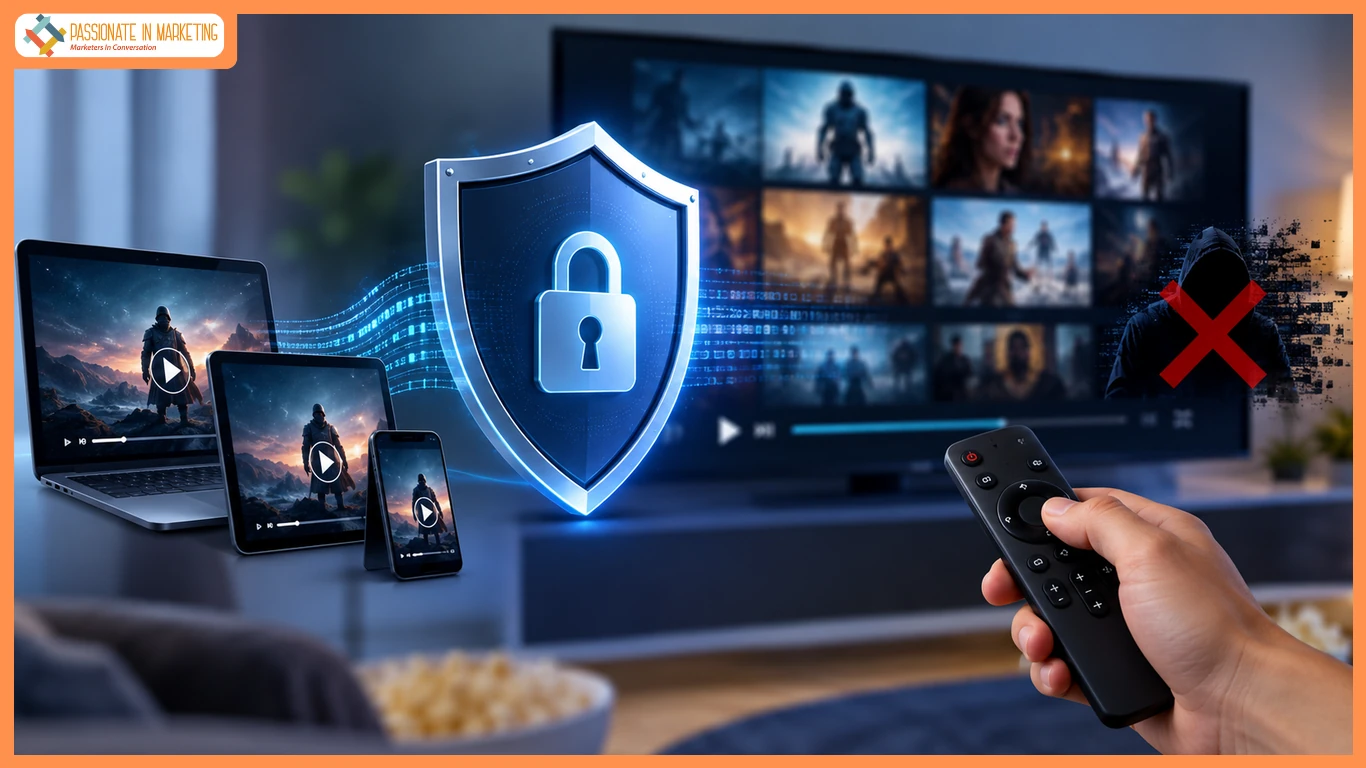
Streaming platforms have transformed how audiences watch movies, sports, television shows, and other premium video content. However, convenient digital access also creates opportunities for unauthorized copying, redistribution, and piracy. Google Widevine helps content providers address these risks by encrypting video, controlling access through licenses, and using device security mechanisms to protect playback. By combining content encryption, secure license management, and device-level protection, it creates a controlled environment for delivering premium video across supported platforms.
What is Google Widevine?
Google Widevine is a digital rights management technology designed to protect digital content during streaming and playback. It enables content providers to encrypt video and control how authorized devices access the decryption information required for playback.
Rather than sending an unprotected video file directly to a viewer, a streaming service encrypts its content before distribution. When an authorized viewer presses play, the compatible device requests a DRM license. The license provides the information required to decrypt the protected content while applying rules established by the content provider.
This approach helps streaming services maintain control over premium content throughout the delivery process. Widevine supports environments including Android devices, Chrome and Firefox browsers, Android TV, and other compatible streaming platforms.
How Does Widevine Protect Streaming Content?
The protection process involves several connected stages. Each stage contributes to preventing unauthorized access while allowing legitimate viewers to enjoy smooth playback.
1. Content Is Prepared and Encrypted
Before a video reaches the viewer, it is encoded into different quality levels for adaptive streaming. The content is then encrypted using the Common Encryption scheme, commonly known as CENC.
Encryption transforms the original video into protected data that cannot be meaningfully viewed without the appropriate decryption key. This means that even if someone obtains encrypted segments from the delivery infrastructure, the protected content cannot simply be played as an ordinary video file.
2. The Encrypted Content Is Delivered
Once encrypted, video segments can be distributed through an existing CDN. This is important for large streaming services because DRM protection does not require them to abandon their established content delivery infrastructure.
Widevine supports streaming technologies and formats such as MPEG-DASH, HLS, and CMAF, along with commonly used video codecs and media containers. This flexibility helps content providers deliver protected video across different viewing environments.
3. The Viewer Requests a License
When an authorized viewer selects protected content, the playback device sends a license request.
The license workflow can include user authentication and authorization before the required DRM license is issued. This creates an additional control point between the viewer and the protected content.
A license can also contain usage rules, such as playback duration, rental duration, renewal requirements, and offline playback conditions. These controls allow providers to define how and for how long protected content can be accessed.
4. The Widevine CDM Handles Decryption
The Content Decryption Module, or CDM, is responsible for securely processing protected media on the client device.
After receiving an approved license, the CDM uses the authorized information to decrypt content for playback. On devices with stronger hardware security, sensitive operations can take place within a Trusted Execution Environment.
This architecture helps keep valuable decryption processes away from ordinary application-level access, making it more difficult for attackers to extract or manipulate protected content.
Understanding Widevine Security Levels
One of the most important characteristics of Widevine is its three security levels: L1, L2, and L3.
Widevine L1
L1 provides the strongest level of protection. Decryption and content handling are performed within a Trusted Execution Environment. Because the protection relies on hardware-backed security, L1 is particularly important for premium HD and UHD streaming.
Widevine L2
With L2, cryptographic operations take place within the trusted environment, while some video processing may occur outside it. It provides hardware-backed protection, although the security architecture differs from L1.
Widevine L3
L3 is software-based and does not use a Trusted Execution Environment for content processing. Because protected operations occur in software, it provides a lower level of security than L1 and L2.
The security level available depends on the device and its certification. Streaming services can therefore use device security information when determining the quality or type of content that can be delivered.
Why Is Widevine Important for OTT Platforms?
For OTT providers, protecting content is about more than stopping individual downloads. Unauthorized redistribution can affect licensing agreements, subscription revenue, brand reputation, and relationships with content owners.
A DRM system provides a technical layer that helps ensure premium video is accessible only through authorized playback environments. Widevine’s broad compatibility also makes it useful for services supporting Android devices, browsers, smart TVs, and other compatible platforms.
However, DRM is only one part of a complete content security strategy. Streaming providers may also require watermarking, anti-piracy monitoring, secure application protection, and additional safeguards around license delivery.
How Multi-DRM Strengthens Streaming Protection
A major challenge for streaming services is platform diversity. Different ecosystems rely on different DRM technologies. Widevine is important for Android and Chrome-based environments, while FairPlay and PlayReady serve other major device and platform ecosystems.
Multi-DRM brings these technologies together through a coordinated workflow. Content can be encrypted and distributed while the appropriate DRM license is provided according to the viewer’s device and platform.
This reduces the complexity of maintaining separate protection systems for every environment while helping services provide secure access across a broader audience.
Conclusion
Protecting premium video requires security throughout the streaming journey, from encryption and license management to controlled playback on trusted devices. Google Widevine provides an important foundation by combining encrypted content, controlled licensing, device security, and flexible playback support. When integrated with Multi-DRM and complementary protections such as watermarking and anti-piracy monitoring, it can help streaming providers build a stronger defense against unauthorized access and content redistribution.
For modern OTT platforms, secure content delivery requires reliable technology and effective protection. Doverunner helps streaming and content businesses strengthen digital media protection with cloud-based Multi-DRM and supporting security services. Its offerings include DRM client SDK, content packaging, license services, DRM license cipher, forensic watermarking, distributor watermarking, and anti-piracy solutions. By integrating Widevine, PlayReady, and FairPlay, DoveRunner supports secure content delivery across diverse devices, platforms, and viewing environments, with flexible licensing workflows and stronger control over premium content.
**The opinions expressed in the article are solely the author’s and don’t reflect the opinions or beliefs of the portal**

