


Introduction
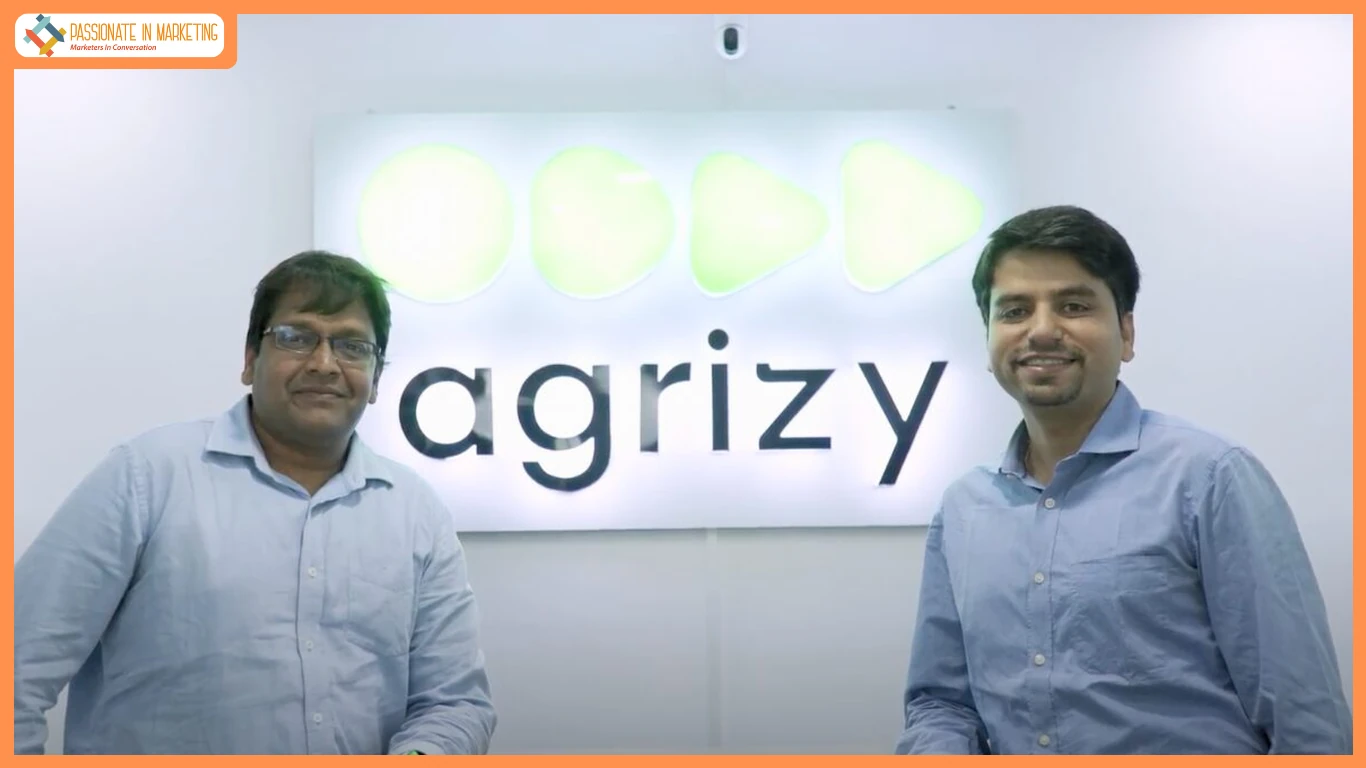
Agrizy started in 2021 with a simple observation. Thousands of small and mid-sized food & beverages and wellness processing units across India had capacity, skill, and raw material access, but no reliable way to connect with global buyers who needed consistent quality and volume. Five years on, the Bengaluru-based company has grown into what it calls a Contract Research, Development and Manufacturing Organisation, or CRDMO, serving more than 200 food, beverage, and wellness brands across more than 25 countries. We sat down with co-founder Saket Chirania to talk about how Agrizy built its brand from scratch, why the CRDMO model matters, and how demand for Indian ingredients differs from Europe to Asia to the Middle East.
Question 1: What is driving international demand for Indian ingredients and product formulations, and how is Agrizy addressing that opportunity?
Answer:
International brands are looking for cleaner labels, functional nutrition and differentiated products across food, beverage and wellness. India’s ingredient diversity and processing capabilities give it a strong foundation to serve that demand. The opportunity is to combine these strengths with our AI-enabled technology and in-house R&D capabilities to deliver consistent, high-quality products tailored to the specific requirements of each market.
The gap has not only been raw material but also the ability to turn that material into consistent, documented, export-ready products. That is where Agrizy comes in. As a technology-led CRDMO, we work as the backend for food, beverage and wellness brands, covering research and formulation, ingredient sourcing, manufacturing and cross-border fulfilment. We have built our own GenAI-powered formulation platform, which shortens new product development cycles by up to 40 percent, and our phytochemistry laboratory helps turn traditional botanicals into standardised ingredients that meet the expectations of regulated markets with a vision to pioneer the shift towards natural ingredients, optimise processes, and enhance overall bioavailability. Over the past year, we processed more than 18,500 metric tonnes of fruits and vegetables into value-added products, which also helps reduce post-harvest losses. Behind all of this are the small and mid-sized processors and farmers we work with. Giving them steady demand from global brands is how we help India capture more of this opportunity.
Question 2: How has Agrizy approached building trust and visibility with global brands looking for ingredient and formulation partners in India?
Answer: Our buyers are procurement heads, product development teams, and founders at food, beverage and wellness companies. Our approach has been built around three things. First, credibility content, meaning case studies, data on the volumes we have processed, and clear communication about our technology enabled quality systems and traceability. Second, presence at the right industry platforms and ingredient sourcing events where buyers already come looking for partners. Third, and most important, word of mouth from existing brand partners. In a trust-driven business like ours, a satisfied client talking to another client does more than any campaign we could run. We also invest in explaining our story, the farmer-to-factory-to-global-shelf journey, because buyers today care about where their ingredients come from and how sustainably they are produced.
Question 3: Agrizy now exports to more than 25 countries. What does the export and international side of the business actually look like on the ground, and how big is this opportunity?
Answer: Exporting from India involves far more than shipping a container. Every destination market has its own regulatory framework, documentation requirements, and quality expectations. Our role is to absorb that complexity for the brand, managing compliance paperwork, food safety certification, and logistics so that a buyer in North America or Europe receives a product that already meets local standards. The scale of the opportunity is significant. According to the Ministry of Commerce and Industry, India’s agricultural and allied exports were close to 52.55 billion US dollars in FY26, and APEDA data puts processed food exports at about 8,034.64 million US dollars in 2025-26. That is the pool of trade we sit inside, and our job is to help Indian processors capture more of it by meeting global buyers’ specification, compliance, and consistency requirements. Our proprietary GenAI-powered Formulation Studio significantly enhances this process by covering the entire product development lifecycle. The platform incorporates a comprehensive set of parameters including regulatory requirements, formulation science, ingredient-level compatibility, compliance, manufacturing feasibility, and more to enable faster, more accurate, and market-ready product development.
Question 4: Demand for ingredients and formulations clearly varies by region. What are you seeing in markets like Europe, the US, the Middle East, and Southeast Asia?
Answer: Each region has a distinct appetite across ingredients and formulations, and the research data backs up what we see in our own order book. In Europe, there is strong demand for clean-label and scientifically validated botanical ingredients. Fortune Business Insights values the global botanical extracts market at about 7.54 billion US dollars in 2026, and Europe alone holds close to a third of that, around 32.8 percent of global revenue, which is the largest regional share of any market. This is driven by regulations that require documented proof of quality and origin, exactly the standardisation our phytochemistry lab is built for. In the Middle East, our spice and dehydrated ingredient shipments track closely with government trade data. The Spices Board of India reported that small cardamom exports have more than doubled in value over five years, rising from about 184.6 million US dollars in FY22 to about 413.2 million US dollars in FY26, largely on the back of steady Gulf demand for traditional coffee and tea preparations. We also see opportunities for convenience food and beverage and wellness formulations tailored to this market. In Asia, including India itself, wellness and nutraceutical demand is the fastest-growing story. Grand View Research puts the global nutraceuticals market at about 683.8 billion US dollars in 2026, with Asia Pacific holding the single largest regional share at close to 39 percent. The US continues to be a strong market for dehydrated fruits & vegetables, and spices used in snacking and functional foods including healthy snacks & savories, a category Fortune Business Insights sizes at about 7.49 billion US dollars globally in 2026. Understanding these regional differences is central to how we plan our new product development, ingredient sourcing and processing capacity.
Question 5: You recently opened a Phytochemistry Research and Development Laboratory focused on botanical ingredients. Why invest in this now, and how does it fit into the export and CRDMO story?
Answer: The global nutraceutical opportunity is very large, and India has a natural advantage because of its deep base of traditional botanical knowledge and raw material access. What has been missing is standardisation, meaning ingredients that are scientifically validated, consistent from batch to batch, and compliant with international regulatory standards. Our new laboratory is built to close that gap. It lets us take traditional botanicals and turn them into ingredients that meet the documentation and quality expectations of buyers in Europe, North America, and other regulated markets. Given that the global botanical extracts market is valued at roughly 7.5 billion US dollars in 2026 and is growing at a double-digit rate according to multiple research firms, this is not a small side bet; it is core to where global demand is heading. It is often the lack of standardisation, not the lack of raw material, that keeps Indian botanical ingredients out of premium global markets, and that is precisely what we are addressing. The lab is pioneering the shift towards using natural ingredients, process optimisation and increasing bioavailability of these ingredients.
Question 6: Looking ahead, what does growth look like for Agrizy over the next few years, both in India and internationally?
Answer: Our focus is on going deeper into the categories we already serve while expanding the range of ingredients and finished products we can offer global brands. We want to keep strengthening our research and development capability along with enhancing AI capabilities built in-house, because that is what lets us move up the value chain rather than simply competing on price. On the international side, we want to deepen our presence in existing markets like Europe, the US, the Middle East, Southeast Asia and South Western Europe, while building compliance and quality capabilities that open up new markets. With India’s agricultural exports at about 52.55 billion US dollars in FY26 and global categories like nutraceuticals and botanical extracts both growing at strong double-digit rates, the runway is considerable. We also see contract manufacturing and advisory services as a natural extension of the CRDMO model, helping brands not just source ingredients but build and scale entire product lines with us as their backend partner. The bigger vision is to make Agrizy the default backend infrastructure that any food, beverage or wellness brand in the world can plug into when they want India-built quality and India-sourced ingredients, without having to build that capability themselves.

