


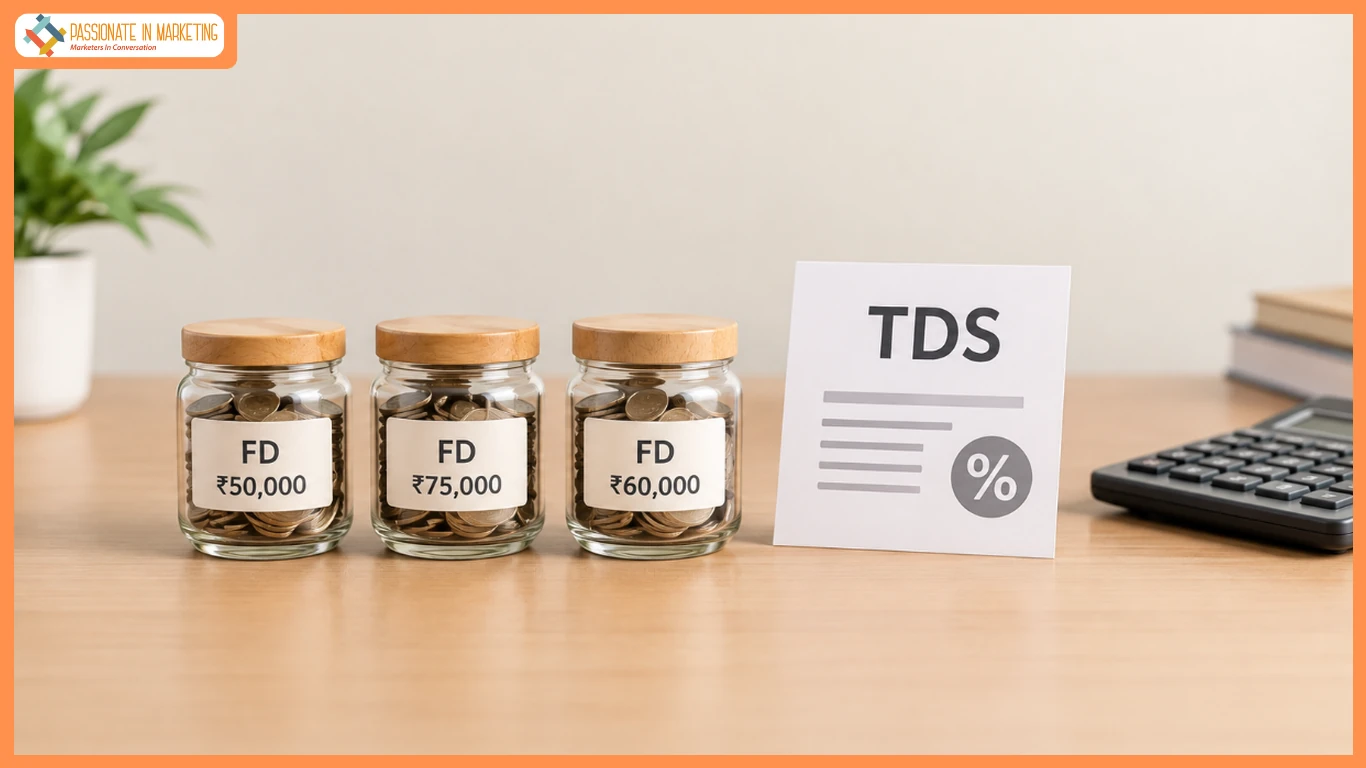
Opening multiple FDs is not the way to stay under the tax radar. The size of any single deposit does not trigger the deduction. It is triggered by the total interest your bank credits to you in a financial year, so several modest deposits can cross the line together while none of them crosses it alone. This guide explains what banks add up, how the multiple FDs TDS threshold applies across branches and across banks, and how to avoid an unexpected deduction.
What Is TDS on Fixed Deposit Interest?
Tax Deducted at Source (TDS) is the tax a bank deducts from eligible interest income earned on a and deposits with the government on behalf of the account holder. Giving the bank your PAN keeps the deduction at the standard 10%; without it, the bank deducts at a higher rate than what is specified, the rate in force, or 20%, which in practice means 20%. The tax applies to the interest earned, not the principal amount invested in the FD.
How TDS Is Calculated on Multiple FDs
The question of how banks calculate TDS on FDs matters most once you hold two or more deposits. The bank totals every rupee of deposit interest it credits to you during the year and tests that total against your threshold.
Example: Multiple FDs Crossing the TDS Threshold
Suppose a resident individual below 60 years holds three FDs with the same bank.
| FD | Annual interest | TDS position |
| FD 1 | ₹18,000 | Below the ₹50,000 threshold on its own |
| FD 2 | ₹16,000 | Running total ₹34,000, still below |
| FD 3 | ₹17,000 | Running total ₹51,000, limit crossed |
| Total | ₹51,000 | TDS due on the full ₹51,000 |
Although each deposit generates less than ₹50,000 in interest, the combined interest is ₹51,000. The bank deducts 10% on the entire ₹51,000, which comes to ₹5,100. It does not deduct only on the ₹1,000 sitting above the limit. This shows why the multiple FDs TDS threshold should be checked based on the combined interest from all relevant deposits.
An can help estimate the interest from each deposit, but you should also total the expected interest from all relevant FDs with the same bank.
Can You Avoid TDS on FD Interest?
Yes, TDS on FD interest can be avoided when the applicable conditions are met and the required declaration is submitted to the bank. The central condition is that the tax payable on your total income for the year works out to nil. Using Form 15G 15H submission is one-way eligible individuals canrequest non-deduction of TDS on interest income. Which form you use depends on the tax year.
Conclusion
The TDS treatment of multiple fixed deposits depends on the total interest earned with the same bank. Track the interest from each FD during the financial year and review the applicable threshold to determine whether TDS may apply.
**The opinions expressed in the article are solely the author’s and don’t reflect the opinions or beliefs of the portal**

