

BENGALURU / CHENNAI, INDIA (JUNE 25, 2026) — Today Figma announced new product updates that reimagine its multiplayer canvas as a place for full-stack digital creation. New materials like code, motion, shaders, and Figma Weave workflows help teams push ideas further with more precision and control, while more powerful agents help them explore creative possibilities, automate tedious tasks, and build custom tools—all in one place.
The updates were unveiled at Config, Figma’s annual conference, before an audience of more than 10,000 product builders in San Francisco with many more tuning in virtually around the world.
“Too often, the tools we have for building force us into false choices between design and code, humans and agents, prompting and direct manipulation. This ends up constraining creativity instead of pushing it further,” said Dylan Field, Figma’s Co-founder and CEO. “We’re reimagining Figma’s canvas as a place where teams can reach for all the tools and materials they need to explore without limits and express their vision exactly as they imagine it.”
Figma’s Config product announcements come at a time when AI is blurring the lines between software and creative work. More people than ever are creating digital products. While this creates new opportunities, it also introduces new challenges as work is increasingly distributed across people, tools, and agents. At the same time, as digital creation becomes easier, it’s never been harder to stand out.
As AI transforms how teams build and create, they need a place for this work to come together: Figma’s intelligent canvas for full-stack creation, with new materials to fully express their ideas, and new tools for teams and agents to collaborate.
New creative materials to express ideas
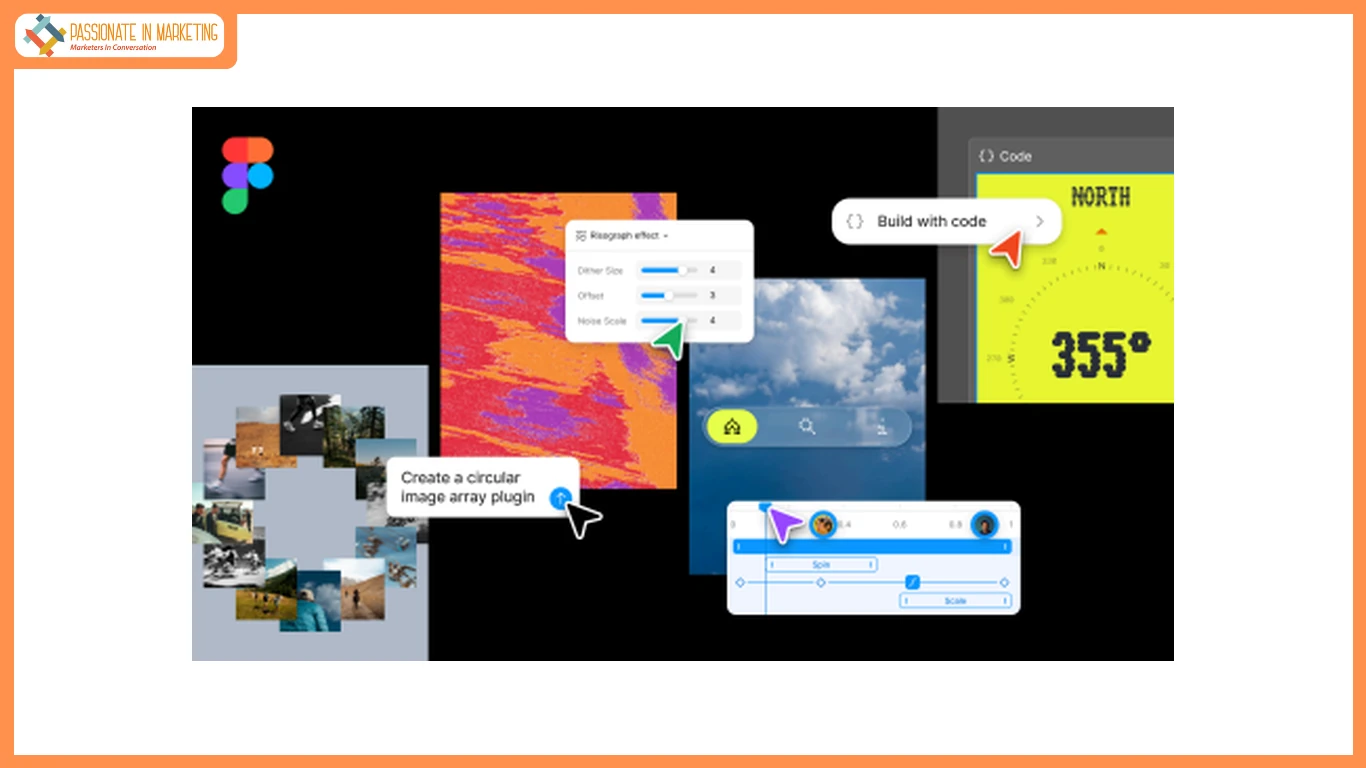
- Code layers: Work directly with code on the Figma Design canvas. Clone repositories, generate new directions with Figma’s agent, extract flows into editable design layers, and sync changes back to code.
- Motion: Design animations, transitions, and 3D transforms collaboratively, directly from Figma. Prompt to create animations with AI, apply preset styles, or adjust manually on a timeline. Motion is connected to design systems, code-backed, and ready to ship.
- Shaders: Prompt to build shader effects and fills, custom visual treatments powered by WebGPU. Effects that weren’t available in Figma before, like dither, pixelate, and various blur types, can now be created directly on the canvas.
- Figma Weave workflows: Generate consistent and high-quality visuals in Figma with 20+ integrated Weave tools, turning complex AI workflows into simple tools on the canvas. This is the first step towards a full integration between Figma and Figma Weave, expected later this year.
New intelligent tools for teams and agents to collaborate
- Agent skills and deeper context: Turn repetitive work into skills that entire teams can use to work more precisely and consistently with Figma’s agent. Bring in more context with third party connectors, web search, and file attachments.
- Generative plugins: Extend Figma’s capabilities by building custom, reusable plugins with the agent. Turn prompts into tools that can be tweaked and shared — no developer setup or technical skills required.
At Config, Figma also released its third annual AI report. The study, which draws on three years of data, including 8,403 total survey responses and 639 qualitative interviews, revealed that design is becoming more important as AI enters its multiplayer era. Key findings for 2026 include:
- AI began as a personal unlock, but its impact is spreading across teams and roles. 6 times as many respondents say AI has “significantly impacted” how they collaborate with others compared to two years ago.
- AI adoption is uneven, but the teams furthest along are betting most on design. Respondents from companies that are the furthest along in AI adoption are 25% more likely to say design has become more important in their work.
- Design’s value is increasing at the individual level, especially among developers. 57% of respondents say design has become more important. For the first time, a majority of developers agree: the percentage saying design is more important jumped from 44% to 65% between 2025 and 2026.
- More people are getting more work done on the canvas. Designers are working on the canvas most often, while 77% of PMs say they work on the canvas half the time or more. Among developers, one in five prefer starting a project on the canvas instead of code.
At the event, Figma also announced the first-ever Config India coming to Bengaluru on October 15, 2026. This follows Figma’s office opening in Bengaluru in November 2025.

