


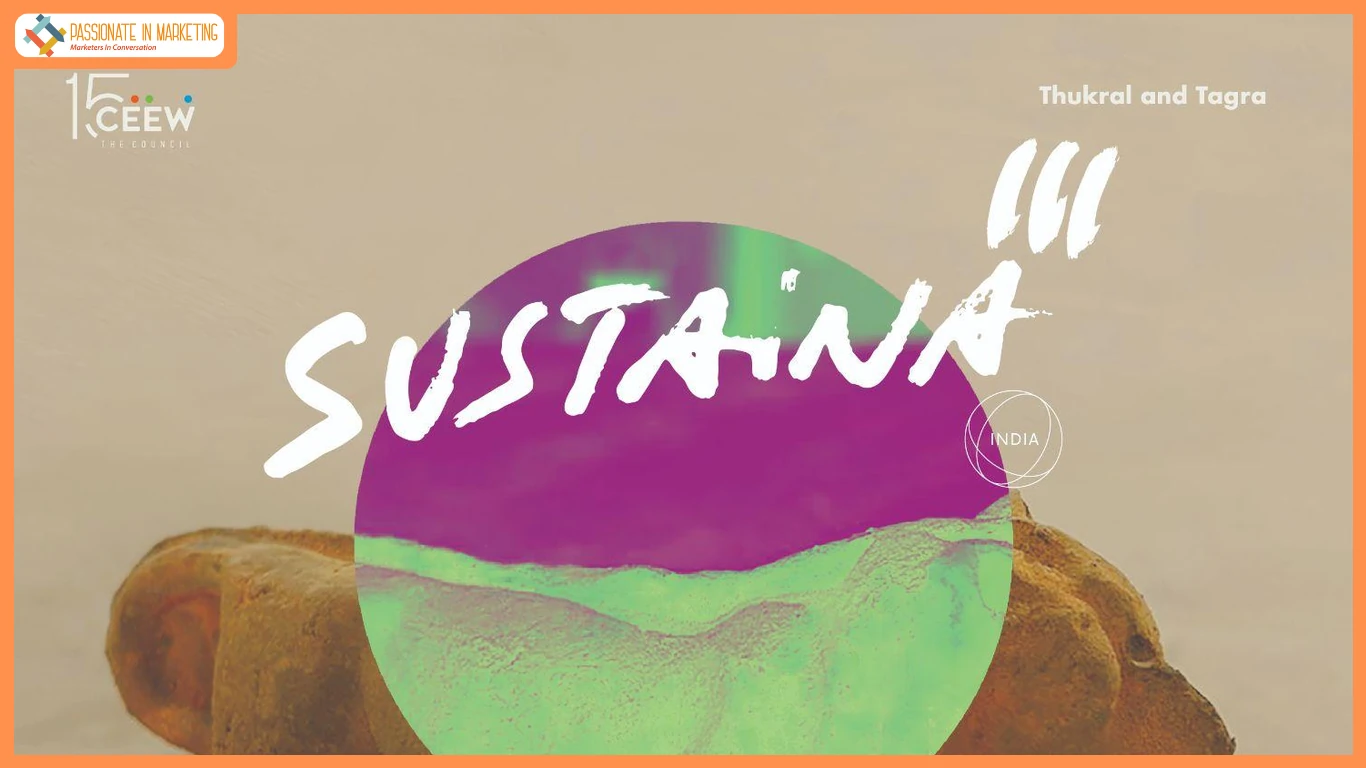
New Delhi, 28 January 2026: Following the success of its first two editions, Sustaina India—an exhibition where science meets art to inspire collective climate action—returns with its third edition, from 1 to 15 February 2026 at Bikaner House, New Delhi. A collaborative initiative by think tank Council on Energy, Environment and Water (CEEW) and acclaimed artist duo Thukral & Tagra, Sustaina India III, titled “Bitter Nectar,” examines climate change through the lens of fruiting cycles, food systems, and abundance.
This year, “Bitter Nectar” takes centre stage as a thematic anchor, reshaping how we perceive everyday elements such as food, taste, labour, and seasonal abundance. The core section of the third edition will feature three Sustaina India Fellows, whose practices are rooted in distinct geographies and materials:
- Vedant Patil, a filmmaker and PhD candidate based in western Uttar Pradesh, traces the fragile journeys of milk across rural and urban landscapes, revealing the invisible labour, infrastructure, and ecological pressures that sustain everyday consumption.
- Anuja Dasgupta, an artist and agripreneur based in Ladakh, uses the apricot—a keystone of the region’s ecology—to explore interdependence, seasonal knowledge, and climate vulnerability in high-altitude communities.
- Mrugen Rathod, a visual artist and educator from Gujarat, reflects on mango monocultures, forest ecologies, and human and animal displacement through a sculptural installation rooted in the Gir landscape
Across India, rising temperatures and erratic rainfall due to climate change are already reshaping food systems in quiet but consequential ways. Recent CEEW research shows that tehsils experiencing declining southwest monsoon rainfall over the last decade are concentrated in agriculturally critical regions such as the Indo-Gangetic Plain, Northeast India, and the fragile upper Himalayan belt. Heat stress is also diminishing labour productivity, particularly for outdoor and informal workers, weakening household incomes and economic resilience. With global temperatures temporarily surpassing the 1.5°C threshold in 2025, what was once considered a distant tipping point is now shaping everyday choices and trade-offs.
Against this backdrop, Sustaina India III reflects on a seemingly simple impulse—the pursuit of ripeness, nourishment, and sweetness—and reveals the complex socio-ecological and political conditions that now shape it. Heat and harvest no longer arrive in agreement; erratic rains interrupt ripening, winters soften or arrive out of turn, and long-held agricultural knowledge is unsettled. Through these temporal mismatches, the exhibition traces how fractures in climate systems travel outward, affecting labour, ecology, consumption, and community life.
Thukral & Tagra, curators of Sustaina India, said, “In its third year, Sustaina peels through urgent questions of climate change, tracing the shifting knowledge of fruiting cycles strained by extreme heat, erratic rainfall, and uncertainty by the means of the artistic practice. Bringing together works from across India, from Ladakh to Kerala and Assam to Gujarat, the exhibition maps a shared ecology of climate action and inquiry into our desire for sweetness, into the nuances of nectar collection.”
The third edition will also feature an expansive line-up of conversations, workshops, performances, closed-door sessions, and interactive engagements. A lively programme of talks, workshops, theatre, and learning experiences unfolds over the weekends with over 15 partners, featuring speakers such as Shrayana Bhattacharya (Author & Economist), Anirudh Kanisetti (Author & Historian), Pragya Kapoor (Actor & Film Producer), Thomas Zacharias (Chef), Shubhra Chatterji (Writer & Director), Anupama Mandloi (Impact Producer), and Kevin Kenneth Lee (Media Leader). Hands-on experiences include zine-making, upcycling, material literacy, data storytelling, and content creation with a climate hook.
Mihir Shah, Director of Strategic Communications at CEEW, added, “Amidst the turbulence of geopolitics and a reordering of the world order, climate change continues to remain a critical risk. 2025 was the third hottest year on record. Climate impacts are already reshaping what India grows, consumes, and relies on. Sustaina India 3 grounds climate conversations in lived experience, showing how disruptions to food systems and seasonal rhythms directly affect communities and livelihoods. Effective climate action must engage with these realities and the knowledge embedded within them as we look for more solutions.”
Alongside the Fellows’ projects, Sustaina India also invites an extended selection of artists whose works engage with climate change through diverse lenses:
- Abhinand Kishore examines urbanisation and climate stress in Kochi through layered visual archives that trace water, land, labour, and infrastructure across the city’s fragile edges.
- Lakshita Munjal explores material memory and heat adaptation through sculptural seating objects rooted in everyday practices of cooling and care.
- Sidhant Kumar addresses labour, pollution, and visibility in the city through a performative film that reflects on construction bans, air quality, and precarity.
- Smita Minda brings a deeply personal perspective through animation, tracing the emotional weight of climate anxiety as it permeates intimate, everyday moments.
- Harmeet Singh Rattan collaborates with his father, a sign painter, to explore memory, taste, and preservation through a material dialogue with the desi keekar tree.
- Pooja Kalai engages with textile waste and indigenous weaving practices, reworking discarded yarns to foreground care, continuity, and ecological possibility within systems of material excess.
- Ankur Yadav responds to extractive landscapes in Rajasthan through eco-poetry created at abandoned mining sites, allowing time and erosion to reveal environmental loss as an ongoing process.
Sustaina India will also continue to explore partnerships to reach wider and younger audiences, including dedicated engagements for students and early-career practitioners.
Exhibition Details:
Sustaina India
Dates: 1-15 February 2026
Venue: Bikaner House, New Delhi
Preview Timings: 31 January, 5 PM onwards
Exhibition continues 1-15 February, 11 AM – 7 PM

