


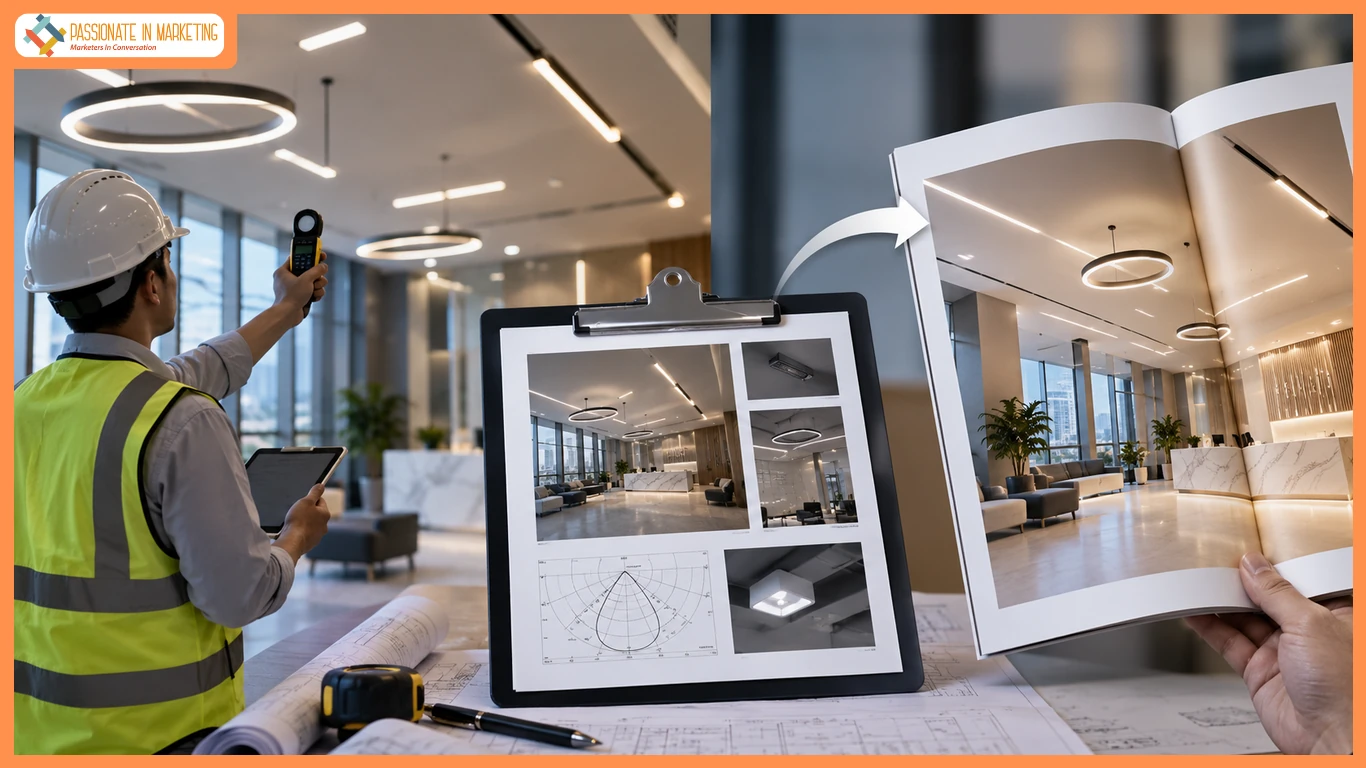
Commercial lighting claims can become misleading when product specifications turn into promises of guaranteed results. To avoid this, marketing teams should connect claims to the installed product, site conditions, and intended use. Clearly describe verified features and only make performance claims the project can support.
Start with the actual space
Define the space and its purpose before making lighting claims. Loading areas, entrances, and warehouses have different lighting needs. Use a marked plan showing UFO high bays, LED flood lights, boundaries, windows, and viewing positions. Focus copy on specific, supportable benefits, and describe unfinished work as planned rather than installed.
Keep product facts attached to the correct range
Coydon Lighting’s floodlight specifications include KD-FLN and KD-FLM models, 130 lm/W efficacy, IP66 protection and Lumileds SMD 3030 LEDs. Its KD-HBD UFO high bay uses OSRAM SMD 2835 LEDs, IP65 protection and 150 lm/W efficacy. Keep these product specifications separate and base marketing claims on the exact product configuration, including lens, colour and mounting.
Describe optics accurately
LED floodlights can be aimed toward specific areas, but beam angles do not guarantee installed results. The KD-FLM offers 65 × 25° and 130 × 30° options. Use approved layouts, photometric data and aiming details to support claims, and avoid promises about eliminating dark spots or glare without evidence.
Make energy claims traceable
Differentiate LED source efficacy from complete-fixture or project performance. Energy claims should account for existing equipment, operating hours, controls and baseline conditions. Present predicted savings as estimates and measured savings only when supported by actual results.
Use photographs as supporting evidence
Photos show appearance but cannot prove lighting performance. Photograph relevant areas under normal conditions and clearly distinguish completed installations from renders or proposals. Captions should accurately reflect the installed configuration.
Keep environmental and maintenance claims modest
Protection ratings and warranties are product features, not guarantees of site-wide performance or zero maintenance. Follow supplier documentation and explain practical maintenance arrangements without using claims such as “maintenance-free.”
Match controls to the installed system
Only describe smart or automated lighting features that are actually installed and commissioned. Distinguish sensors, dimmable drivers and control systems, and explain verified operating sequences in plain language.
Assign evidence to every claim
Link each marketing statement to its supporting source and responsible person. Supplier data should support product facts, design calculations should support predicted results, and commissioning or measurement records should support installed performance.
Teams assessing industrial and outdoor lighting from Coydon Lighting Use the supplier’s high bay and floodlight specifications as the starting point, then let project-specific review determine what can be claimed about the building. Recheck claims whenever fittings, PC lenses, controls or layouts change. Approval should follow the documented project, not a fixed sentence. This approach keeps brochures persuasive while giving sales teams accurate answers to buyers’ questions.
**The opinions expressed in the article are solely the author’s and don’t reflect the opinions or beliefs of the portal**

