


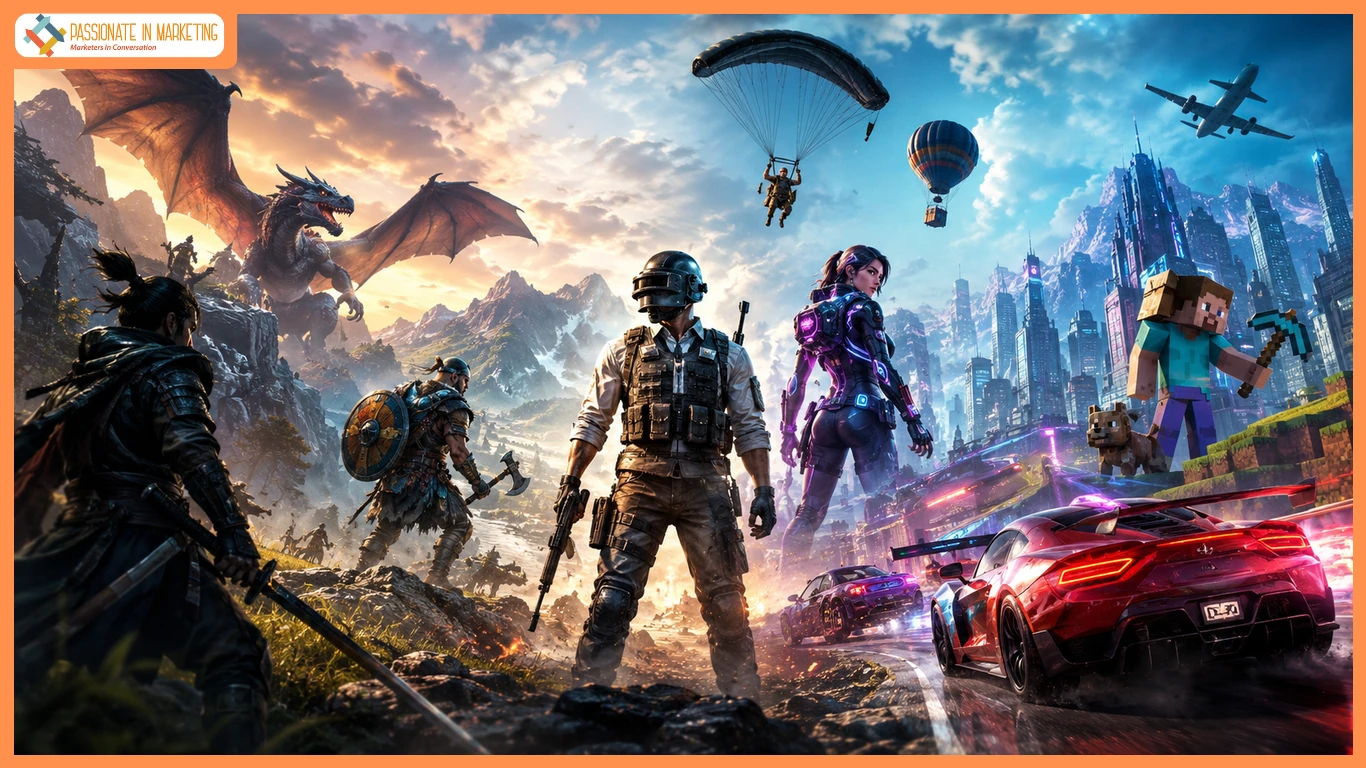
Virtual car collisions attract not only fans of strong sensations but also those looking for new ways to train the mind. Crash games with destruction, explosions and chaotic racing have long held their place in the entertainment industry. Interest in this format is not limited to gameplay alone: platforms such as CrashGamblers show how crash mechanics can be discussed as part of a wider gaming culture. Why are these games becoming so popular among very different players? Can participation in virtual accidents really help develop concentration, observation skills and other cognitive abilities? Let us dive into the world of crash games to understand their value not only as entertainment but also as a possible tool for training attention and reaction.
Features of crash games and how they differ from classic racing simulators
Crash games stand out among many racing simulators because of their special focus on destruction and collision elements. Their main feature is the creation of many situations in which the player faces unpredictable events. Here, simply reaching the finish line first is not enough; it is important to cope with the chaos dominating the track. Events in such games unfold at lightning speed, leading to the need for immediate responses to changing conditions.
Unlike classic racing, where competition and precise control dominate, crash games emphasize dynamism and unpredictability. Players must not only avoid obstacles but also use the environment to achieve their goals. Interest is strengthened by expressive visual effects and realistic sounds of collisions and destruction, which create a feeling of complete immersion in the events.
Examples of such games include various simulators with refined accident models, where players can observe parts flying across the track. This approach allows the player to feel right in the middle of events and make quick decisions in dynamically changing circumstances.
The training effect of crash games
Immersion in the chaotic atmosphere of crash games requires from the player not only dexterity but also a high level of concentration. In such games, driving a car becomes a true challenge for the nervous system because every mistake can lead to instant defeat. The player must constantly focus on key points of the track and react quickly to signals coming from all directions.
Gameplay is made harder by the need to track many objects on screen at once. When crashes occur all around, unexpected obstacles appear and opponents change trajectories, the player’s attention is constantly loaded. Moments when the situation on the track slips out of control are especially important, requiring immediate assessment of events.
Crash games develop several types of attention that are important not only for in-game success but also for solving real tasks:
- Selective attention, when the player learns to pick out key details against the background of general chaos
- Sustained attention, needed for long-term focus throughout a race
- Switching attention, allowing the player to instantly move focus from one event to another and respond to new threats
Development of cognitive skills
Destructive racing confronts the player with a whole range of complex cognitive tasks. Route planning, analysis of opponents’ behavior, risk assessment and real-time tactical choice require higher thinking functions. The virtual driver must remember object placement, track features and the behavioral tendencies of other participants in order to make the most effective decisions.
The player must remember many details: where new obstacles may appear on the track, how opponents usually behave in difficult situations and which sections of the road are most dangerous. These skills are closely linked to the development of working and long-term memory. Every new run is a mini-experiment in which actions must be adjusted depending on changing circumstances.
Decision-making under uncertainty becomes a true school of mental flexibility. Unexpected accidents, sudden changes in opponents’ movement trajectories and the appearance of new threats force the player to combine different strategies and instantly correct their action plan. This experience also transfers to real tasks where quick reaction, analysis of complex situations and decision-making with limited information are needed.
Motivation to learn and development of perseverance
One of the key features of crash games is a unique system of immediate feedback. Every player action is instantly reflected in the result: a collision leads to failure, while a successful maneuver brings success. This dynamic builds in players a desire to improve and try new approaches.
Repeatedly replaying the same track or level becomes a kind of challenge. Failure is not perceived as defeat but becomes an incentive to look for original solutions, analyze mistakes and develop new strategies. Regularly returning to difficult moments teaches perseverance and patience.
Psychological qualities that actively develop through crash games include:
- Patience and composure when overcoming difficult challenges
- The ability to cope with failures and not give up after defeat
- The desire to achieve new goals and constantly improve oneself
Social and communication aspects of crash games
Modern crash games often involve not only individual but also team participation. Multiplayer modes create unique conditions for training communication skills. Players learn teamwork, rapid information exchange, the development of shared tactics and analysis of partners’ and opponents’ behavior.
Competition and cooperation stimulate the development of emotional intelligence. Paying close attention to other players’ reactions, predicting their actions and adjusting one’s own strategy with team goals in mind are all integral parts of the process. Through such interactions, the ability to consider others’ interests and find common language with different people is formed.
Regular shared play supports the development of team decision-making skills and conscious role distribution within a team. The ability to negotiate, work out compromise solutions and take partners’ opinions into account becomes important not only in virtual life but also in real life.
Creativity and stress resistance through crash games
Collisions and destruction in crash games require players to take a nonstandard approach to problem solving. When a situation can change at any moment, typical solutions often prove ineffective. Players must quickly search for alternative options, experiment with tactics and use all available resources to achieve the goal.
The ability to adapt to chaos and uncertainty plays an important role. Every episode of the game is a new challenge in which plans must be changed quickly while maintaining composure. The player learns not only to act rationally in emergencies but also to remain calm under significant emotional pressure.
The psychological effect of release provided by crash games should also not be forgotten. The moment of destruction or victory is connected with an emotional outburst, reducing stress levels and helping players withstand tension more easily. This experience supports the development of stress resistance and the ability to stay productive under difficult conditions.
By immersing themselves in the world of crash games, players receive not only strong sensations but also a whole set of skills necessary for effective functioning in both virtual and real environments.
**’The opinions expressed in the article are solely the author’s and don’t reflect the opinions or beliefs of the portal’**

