

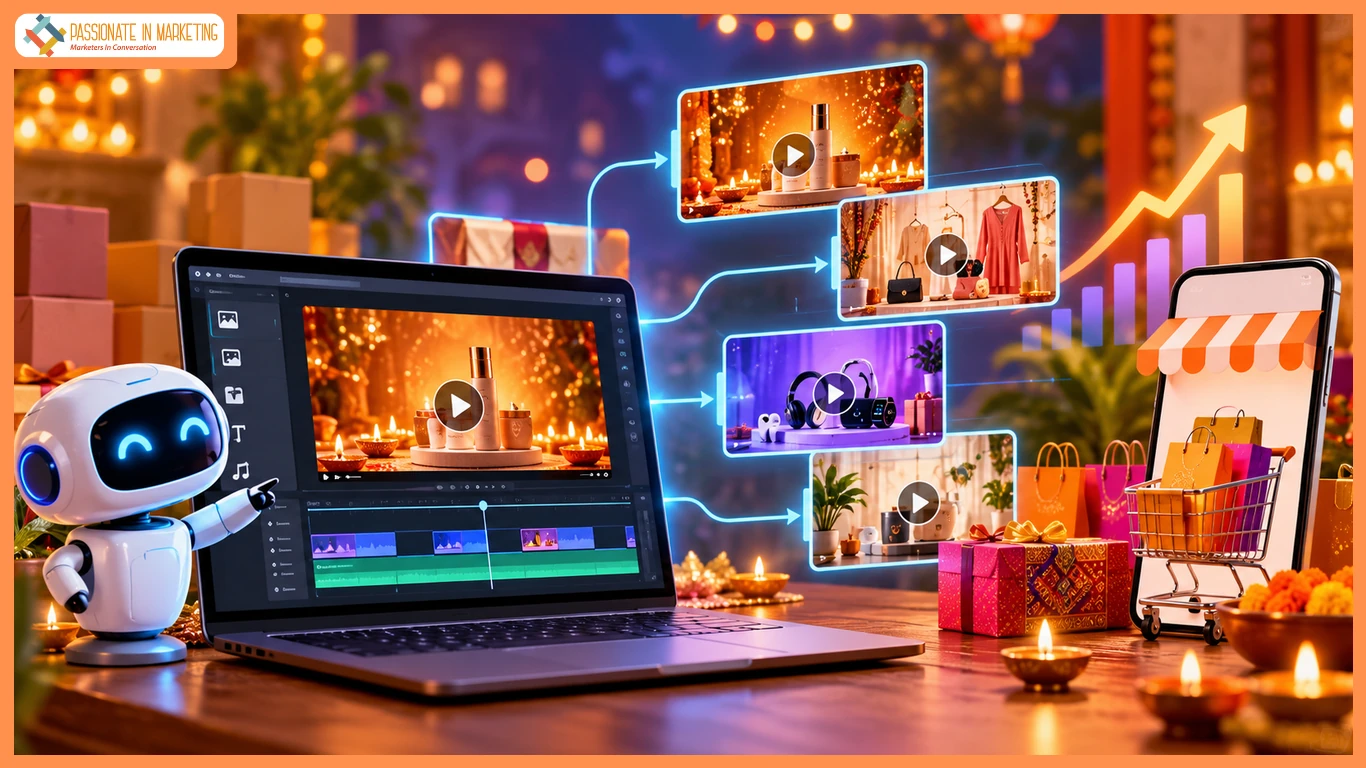
Festive seasons push DTC brands to produce more ads faster as competition and ad fatigue increase. AI video helps create and test multiple creative variations without repeated shoots.
The real bottleneck is variation
Brands need different hooks, settings, presenter-led ads, formats and regional versions. Traditional production increases costs and delays testing, often limiting creative options.
What AI video changes
AI tools turn product photos, links or briefs into video ads, making creative testing faster and cheaper.
- Use real product assets: Clear photos and selling points improve accuracy.
- Test different hooks: Compare openings to find what captures attention.
- Create presenter-led ads: Generate UGC-style videos for social platforms.
- Keep human oversight: Check logos, text, prices and claims before publishing.
One workspace instead of five tools
Another shift is consolidation. Different video models are good at different things. Some handle realistic product shots well, others are better at cinematic scenes or longer clips. Until recently, teams had to juggle separate subscriptions to compare them.
Platforms built specifically for advertising now bring several models, including Kling, Veo and Seedance, into a single workspace, together with tools for writing the ad script and arranging scenes on a canvas. Nereo, for example, is built around product ads: a brand can start from a product image or link, choose a format for TikTok, Instagram, Facebook or YouTube, and generate creative variations ready for testing.
This matters because access to the best models is not always straightforward. Google’s Veo 3.1 is one of the strongest models for realistic product scenes, but Google Flow, the tool Google built around it, is tied to Google’s AI subscriptions and is not available in every country. Teams in that position often turn to a Google Flow alternative that offers Veo 3.1 alongside other models, so the creative team is not blocked by where it happens to be based.
A simple way to start
For brands planning their next campaign, a practical first step is small:
- Pick one hero product and one offer.
- Write three different hooks and two different settings.
- Generate the variations, review them carefully, and run them as a controlled test.
- Scale the winner, and feed what you learned into the next brief.
The brands that will win the next festive season are not necessarily the ones with the biggest production budgets. They are the ones that learn fastest which story makes their product click with customers, and AI video makes that learning loop much shorter.
**The opinions expressed in the article are solely the author’s and don’t reflect the opinions or beliefs of the portal**

