


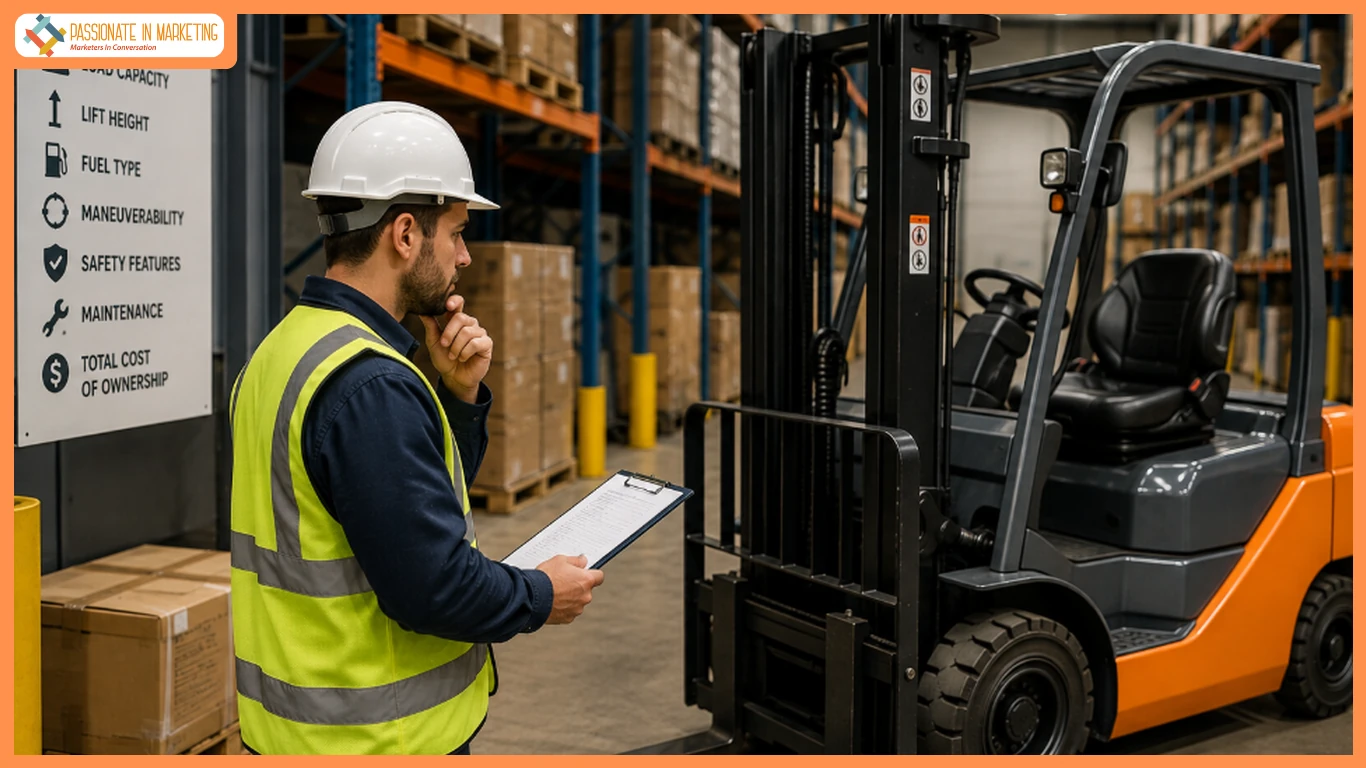
Selecting the right forklift rental service starts with understanding the loads, tasks, and working conditions involved. Load requirements, site conditions, operating hours, and available space shape your choice. Assessing these factors helps warehouse owners choose forklifts that match their daily material-handling requirements. Equipment type, power source, safety provisions, service support, and rental terms also need to be assessed. Matching these factors with the intended application helps businesses narrow down suitable equipment options. This approach supports consistent material movement across regular warehouse operations and different working conditions.
Assess Your Material Handling Requirements
Defining daily material movement needs helps businesses determine the equipment capabilities required for their operations.
Key operational factors include:
- Material Type: Identify whether operations handle pallets, containers, components, packaged goods, or other materials.
- Handling Frequency: Consider how often loads move during each shift.
- Operating Hours: Estimate daily usage and expected shift patterns.
- Movement Pattern: Review travel distances, loading areas, storage locations, and regular routes.
These factors provide a basis for comparing equipment against the planned workload and material handling tasks.
Determine the Required Load Capacity and Lift Height
The forklift’s rated capacity should suit the loads handled during routine operations. Consider load weight, dimensions, and load centre when identifying suitable capacity. These factors should align with the manufacturer’s rated specifications for the intended material handling application.
Lift height depends on where materials need to be placed or retrieved. The required lift height can vary depending on the warehouse’s racking configuration. Compare required lift height and load characteristics with manufacturer specifications when selecting rental equipment for regular operations.
Choose the Right Type of Forklift
Different types of material handling equipment are designed for different tasks and operating conditions.
Common equipment options include:
- Counterbalance Forklifts: Support loading, unloading, pallet movement, and general material handling.
- Reach Trucks: Support pallet placement and retrieval at height within suitable warehouse aisles.
- Pallet Trucks: Support horizontal pallet movement between receiving, storage, and dispatch areas.
- Stackers: Support pallet lifting, stacking, and movement at suitable heights.
Choosing the right forklift type matches equipment capabilities with the handling task, load, available space, and expected operating conditions.
Evaluate the Operating Environment
Site conditions can affect which equipment suits an application. Assessing the workplace helps match equipment dimensions and capabilities with available space, surfaces, access points, and movement requirements.
Important site factors include:
- Operating Area: Determine whether equipment will operate indoors, outdoors, or across both environments.
- Aisle Width: Measure available space and assess equipment manoeuvring requirements.
- Floor Conditions: Review floor surfaces, gradients, and operating routes.
- Clearance Requirements: Check doorways, overhead clearances, ramps, and access areas.
Reviewing these conditions helps warehouse teams select rental equipment suited to the workplace, material movement requirements, and regular operating routes.
Select the Suitable Power Source
Electric forklifts can suit indoor applications, depending on the equipment specifications and charging arrangements available on site. Consider operating hours, charging arrangements, site conditions, and application requirements. These factors help determine whether electric equipment aligns with the workload and working environment.
Diesel forklifts can suit outdoor and certain industrial applications, depending on site conditions and equipment specifications. Comparing these factors with equipment specifications helps businesses select a suitable power source for their application.
Check Safety and Operator Requirements
Safe forklift operation requires suitable equipment, trained operators, and appropriate workplace safety measures. Assess equipment features alongside operating routes, pedestrian movement, visibility, load characteristics, and site conditions. Consider these factors when assessing equipment suitability for the workplace.
Operators should receive appropriate training for their equipment and assigned tasks. Businesses should also consider relevant safety accessories. Rental providers can explain available equipment features, operating requirements, and intended applications before final selection.
Evaluate Maintenance and Service Support
Service arrangements influence equipment support during the rental period. Reviewing these provisions helps businesses understand the assistance available throughout regular equipment use and maintenance.
Important areas to evaluate include:
- Planned Maintenance: Confirm how routine servicing and maintenance will be scheduled.
- Technical Support: Understand how technical assistance will be provided.
- Operator Support: Check whether trained operators are available when required.
- Fleet Monitoring: Consider digital monitoring when you need utilisation information.
Providers such as Godrej RenTRUST offer rental solutions covering equipment, maintenance, trained operators, and digital fleet monitoring for relevant material handling requirements.
Review the Rental Terms Before Selecting Equipment
Rental terms should define equipment, services, responsibilities, and duration. Reviewing these details helps businesses align the arrangement with operational requirements before selecting equipment.
Important rental details include:
- Rental Duration: Choose a period aligned with operational requirements.
- Service Inclusions: Confirm which maintenance, technical support, and operator services are included.
- Equipment Availability: Verify the required forklift type, capacity, lift height, and specifications.
- Operational Responsibilities: Understand responsibilities for operation, servicing, and reporting.
A fork truck rental arrangement should align equipment specifications, services, duration, and responsibilities with the intended application and operational requirements.
Conclusion
Choosing rental equipment starts with understanding the load, application, workplace, and operating requirements. Businesses should assess forklift type, capacity, lift height, power source, safety, and site conditions. These factors help identify suitable equipment. Consider maintenance support and rental terms as well. A suitable forklift rental service should match equipment capabilities with operational needs. Reviewing these factors helps warehouse teams select equipment that fits their material-handling needs.
**The opinions expressed in the article are solely the author’s and don’t reflect the opinions or beliefs of the portal**

