


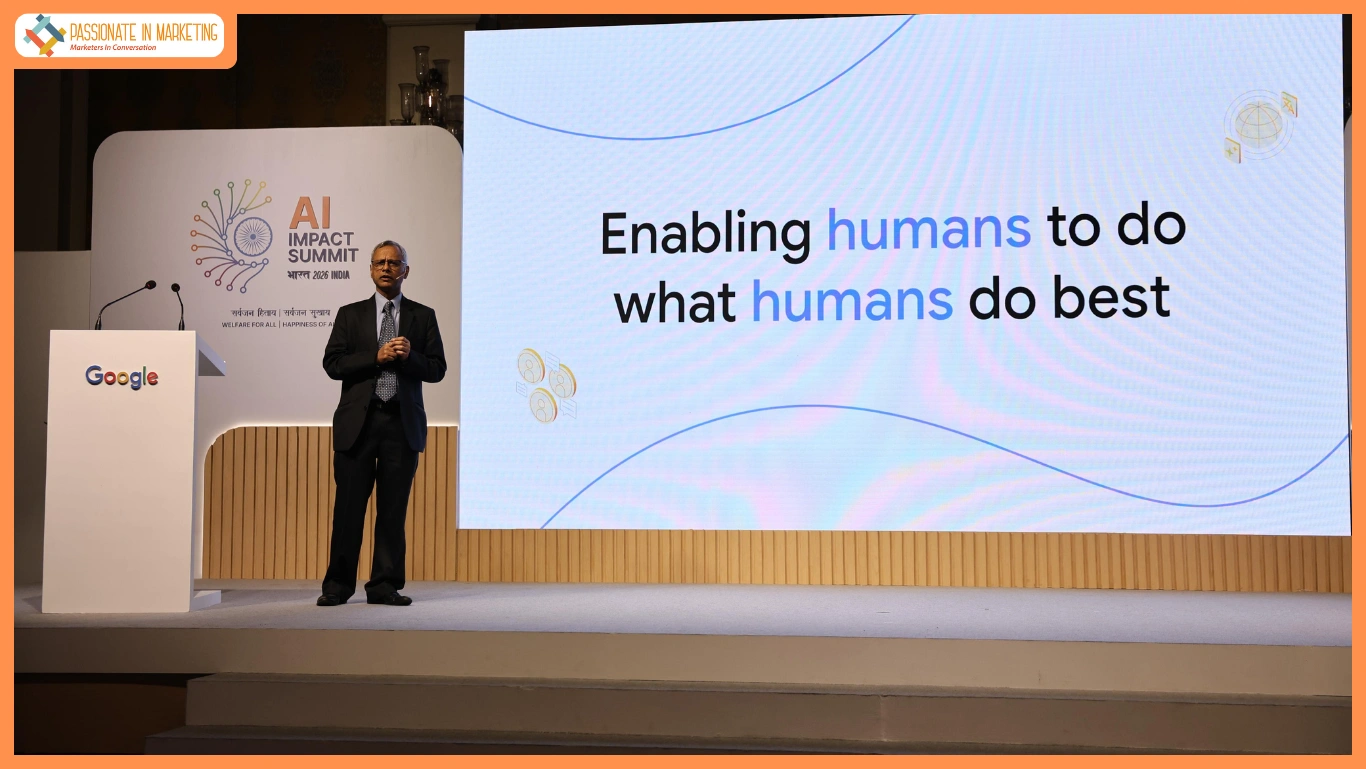
New Delhi, 16th December 2025: Google today announced a suite of new collaborations and funding commitments to bolster India’s AI ecosystem at its “Lab to Impact” dialogue, an event supported by the India AI Impact Summit 2026. Attended by Shri Dharmendra Pradhan, Union Minister of Education, the dialogue highlighted Google’s research-driven approach to supporting Digital Public Infrastructure and empowering the research, developer, and startup ecosystem to solve national challenges and meet large-scale social needs.
Speaking at the event, Dr Manish Gupta, Senior Research Director, Google DeepMind stated: “AI is humanity’s most profound and powerful force for progress, and at Google, we see its global evolution driven by three pivotal shifts – its ability to accelerate scientific discovery, its advances augmenting human capability, and India’s unique embrace of AI’s potential. From foundational research to ecosystem deployment to scaled impact, our full-stack approach is equipping the country to lead a global AI-powered future, with innovations from India’s labs benefiting billions across the world.”
Integrating AI into India’s Digital Public Infrastructure (DPI) for healthcare
Google announced funding of $400,000 to support new collaborations that will leverage MedGemma to build India’s Health Foundation Models. These models aim to improve the efficiency of healthcare providers and improve patient outcomes across India. As a first step, Ajna Lens will work with experts from the All India Institute of Medical Sciences (AIIMS) to build models that will support India-specific use cases in Dermatology and OPD Triaging. The resulting models will contribute to India’s Digital Public Infrastructure and their outcomes will be made accessible to the ecosystem.
Additionally, researchers, AI experts, and clinicians from IISc will explore using AI models for broader clinical applications.
Google is also working with the National Health Authority (NHA) to deploy its advanced AI to convert millions of fragmented, unstructured medical records (such as doctor’s clinical and progress notes) into the international, machine-readable FHIR standard. This shift is expected to help patients understand their medical information better, reduce documentation burden on patients and hospitals, and inform better data-driven policy decisions for India’s public healthcare strategy.
Google is also working with NHA to bring over 400,000 NHA-registered health facilities, including hospitals, clinics, and diagnostic labs, on Google Maps and Search, allowing people to easily find and navigate to their nearest health centers with the most updated official information.
Strengthening India’s AI research ecosystem, and the government’s vision of India’s AI leadership
Google has consistently supported India’s scientists and researchers in fostering the country’s innovation. Over the last five years, Google has supported nearly 1,000 years of PhD-level research work across more than 25 leading research institutions, including premier institutes. The global PhD Fellowship program has supported 166 Indian PhD students to date. This year’s recipients from India are leading inspiring foundational and applied research, spanning computer vision foundational models to models supporting mental disorders.
To further support India’s research ecosystem, Google.org, the philanthropic arm of Google, is announcing funding support totaling $8 million for four AI Centres of Excellence established by the Government of India, aligning with the vision to “Make AI in India and Make AI work for India”. This funding will support research at the Centers of Excellence:
- TANUH at IISc Bangalore will focus on developing scalable AI solutions for effective treatment of non-communicable diseases.
- Airawat Research Foundation, IIT Kanpur will focus on pioneering research on AI to transform urban governance.
- AI Centre of Excellence for Education, IIT Madras will focus on developing solutions to enhance learning and teaching outcomes.
- ANNAM.AI at IIT Ropar will focus on developing data-driven solutions for agriculture and farmer welfare.
To continue advancing its commitment to Inclusive AI, Google is announcing a $2 million founding contribution to establish the new Indic Language Technologies Research Hub at IIT Bombay. This hub is set up in memory of Professor Pushpak Bhattacharyya, a pioneer in Indic language technologies and a Visiting Researcher at Google DeepMind. It will aim to ensure that global AI advancements serve India’s linguistic diversity.
Equipping developers with our open models to power indigenous AI
Indian startups have shown enthusiasm for the benchmark-leading Indic capabilities of Google’s foundational AI models. Startups Gnani.AI and CoRover.AI have been leveraging Gemma to build Voice AI models and e-governance–focused models serving Indic language solutions.
Google is providing $50,000 of funding to each of these startups to support their efforts to include more of the Indian diaspora in AI. Additionally, Google is giving a $50,000 grant to IIT-Bombay as it uses Gemma to process Indic language health governance and policy documents to establish a novel ‘India-Centric Trait Database’ containing information on diseases, phenotypes, and genetic conditions relevant to the Indian population.
To increase access to its foundational open models, Google has uploaded all 22 Gemma models onto AIKosh, the India AI Mission’s open data and model platform. This action is intended to help the Indian developer community develop indigenous models that elevate the Make-in-India ambition.
Empowering India’s changemakers to deploy AI for India’s pressing challenges
Google remains inspired by the commitment of Indian innovators’ and changemakers’ to solve for India and will continue supporting the ecosystem as it develops AI-powered solutions on the foundational layer of the nation’s AI ambition.
Utilizing Google’s Open Health Stack, a collection of open-source tools for next-generation digital health solutions, the Indian nonprofit Khushi Baby has successfully conducted over 35 million tuberculosis screenings in Rajasthan during this year using a TB Active Case Finding (ACF) screening module. Integration with the Open Health Stack ensured the solution’s compliance with international standards, the Indian government’s digital health mission, and the national effort for tuberculosis elimination.
Third-party research has indicated that AI-powered digital tools could enhance the labor productivity of India’s over one million ASHA frontline workers, enabling them to deliver an additional 98 million visits to rural patients each year. Furthermore, research estimates that AI-assisted screening tools could save the Indian public roughly ₹390 billion ($4.7 billion) yearly, which is approximately 12% of India’s total out-of-pocket healthcare expenditure.
Google is providing $2.5 million in Google.org funding to support Wadhwani AI in piloting HealthVaani, an LLM-based conversational AI assistant. Launched in partnership with the Ministries of Health and Family Welfare and Women and Child Development, HealthVaani supports ASHA and Anganwadi workers. This multimodal and multilingual solution uses Gemini 2.5-Flash for translations, answer generation, and moderation, while the advanced Gemini Embedding Model handles response retrieval.
Google is also providing $2 million in Google.org funding to Wadhwani AI to help develop and deploy Garuda, a new Indian language model for agriculture. Garuda will power AgriVaani, a multilingual, AI-driven smartphone application that will offer India’s farmers and agri-workers precise, contextually relevant advice on crop and livestock management, pest detection, and climate-smart practices.
Ensuring AI’s long-term impact is powered sustainably
Google is committed to ensuring the scaled impact of AI is responsible and sustainable, demonstrated by a partnership with ReNew Energy to support a new 150 megawatt (MW) solar project in Rajasthan, India. Under a long-term agreement, Google will receive environmental attribute certificates (EACs) and allocate them to its value chain emissions. Concurrently, Google will engage with key suppliers to boost clean energy adoption. This initiative addresses the supply chain’s energy footprint and demonstrates a clear pathway for organizations to credibly tackle emissions across the AI value chain.
This partnership builds on Google’s prior collaborations with Adani Group and Clean Max, which added 186 MW of wind and solar power to India’s grid, and contributes to India’s 2030 goal of 500 GW of non-fossil fuel-based electricity.

