


In the ever-competitive online market, ranking on the first page of search results is no longer the destination. Though visibility is a crucial factor, sustainable growth will be determined by the brands’ ability to attract, convert, and retain users over time. This is where full-funnel SEO comes in–moving SEO off its tactic of traffic-based strategy and into a long-term expansion strategy that will underpin the entire customer experience.
As opposed to conventional search strategies, which emphasize awareness alone, a full-funnel mentality approaches search strategy with business performance in mind. More and more modern brands, especially those that have reached their maturity stage and collaborate with SEO services in Dubai, acknowledge that organic search should not only facilitate the acquisition process but also decision-making and retention in order to offer quantifiable value.
SEO Has Evolved Beyond Rankings
SEO has evolved in this way. Ranking on high-volume keywords is not often directly correlated with revenue in competitive industries, including finance, e-commerce, SaaS, and professional services. The user’s intent is much more complex, and search engines will give greater preference to content that shows relevance throughout the search process.
The result of this evolution is the broadening of the SEO funnel strategy, an approach that recognizes that queries are driven by different levels of intent. A user who goes online to seek educational information can become a customer in a few months if the brand’s name keeps showing up with useful content.
What Is Full-Funnel SEO?
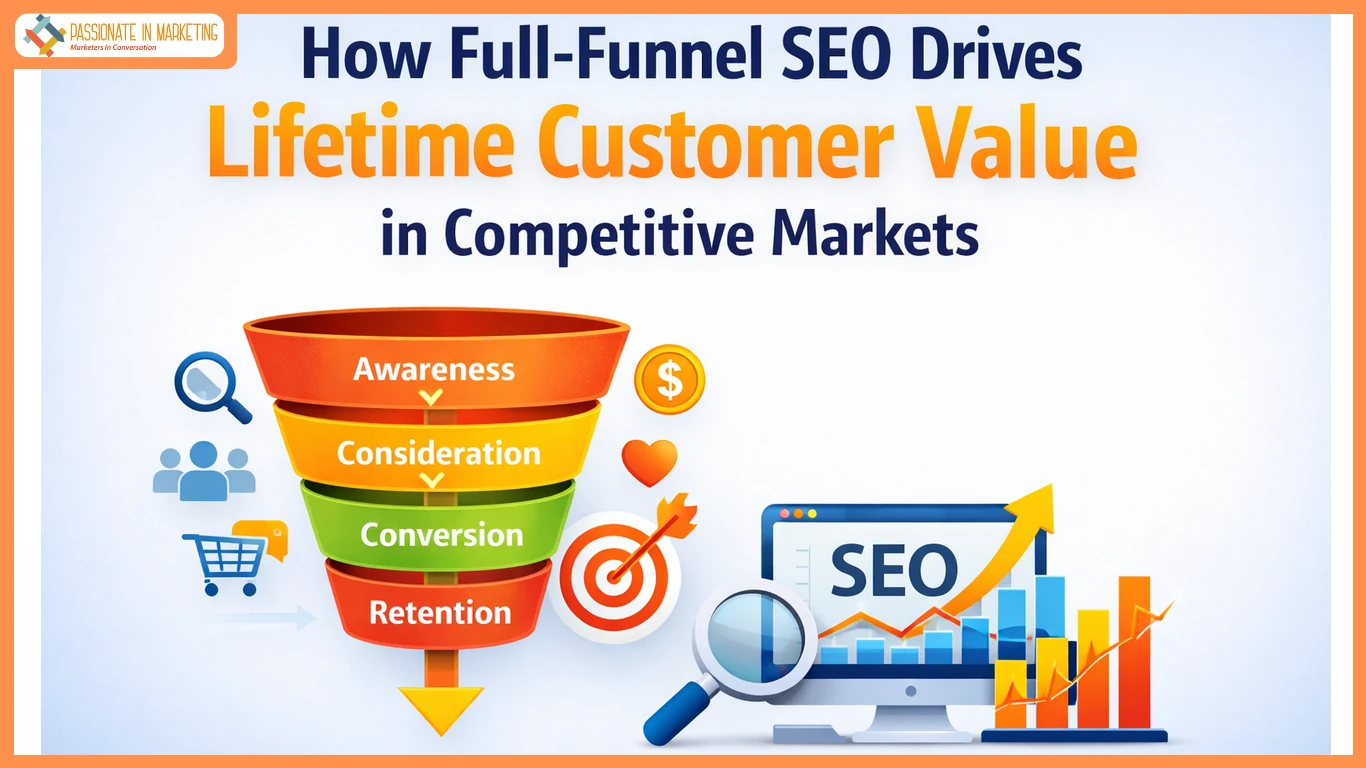
Full-funnel SEO is a strategy that considers content alignment across every phase of the customer experience rather than relying on individual keywords. It makes sure that users are exposed to the appropriate information at the appropriate time, both at the stage of initial awareness and after the purchase.
A typical funnel includes:
- Top of Funnel (Awareness): Informational searches of a problem or a topic.
- Middle of Funnel (Consideration): Comparison and solution-oriented queries.
- Bottom of Funnel (Conversion): Decision-based searches.
- Post-Funnel (Retention): Use, support, and optimization questions.
It is through this structure that the brands have been able to establish a relationship rather than depending on conversion at a single time.
Connecting SEO to Customer Lifetime Value
Customer lifetime value SEO is aimed at maximizing the total value that a customer provides in the period of his/her relationship with a brand. Full-funnel SEO facilitates this through having consistent touchpoints at both ends during organic conversion.
As an example, a user might learn about a brand by reading an informative article, come back in the future via a comparison page, buy using a service-oriented landing page, and proceed with post-purchase guides. Trust is built with every interaction, churn is minimized, and chances of returning to the interaction are enhanced.
SEO is not only a channel of growth, but also a channel of life.
Top-of-Funnel SEO: Educating Before Selling
During the awareness stage, the users are not willing to purchase. They are in search of knowledge. Learning materials, including manuals, explanations, and industry knowledge, are important here.
Within the competitive market environment, the brands that regularly release unbiased and high-quality informational materials develop topical authority over time. This power enhances visibility as well as shaping perception, thus users become likely to trust the brand later in the funnel.
Importantly, the content at the top of the funnel must not entail sales language. It is meant not to convert but to inform.
Middle-of-Funnel SEO: Supporting Evaluation
The more the user proceeds to consider, the narrower his or her searches are. They can cross-examine solutions, weigh options, or seek confirmation before arriving at a decision.
The content in the middle of the funnel eases the transition between conversion and awareness. Each page, like comparisons, use-case breakdowns, and decision guides, makes the user proceed without the feeling of being pressured.
In terms of the SEO funnel strategy, this step is crucial in sustaining the momentum and ensuring that the users do not lose steam or switch to rival companies.
Bottom-of-Funnel SEO: Capturing High-Intent Searches
The bottom-of-funnel queries will also have low search volume yet high intent. These are service-related searches, pricing-based searches, and solution-based searches.
This maximization of such searches will mean that when these users are ready to take action, the brand is at the top with clear and trustworthy information. Effective bottom-of-funnel SEO may greatly ease the need to buy rather than create products in competitive markets that are costly to enter.
The quality of the content is also critical in this case; clarity, transparency, and relevance directly affect the result of conversions.
Post-Funnel SEO and Organic Retention Tactics
The purpose of SEO does not stop when conversion happens. Post-purchase searches, e.g., onboarding questions, how-to questions, optimization tips, offer valuable opportunities to keep customers on board.
Organic retention tactics as knowledge bases, tutorials, and advanced resources, assist customers in deriving the continued value of a product or service. This enhances satisfaction, reduces the cost of support, and fosters long-term relationships.
Through serving the customers by search, the brands strengthen loyalty and drive lifetime value.
Why Full-Funnel SEO Works in Competitive Markets
Short-term tactics of SEO cannot achieve any long-term results in saturated industries. Full-funnel SEO works as it builds up with time- one stage reinforces the other.
Through matching content to user intent throughout the journey, brands enjoy:
- Better-qualified organic traffic.
- Increased conversion efficiency.
- More trust and power of the brand.
- High customer lifetime value.
Conclusion
With increasing competition, brands must go beyond rankings to measure the true success of SEO. A digital marketing agency plays a crucial role in implementing a full-funnel SEO strategy—one that bridges the gap between visibility and user experience, as well as traffic and long-term value.
By focusing on the entire customer lifecycle, businesses can transform SEO into a strategic asset. With the right digital marketing agency, brands can drive meaningful engagement and achieve sustainable growth that goes far beyond the first click.
**’The opinions expressed in the article are solely the author’s and don’t reflect the opinions or beliefs of the portal’**

