


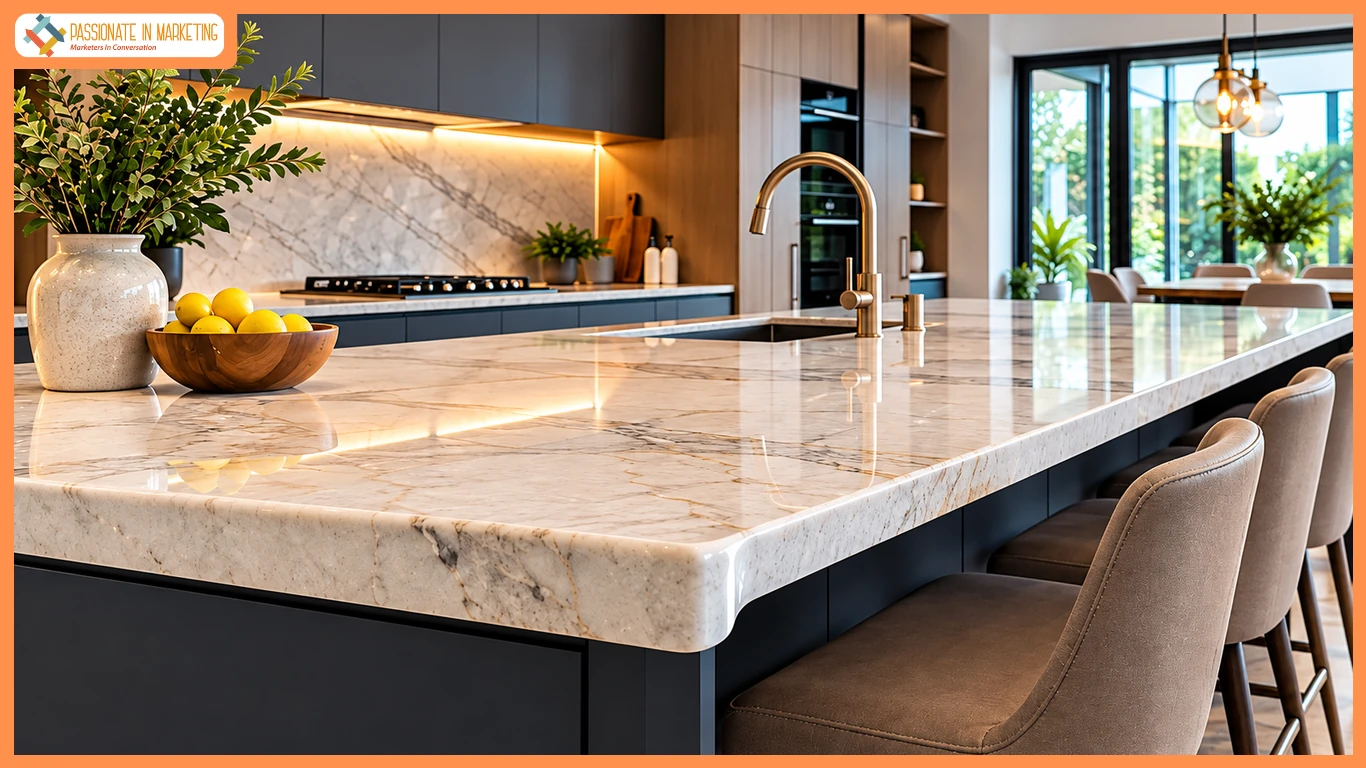
The edge of a kitchen worktop is a small detail that can significantly affect everyday use. It is the part of the countertop you brush past, lean against, and clean regularly. The right profile can feel comfortable while complementing the overall kitchen design. A poorly suited edge, however, can create sharp corners, become more vulnerable to chips, or make cleaning harder. For this reason, consider the kitchen countertop edge alongside the material, color, and finish. The right choice can balance safety, appearance, maintenance, and durability without disrupting the kitchen’s overall design.
Why The Countertop Edge Matters More Than You Think
The countertop edge has three main roles, and each deserves consideration. From a safety perspective, a softer, rounded edge can be useful in busy family kitchens, while a sharp corner may be more prone to causing bumps. From a design perspective, the profile can reinforce the kitchen’s character, whether it is contemporary or more traditional. The shape can also affect how well the edge handles everyday knocks and how easily it cleans.
Balancing these factors is central to choosing the right profile. An edge that works well in a family kitchen may not suit a minimal, design-led space. Considering safety, appearance, and everyday wear together can help narrow down the options.
How Your Material Shapes The Edge Options
The material you choose affects which edge profiles you can create, so consider the countertop and edge together. Different materials have different properties, thicknesses, and fabrication requirements. When selecting stone for kitchen slab applications, the material’s thickness and composition can affect the available profiles.
A few material considerations are worth keeping in mind:
- Natural stone: Materials such as granite and marble can be shaped into different profiles, including beveled and curved edges.
- Engineered and sintered surfaces: These can suit clean, straight, eased, and mitered profiles for contemporary kitchens.
- Thinner surfaces: Can be mitered to create the appearance of a thicker worktop without adding the same visual weight.
- Detailed profiles: More decorative edges generally require enough material thickness to fabricate accurately.
Choosing the profile alongside the material, rather than as a separate decision, can help avoid fabrication limitations and unexpected changes later in the process.
Common Countertop Edge Profiles Explained
Once you have selected the countertop material, you can consider the edge profile that best suits the kitchen. Each option creates a different visual effect and offers different practical characteristics.
- Straight or eased edge: A clean profile with a lightly softened top edge. It works well in modern kitchens and is relatively simple to maintain.
- Beveled edge: Features a small angled cut along the top, adding a defined line without making the profile overly decorative.
- Bullnose: A fully rounded edge that removes sharp corners. It can suit family kitchens where a softer profile is preferred.
- Half-bullnose: Has a rounded upper section with a more defined lower edge, combining a softer appearance with a structured finish.
- Ogee: Features an S-shaped curve that creates a more decorative, traditional appearance and generally suits thicker materials.
- Mitered edge: Joins pieces at an angle to create the appearance of a thicker, seamless block while using a slimmer surface.
If possible, view the profiles in person before deciding. Running your hand along an actual sample can give you a better sense of the profile’s shape, comfort, and finish than a drawing alone.
Choosing An Edge For Safety And Durability
Practicality matters most in a busy family kitchen. Rounded profiles, such as the bullnose, reduce sharp corners and can be more comfortable in areas where people move around frequently. Simpler profiles can also be easier to maintain, as they have fewer detailed areas where dirt can collect.
The surface itself also contributes to everyday performance. Features such as scratch and stain resistance can be useful for kitchen countertop that experience regular cooking and cleaning. Engineered surface manufacturers such as Neotra Advanced Surfaces offer options with properties suited to these everyday requirements.
Cleaning should be considered alongside durability. A few points can help when selecting an edge:
- Choose smooth profiles: Simple edges are easier to wipe and maintain in frequently used kitchens.
- Consider the level of use: Detailed profiles may suit areas that experience less daily impact.
- Think about the surface: Pairing the profile with a suitable non-porous surface can help prevent spills from penetrating the material.
- Check exposed corners: Areas around islands and walkways may benefit from softer profiles where people pass frequently.
Choosing an edge based on how the kitchen is actually used can help the worktop remain practical and well maintained over time.
Matching The Edge To Your Kitchen Style
The edge profile should complement the overall kitchen rather than appear as an isolated detail. A straight or beveled edge can reinforce the clean lines of a contemporary kitchen, while a bullnose can create a softer appearance. An ogee profile can add more traditional detailing to a classic kitchen.
Thickness also influences the countertop’s visual character. A substantial mitered edge can create a stronger, more solid appearance, while a slimmer profile can make the worktop feel lighter and more understated. Looking at the edge alongside your cabinets, flooring, splashback, and other finishes can help you judge whether the combination feels balanced.
Consistency is another useful consideration. Using the same profile across the main worktop, island, and breakfast bar can create a more coordinated appearance. If you want to add a decorative detail, use it on the island to create a focal point while keeping other areas simpler.
Conclusion
The countertop edge may be a small part of the kitchen, but it influences comfort, appearance, maintenance, and durability. Start by considering how you use the space, then choose a profile that suits the countertop material and overall design. Rounded edges suit busy family kitchens, while straight, beveled, and mitered profiles complement contemporary spaces. More decorative options can work with traditional interiors and thicker surfaces. Viewing profiles in person can also help you understand their shape and finish. A considered edge can complete the countertop while supporting the practical needs of everyday kitchen use.
**The opinions expressed in the article are solely the author’s and don’t reflect the opinions or beliefs of the portal**

