


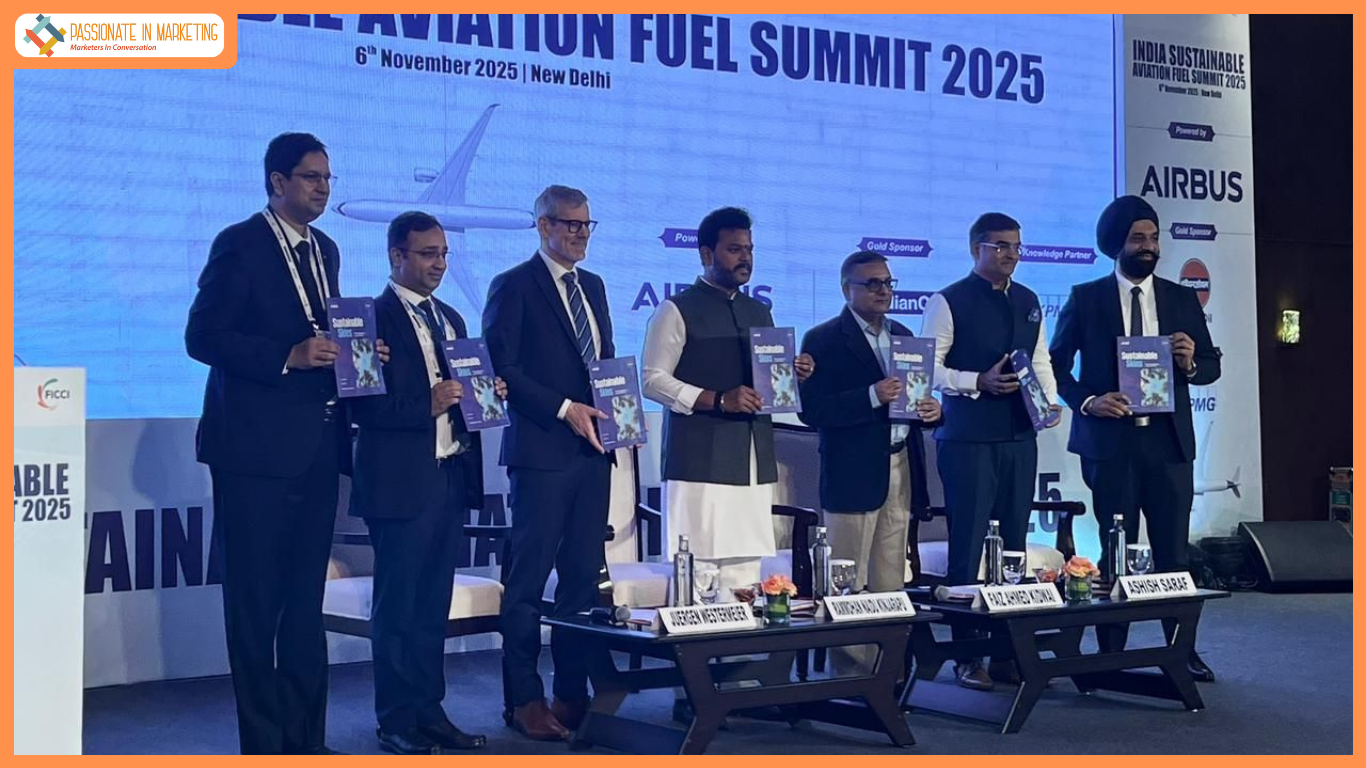
As the global aviation industry confronts the dual challenge of rapid growth and climate responsibility, Sustainable Aviation Fuel (SAF) has emerged as the most scalable and immediate solution to decarbonize flight. With India now the fifth-largest aviation market and projected to become the third by 2030, the country is uniquely positioned to lead the transition toward cleaner skies.
To discuss more on this, FICCI and KPMG in India released a report tiled – “Sustainable Skies: Positioning India as a Global SAF Hub” at the India Sustainable Aviation Fuel Summit today. The report was released by Shri Ram Mohan Naidu Kinjarapu, Hon’ble Minister of Civil Aviation, Govt. of India, in the presence of other eminent dignitaries. The report outlines a strategic roadmap for India to become a global leader in SAF production, adoption, and export.
Key Insights from the Report:
- India’s SAF potential is structural, not speculative: With over 680 MMT of agricultural residue, 3.4 MMT of used cooking oil, and ethanol capacity exceeding 1,800 crore litres, India has the raw materials to scale SAF production.
- SAF can reduce lifecycle emissions by up to 80%, making it the most immediate and scalable decarbonization lever for aviation.
- Blending targets set by the government: 1% by 2027, 2% by 2028, and 5% by 2030, aligned with ICAO’s CORSIA mandate.
- Economic dividends: A 10% SAF blend could offset billions in aviation fuel imports, generate green jobs, and enhance rural incomes.
- Export opportunity: India is well-positioned to supply SAF to premium markets like the EU, Japan, Singapore, and the Middle East.
Anish De, Global Head, Energy Natural Resources & Chemicals, KPMG in India, said, “Sustainable Aviation Fuel represents a strategic opportunity for India to shape the future of clean mobility. We have the right foundational strengths – diverse feedstock, an advanced refining ecosystem, and a strong policy direction. What is needed now is a coordinated systems approach that aligns policy, finance, technology, and offtake commitments. If pursued decisively, India can not only meet its domestic decarbonisation goals but also emerge as a global hub for SAF production, innovation, and exports.”
Vivek Rahi, Partner and National Head – Oil & Gas, KPMG in India, stated, “India’s SAF journey will be built on the intelligent use of our abundant feedstock base – from agricultural residues and municipal solid waste to press-mud and used cooking oil. With technology pathways such as HEFA, Alcohol-to-Jet and FT moving towards scale, it is important that we develop multiple pathways in parallel, as no single route can meet our long-term needs. The key will be establishing viable supply chains and long-term offtake frameworks involving airlines, OMCs, and technology providers.”
Jodhbir Sachdeva, Associate Partner – Aviation, KPMG in India, added, India’s aviation sector is at a defining moment, balancing rapid growth with climate responsibility. Even as airlines induct new fuel-efficient aircraft, overall fuel use continues to rise with expanding capacity. Sustainable Aviation Fuel offers the most scalable path towards decarbonisation and presents India with a strategic opportunity to lead this transition.

