


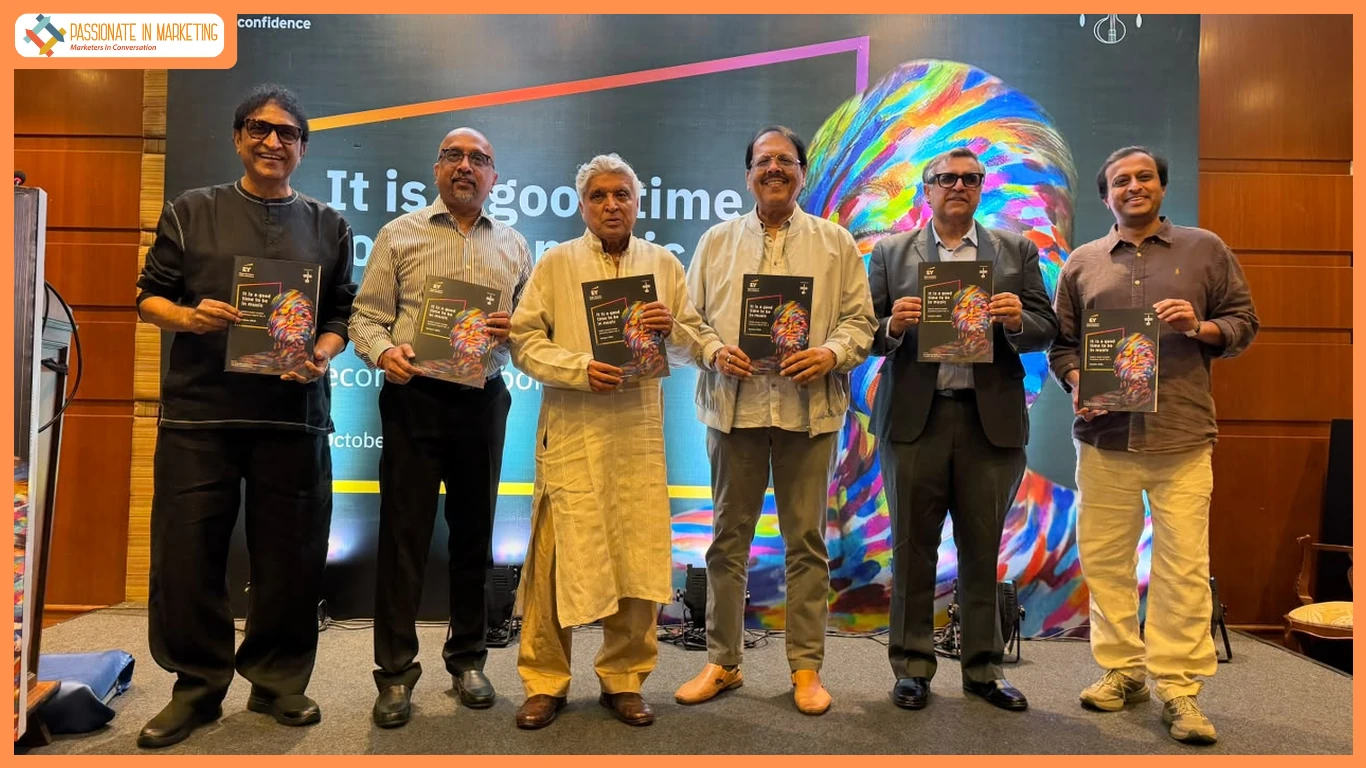
According to the EY report supported by IPRS (Indian Performing Right Society) and, “It is a good time to be in music: India’s music creator economy report Vol. 2”, India’s music creator economy generated an estimated INR 17,400 crore in gross economic value in 2025, a 45% increase over 2023. Of this economic value, 52% was generated by digital consumption platforms. The findings reflect the growing contribution of music to India’s creative economy as the industry continues to expand.
Music publishing and performance revenues grew to INR 1,125 crore in 2025 from INR 628 crore in 2023, and music consumption reached nearly six trillion streams, reinforcing India’s position as one of the world’s largest and most dynamic music markets. Independent music accounted for 43% of digital music consumption, up from less than 35% in 2023, reflecting changing listener preferences and growing traction for creator-led and regional-language content.
The EY report, through a survey partnership with JioSaavn, analyses how GenZ is changing music consumption, keeping it as a companion through the day, with 88% of respondents listening to at least an hour of music each day. Traveling (85%), relaxing (76%) and working (56%) were the top use cases for music consumption, while a background to studying was also prominent.
The report highlights a clear tension for music creators: while 75% believe opportunities are increasing, 76% feel it is becoming more difficult to take advantage of them. Creators now have access to more platforms, independent reach, global audiences and new revenue streams, but continue to face income uncertainty, discoverability pressure, complex rights administration, rising marketing costs and emerging AI-related risks.
To unlock the sector’s potential, the report calls for stronger creator education and transparency, including greater awareness of rights, improved access to music on digital platforms and clearer royalty payouts. It also recommends simpler and more effective licensing compliance (particularly for retail, venues, events and public spaces), a single-window licensing model, defined rate cards where feasible, closer government-industry collaboration, greater regulatory clarity and formal music creation and management education.
The report further identifies technology, independent music and export growth as important levers for the industry’s next growth phase. These include promoting Indian creativity globally, enabling wider reach through digital platforms, expanding awareness of copyright and publishing rights, improving metadata quality and royalty tracking, increasing adoption of licensed music across businesses, and strengthening creator education around monetization and intellectual property. It recommends the creation of an export promotion council for music to take Indian creators and performs to global audiences.
The findings also align with the broader priorities highlighted by CISAC in its 2026 Global Collections Report, particularly around AI and creator rights. Released in CISAC’s centenary year, the CISAC Global Collections Report 2026 shows that music creator royalties rose 11.9% to EUR 14.06 billion, while digital music collections increased 27.9%, accounting for 45.6% of total music collections. Live and Background became the second-largest income source for music creators globally. The CISAC Global Collections Report 2026 found that collections crossed EUR 2 billion for the first time, with digital revenues accounting for 51.3% of the region’s total collections. The global trends underline the increasing importance of digital consumption, live entertainment, licensing and effective rights management as India’s music ecosystem expands.
Lily Pandeya, Joint Secretary, Ministry of Culture, Government of India said, “India possesses a unique opportunity to emerge as one of the world’s leading music markets and cultural exporters. By nurturing talent across languages, regions, and genres, encouraging innovation while safeguarding creators’ rights, and building stronger bridges between culture and commerce, we can unlock the full potential of India’s music creator economy.”
Youssou N’Dour, Vice-President, International Confederation of Societies of Authors and Composers (CISAC) said “Around the world, we are seeing creators shape culture in new ways while reaching audiences at an unprecedented scale. India’s music ecosystem reflects this transformation, with artists, songwriters and composers contributing not only to cultural identity but also to economic growth. The future of the industry will depend on ensuring that creators have the knowledge, rights and opportunities needed to build sustainable careers and continue enriching our societies through music.”
Ashish Pherwani, Partner and Media & Entertainment Leader, EY India, said: “India’s music economy is creating significant value, but its long-term success will be measured by how effectively that value reaches creators. Strengthening monetization avenues, rights management and export capabilities through creator education can help translate rising consumption into sustainable growth for the entire ecosystem.”
About EY
EY is building a better working world by creating new value for clients, people, society and the planet, while building trust in capital markets. Enabled by data, AI and advanced technology, EY teams help clients shape the future with confidence and develop answers for the most pressing issues of today and tomorrow. EY teams work across a full spectrum of services in assurance, consulting, tax, strategy and transactions. Fuelled by sector insights, a globally connected, multi-disciplinary network and diverse ecosystem partners, EY teams can provide services in more than 150 countries and territories.
About IPRS
The Indian Performing Right Society Limited (IPRS), established in 1969, is India’s only government-authorised copyright society representing authors (lyricists), composers and music publishers. Dedicated to protecting and administering the rights of music creators, IPRS facilitates the licensing of musical and literary works, collects and distributes royalties, and advocates for fair remuneration whenever music is commercially used. Through its initiatives focused on music licensing awareness, creator outreach, education and industry collaborations, IPRS continues to strengthen India’s music ecosystem and promote a fair, transparent and sustainable environment for music creators.

