


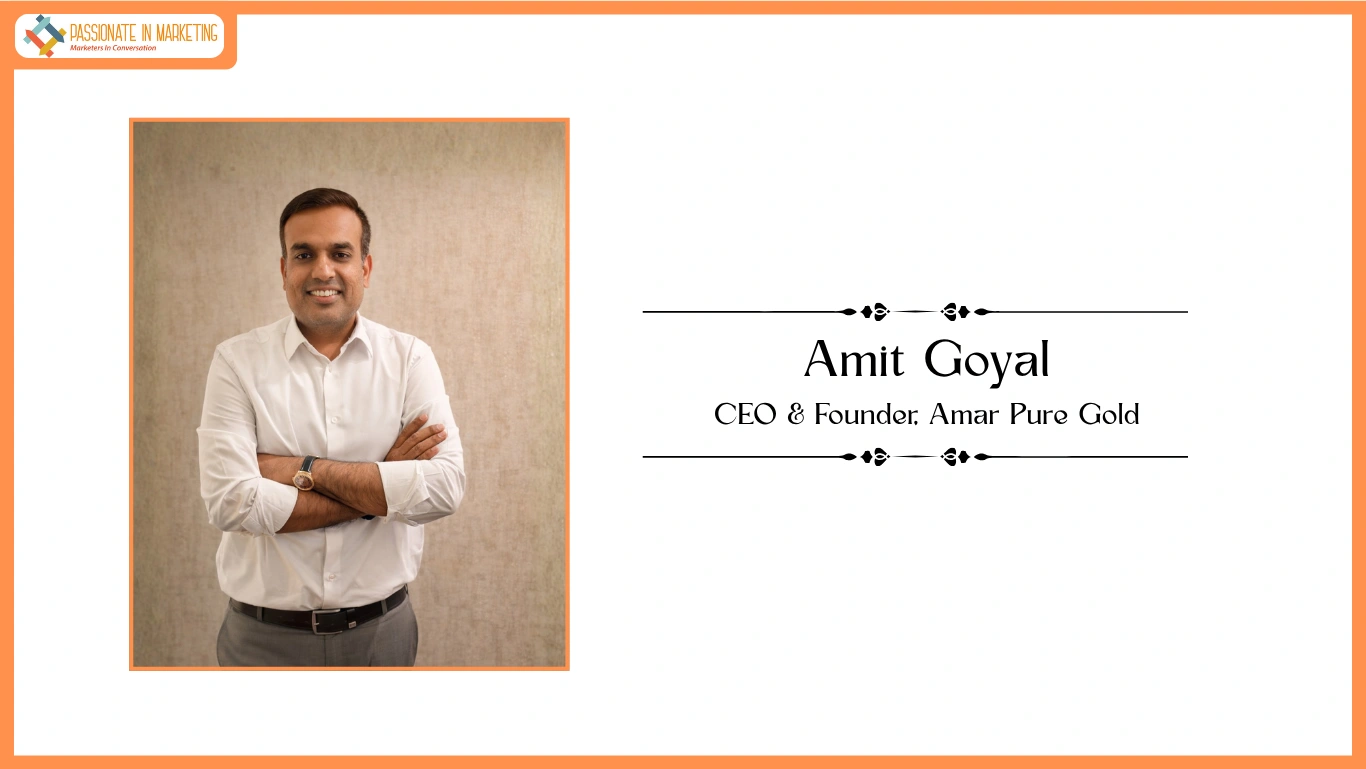
1. Can you share the growth journey of Amar Pure Gold and the key milestones achieved so far?
Amar Pure Gold’s journey has been guided by a clear strategic belief; that Indian cuisine, despite the country having one of the world’s largest diasporas, remains under‑represented in mainstream global food markets. While global demand for Indian flavours has always existed, the challenge historically has been standardization, scalability, and consistent quality delivery across geographies.
The emergence of frozen food technology became a turning point for us. It allowed authentic Indian flavours to travel globally while preserving taste, texture, and food safety. Recognizing this opportunity early, Amar Pure Gold positioned itself at the intersection of tradition and technology by developing export‑grade frozen products aligned with international standards.
A key milestone has been our recognition as the Best Export House for Authentic Indian Sweets & Snacks for two consecutive years by Dainik Bhaskar, reflecting both our growing global footprint and the trust built through quality and compliance.
Over time, we have strengthened farm‑to‑fork integration, upgraded processing infrastructure, and expanded international distribution networks. These initiatives have enabled strong repeat partnerships in global markets. Today, Amar Pure Gold is evolving into a globally oriented frozen food brand contributing to India’s emergence as a credible exporter of premium frozen foods.
2. What are the major factors driving the growth of the frozen food market in India today?
India’s frozen food market is expanding rapidly due to changing lifestyles, rising demand for convenience, and increasing consumer awareness around food safety and quality. Urbanization, higher disposable incomes, and dual‑income households have significantly influenced consumption patterns. Frozen foods are now seen as reliable, high‑quality meal solutions rather than occasional substitutes.
Another important factor is the growing emphasis on consistency, hygiene, and traceability. Consumers expect food products to deliver reliable quality every time.
This is where integrated supply chain models become critical. At Amar Pure Gold, farm‑to‑fork integration is a core part of our vision. It begins with close collaboration with sourcing partners and clearly defined quality parameters, followed by disciplined manufacturing supported by GMP standards, rigorous standardization, and well‑defined process controls.
The result is a transparent and resilient supply chain that ensures food safety, traceability, and consistent product quality. Such integrated frameworks are increasingly shaping the growth trajectory of India’s frozen food industry while building consumer confidence and sustainable topline growth.
Our expansion strategy focuses on capacity expansion, portfolio diversification, and geographic growth.
On the manufacturing front, we are expanding production capacity through new facilities and upgrades across multiple states. We are currently developing four new manufacturing and processing plants with investments exceeding ₹300 crore, which will improve efficiency, reduce turnaround times, and support growing domestic and export demand.
Internationally, we are exploring strategic partnerships and potential overseas processing collaborations to strengthen market access and align with region‑specific consumer and regulatory requirements.
In terms of product diversification, we are also entering the spice processing segment, leveraging India’s strong agricultural base. This complements our frozen food portfolio and opens opportunities in high‑potential markets such as Europe, where demand for traceable and quality‑assured Indian ingredients continues to grow.
Overall, our roadmap aims to build scale, strengthen global integration, and position Amar Pure Gold as a diversified, export‑ready food enterprise.
4. How is Amar Pure Gold leveraging technology to improve manufacturing efficiency and consistency?
Technology plays a critical role in enhancing efficiency and consistency across our operations.
We have integrated automation and digital monitoring systems throughout our manufacturing facilities to ensure precision‑driven production. Our IoT‑enabled SCADA systems allow real‑time monitoring of parameters such as temperature, humidity, processing conditions, and hygiene checkpoints.
This continuous monitoring helps maintain batch‑to‑batch consistency while ensuring strict compliance with food safety standards. Automation also reduces manual intervention, minimizing variability and strengthening quality assurance.
The result is improved operational efficiency, better throughput, and stronger process reliability. These technology frameworks also enhance audit readiness and align our operations with global food manufacturing standards, enabling us to scale confidently across domestic and international markets.
5. What investments has the company made to strengthen its cold chain and supply chain infrastructure?
Amar Pure Gold has made focused investments in building a robust cold chain and supply chain infrastructure.
We have expanded our network of strategically located chilling centres and installed modern Bulk Milk Coolers (BMCs) across sourcing clusters to preserve product quality at early procurement stages. Maintaining temperature integrity at this stage is critical for product consistency.
Our cold chain is supported by refrigerated logistics, temperature‑controlled transport systems, and modern cold storage facilities at distribution hubs, ensuring uninterrupted freshness from procurement to delivery.
Additionally, we have upgraded processing facilities with automation, implemented digital inventory and traceability systems, and strengthened farmer partnerships. Expanding our dealer‑distributor network has also improved last‑mile reliability and market reach.
These investments reflect Amar Pure Gold’s evolution into a professionally managed, quality‑driven enterprise with a strong supply chain backbone.
6. What quality control practices and certifications help you meet global food safety standards?
Quality and food safety are fundamental to our operations.
Our facilities comply with FSSAI regulations and are certified under ISO 22000:2018, supported by HACCP protocols and stringent Good Manufacturing Practices (GMP). For exports, we adhere to APEDA guidelines and destination‑specific regulatory requirements.
Our quality framework follows a structured farm‑to‑fork model, including raw material testing, multi‑stage laboratory validation during processing, automated cold chain monitoring, and batch‑wise traceability.
Regular third‑party audits and internal reviews reinforce operational discipline. We also conduct training programs for plant teams and awareness initiatives for farmers to embed quality consciousness across the organization.
These systems ensure Amar Pure Gold consistently meets both domestic regulatory standards and international food safety expectations.
7. How do you see the future of the frozen food industry evolving in India?
India’s frozen food industry is entering a strong growth phase driven by rising domestic consumption and increasing global demand for authentic Indian cuisine.
With a rapidly expanding diaspora and growing international curiosity for Indian flavours, Indian food is moving beyond ethnic aisles into mainstream global dining. This shift creates significant export opportunities.
India’s agricultural strength, improving processing capabilities, and expanding cold chain infrastructure position the country as a competitive sourcing hub for frozen foods.
At Amar Pure Gold, we are investing in quality‑assured farm‑to‑fork integration, advanced manufacturing systems, and export‑ready compliance frameworks. Our focus is on scalable infrastructure, automation, and strong quality standards.
As global demand for Indian frozen foods grows, we aim to play a meaningful role in shaping the sector by setting benchmarks in reliability, quality, and globally aligned production systems.

