


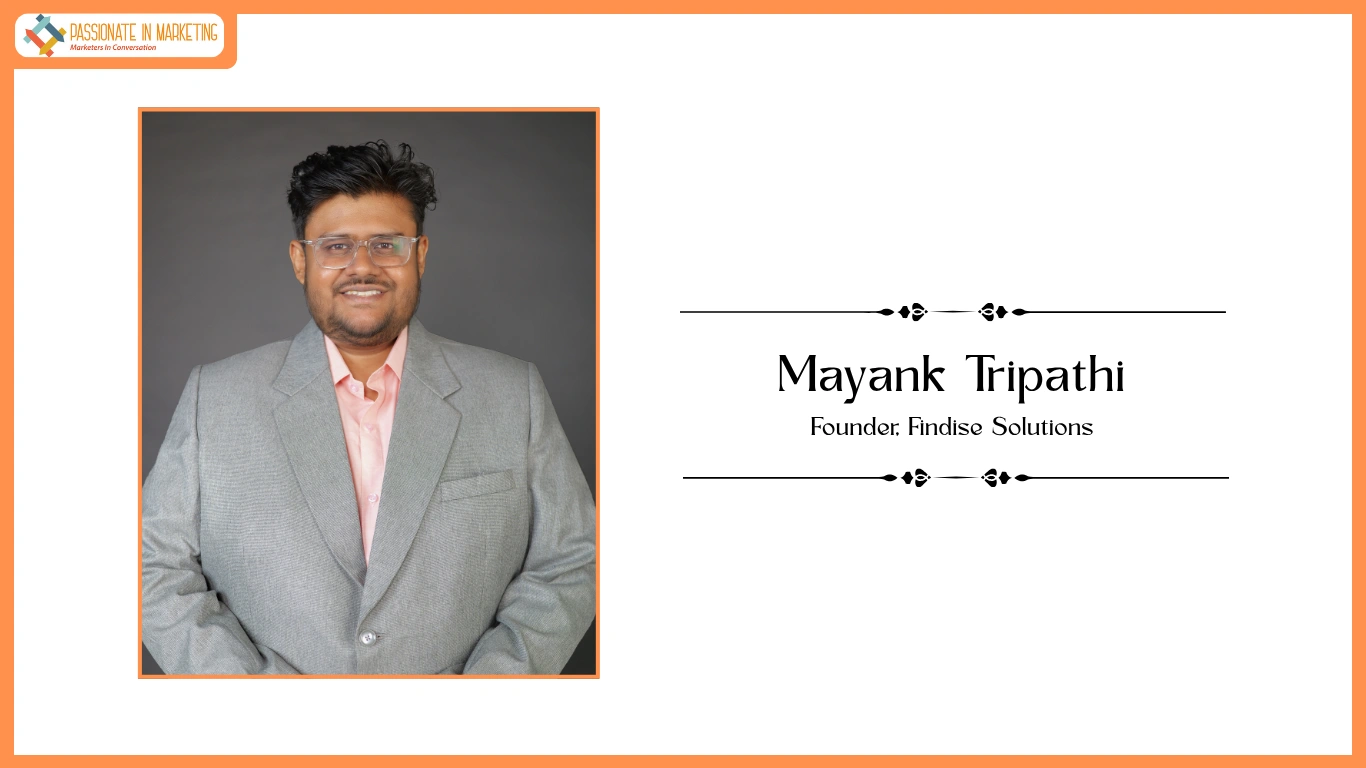
- As AI tools become increasingly capable of generating content, how can brands ensure their communication remains authentic and emotionally resonant with audiences?
Honestly? Authenticity was never about the words. It was always about the truth sitting behind them. AI can spin out a caption in two seconds, but it can’t have lived the thing that caption is about — and audiences feel that gap faster than we give them credit for.
There’s data on this now, and it’s brutal. Only about 7% of consumers say visible AI content makes them trust a brand more, and 31% say it makes them trust it less. People aren’t anti-technology. They just don’t want to be spoken to by a machine pretending to be a person.
So the way we work at Findise is pretty simple: let AI do the heavy lifting — drafting, scaling, personalising — but a human owns the message and the emotion. The minute you let the model decide what the audience should feel, you’ve already lost them. Look at McDonald’s in the Netherlands or Coca-Cola’s AI holiday spot — both got pulled or roasted because they felt, in people’s words, soulless. Meanwhile, Aerie made a no-AI pledge and saw a 23% sales jump. That’s not a coincidence. Right now, sounding human is a genuine competitive edge. Use it on purpose.
- Do you believe AI is enhancing creativity in marketing or creating a risk of uniformity in brand storytelling? Why?
Both at once — and that’s the part people miss. It’s the most powerful creative tool we’ve ever had and the biggest threat to original work, in the same breath.
Here’s the mechanic nobody likes to say out loud. These models predict the most probable next word. “Probable” is just a polite word for average. So when you and your competitor and ten other agencies all reach for the same tools, everything quietly drifts to the same safe middle. Researchers literally have a name for it now — content homogenization. The whole industry slowly melting into one beige average.
And look, 95% of marketers are using AI today. Almost everyone. So if your plan is “use AI to make content faster,” congratulations, that’s also everyone else’s plan. For most brands that’s scary. For sharp ones it’s the opportunity of the decade — because when everyone sounds identical, standing out gets cheaper. AI raises the floor; anyone can hit “good enough” now. But the ceiling — the spiky, weird, emotionally specific stuff people actually remember — that still needs a human with a real point of view. So does AI enhance creativity? Only for the people using it to escape the average instead of racing toward it.
- What role does human intuition play in campaign strategy and decision-making, even when brands have access to vast amounts of AI-driven consumer data?
Data tells you what happened. Intuition tells you what it means and what to do next. Two completely different jobs — and AI is incredible at the first one and basically useless at the second.
I’ve sat in rooms where the dashboard is screaming one “obvious” answer and it’s just… wrong. Because the numbers can’t see the context. Data is a rear-view mirror — it’s built entirely on what people already did. But every campaign worth running is a bet on what they’ll do next, sometimes something they’ve never done before. A few years back the data said the AI software market was too small to bother with. The people who trusted their gut over that chart now run the category.
Even marketing leaders admit this when you ask them. In a recent Canva study, when they were asked what AI will never replace, the top answers were empathy, human imperfection, and brand intuition. The people closest to the tools know the judgment layer is still ours. So intuition’s job isn’t to ignore the data — it’s to interrogate it. Use AI to kill the guesswork on what’s known, so your human brain is free for the unknown: reading culture, sensing a shift before it shows up in a graph, knowing which “statistically optimal” idea is actually just boring.
- Can you share an example where a creative, human-led insight delivered better results than a purely data-driven approach?
The one I always come back to is Dove’s Real Beauty campaign, because it’s so clean. The whole thing was built on one human insight from their research — only 2% of women described themselves as beautiful. Two percent. No optimization model hands you that. It takes a person to look at that number and feel the size of the problem hiding inside it.
They built the entire campaign around that emotional truth, used real women instead of models, and it ran for years. Sales went from around $2.5 billion to over $4 billion. The “Real Beauty Sketches” film hit 50 million views in under two weeks. A pure data-first approach would’ve never gotten there — the data would’ve told them to talk about moisturizer.
And the flip side is just as useful: Tropicana redesigned its packaging to a cleaner, “smarter” look, tested fine on paper, and lost something like $30 million in a couple of months before pulling it. The human insight they ignored was that people find their juice by that iconic orange-and-straw image — it’s emotional, not logical. I see tiny versions of this every week in performance marketing. The numbers tell us how to say something efficiently. Only a human can tell us what’s actually worth saying. Logic scales the magic. It doesn’t create it.
- Looking ahead, what skills should marketers focus on developing to remain relevant and valuable in an AI-first marketing landscape?
Simple rule: stop trying to beat AI at the things it’s good at. If your whole value is “I make content fast,” you’re already replaceable — 95% of marketers have that button now. The future belongs to people who can do what the machine can’t.
Four things I’d tell anyone on my team to build right now.
One — taste. AI will hand you a hundred options; your job is knowing which one’s actually great and why. That’s the rarest skill in the room, and it’s getting rarer.
Two — AI fluency, but the director kind. Not just typing prompts. Knowing how to brief it, push back on the lazy average it gives you first, and edit it hard. Almost every marketer already admits they rewrite AI copy to make it sound human — so be excellent at that part.
Three — strategic and critical thinking. When everyone can generate, the edge moves to whoever asks the sharper question and connects the dots into a story over time. Don’t let that muscle go soft just because the tool is easy.
And four — the one nothing can automate: emotional intelligence and actual human connection. Reading a room. Telling a story that makes someone feel something. When marketing leaders themselves say empathy is the thing AI will never replace, that’s not a soft skill anymore — that’s the moat. Get great at the human layer, let AI handle everything underneath it, and you don’t just survive this shift. You win it.
**’The opinions expressed in the article are solely the author’s and don’t reflect the opinions or beliefs of the portal’**

