


- In your experience, what’s the biggest misconception people have about what PR actually does?
That PR is just media coverage — getting a name in the news and calling it a win. In reality, PR’s real job is building trust before a customer or investor ever interacts with a brand directly. By the time someone reaches out, a lot of the convincing has already happened through what they’ve read or heard. That’s the part people underestimate. - You’ve talked about how PR indirectly affects things like trust and even search visibility. Can you unpack that connection for readers who think of PR as “just media coverage”?
One client we worked with had almost no presence anywhere when we started — nothing came up if you searched for them. Within about a year of consistent PR, that changed completely. They started attracting business nationally and internationally, at better rates, because prospects researching them found real coverage and, increasingly, better Google rankings. That wasn’t an SEO campaign — it was a byproduct of sustained media presence. It’s a good example of how PR’s impact shows up in places people don’t expect. - Negative PR versus positive PR — when does a brand actually benefit from controversy, and when does it backfire?
Both exist as real strategies. Some brands lean into controversy deliberately because it builds recognition — it gets people talking, even if the sentiment isn’t entirely positive. But recognition isn’t the same as trust. For almost every client relationship I’ve had — B2B or B2C — the actual goal is a positive brand image, because that’s what earns real trust with an audience. Visibility gets you noticed; a positive story is what gets you believed. - How has the PR industry changed since you first entered it in 2022?
The biggest shift is how much founder-led and personal storytelling has come to matter. When I started, PR was still very corporate-brand-first. Now, audiences want to know the person behind the brand — the story, the struggle, the point of view — not just a polished press release. Digital and social channels have also blurred the line between PR and content in a way that didn’t exist a few years ago. - What’s a piece of advice you give clients who expect PR to generate leads overnight?
I tell them PR isn’t a lead-generation tool the way a performance ad is, and it was never meant to be one. What it does is build a strong impression in front of the right audience over time — slower, but far more durable. By the time a lead comes in, PR has usually already done the quiet work of making them receptive, so the actual conversion happens faster and needs far less convincing. - What does “Your Story, Our Strategy” mean to you in practice — how does it show up in a real client engagement?
It means we start every client relationship by listening, not pitching. Every brand already has a story worth telling — our job is figuring out what that story actually is, and then building the strategy that gets it to the right audience, through the right channels, at the right time. It keeps us from treating clients like a checklist and instead treating them like a partner in their own narrative. - What’s been the hardest part of building and leading a team at ASPR?
Learning to hand things off. I built ASPR alone at the start, so every client relationship and every piece of strategy went through me directly. Bringing on a team meant trusting other people with something I’d built from nothing — that took longer for me to get comfortable with than I expected, but it’s also what let ASPR actually grow past what one person could handle. - How do you decide which clients are the right fit for ASPR?
I look for clients who actually have a story worth telling and are willing to be honest with us about their business — the good and the difficult parts. PR only works when we have the real picture, not just the polished version. If a client wants us to manufacture a narrative instead of building one on something true, that’s usually not a fit. - What’s a lesson from a client relationship that didn’t go as planned that changed how ASPR operates now?
Early on, a few clients simply didn’t pay for completed work — a hard lesson in running a business, not just doing the craft. It changed how we operate: clearer contracts, clearer payment terms, upfront, before any strategy work begins. Protecting the business is part of protecting the work itself. - What would you tell a young woman graduating in mass communication today who wants to eventually start her own agency?
That rejection isn’t always a signal to stop — sometimes it’s the push you need to stop waiting for someone else’s approval. I heard “how will you handle everything” more times than I can count, as a woman trying to move up in this industry. My answer was always the same: I can. I started ASPR with almost nothing and no safety net. If the capability is there, the rest can be built. - Where do you see ASPR in the next few years?
Continuing to grow the team and deepen the sectors we work in, while staying founder-led at the core — that hands-on approach is what got clients real results from day one, and I don’t want scale to come at the cost of that. - If there’s one thing you want ASPR to be known for beyond client results, what would it be?
That we built something real from almost nothing, and that we did it by actually believing in the people we worked with — clients and team both. Results matter, but I want ASPR to also stand for proof that you don’t need permission or connections to start; you need the work and the belief that you can do it.
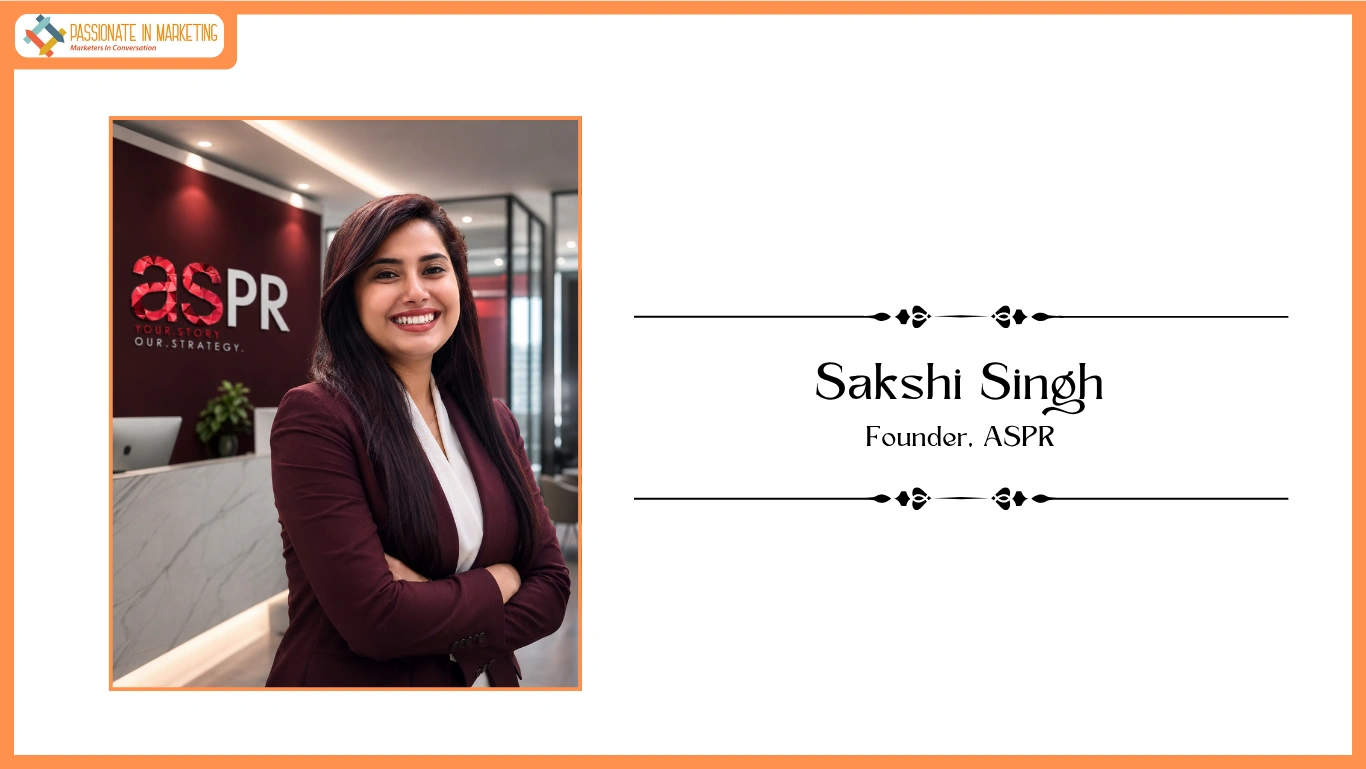
Passionate in Marketing – In Conversation With Ms. Sakshi Singh, Founder, ASPR


Read More