


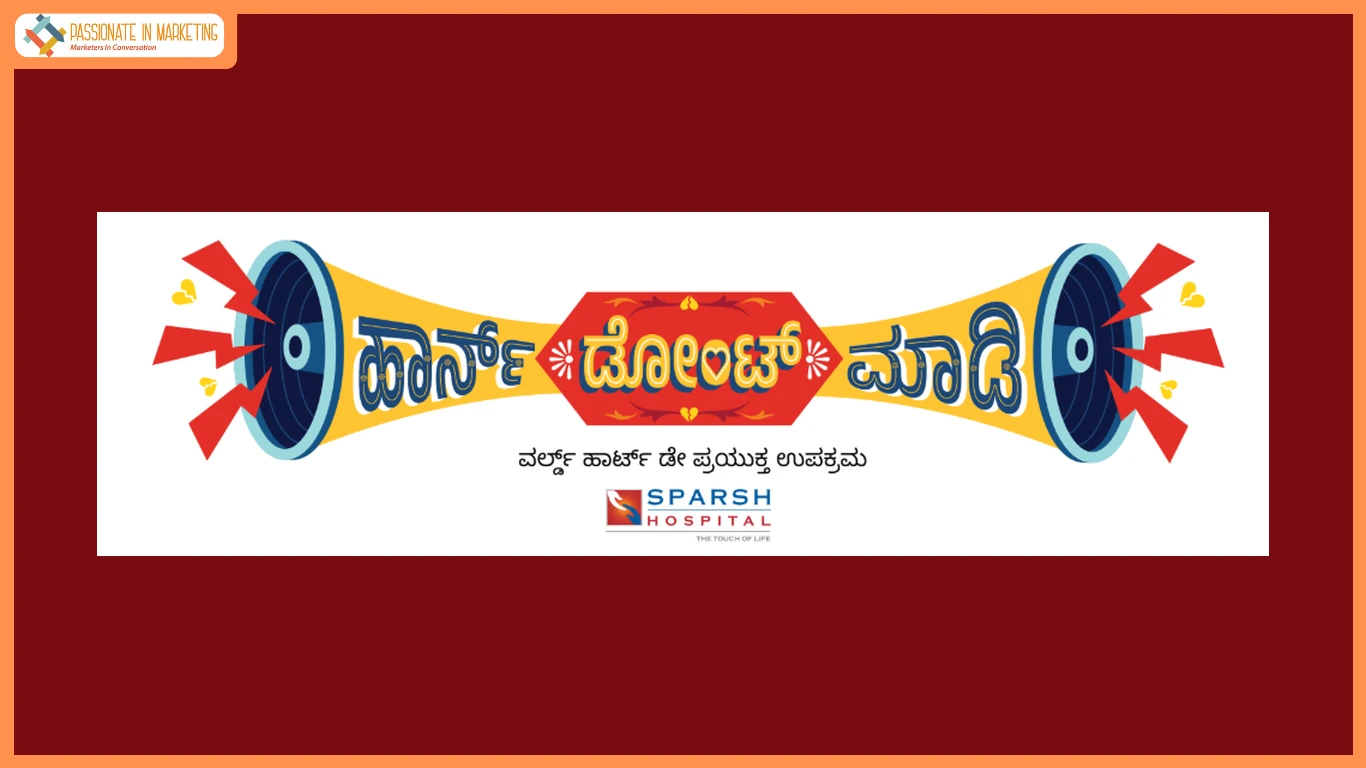
Bengaluru, September 21, 2026: In Bengaluru, honking has become as much a part of the daily commute as traffic itself. At signals, in bumper-to-bumper roads, and even when there is nowhere for vehicles to move, the instinct to honk often comes automatically. This World Heart Day, SPARSH Hospitals is turning this everyday Bengaluru behaviour into a city-wide awareness conversation with the launch of ‘Horn Don’t Maadi’.
Built around a simple observation that honking does not make traffic move, the campaign encourages commuters to rethink unnecessary and habitual honking and consider the impact of repeated traffic noise and everyday commute-related stress on their overall wellbeing. Importantly, ‘Horn Don’t Maadi’ is not a campaign against using the horn when it is required for safety. Instead, it seeks to distinguish between necessary honking and the habitual use of the horn driven by impatience, frustration or the belief that making more noise can somehow make traffic move faster.
The campaign’s central thought asks Bengaluru a simple question: “Can honking move the traffic? If not, what is all this noise doing to us?” By connecting a highly relatable urban behaviour with heart health, SPARSH Hospitals aims to take the World Heart Day conversation beyond conventional health messaging and into the everyday environment experienced by millions of Bengaluru commuters.
“We wanted to create a World Heart Day campaign that people in Bengaluru would immediately recognise as their own. Honking has become such a familiar part of our daily commute that we rarely stop to question whether every honk is actually necessary. With ‘Horn Don’t Maadi’, our intention is simply to encourage a moment of pause. If the traffic is not moving, another honk is unlikely to change it. But choosing not to honk unnecessarily can make the environment around us a little calmer. As a healthcare organisation, we believe prevention and wellbeing are also shaped by the everyday environments and behaviours around us” said Dr. Sharan Shivaraj Patil, Founder, Chairman and Chief Orthopaedic Surgeon, SPARSH Group of Hospitals.
“An occasional honk is not the concern. It is repeated exposure to unnecessary and stressful noise that can add to the body’s stress response. When these stressors are experienced repeatedly, they can contribute to chronic stress, which is one of several factors that influence cardiovascular health,” said Dr. (Prof) Ranjan Shetty, Lead Consultant, Cardiologist and Group Medical Director, SPARSH Hospitals.
The campaign is rooted in the understanding that loud or unexpected noise can activate the body’s fight-or-flight response, with stress hormones such as adrenaline and cortisol involved in the body’s response to stress. While an occasional honk is not the concern, repeated exposure to stressful noise and traffic environments can contribute to physiological stress over time.
SPARSH Hospitals is therefore using honking as an entry point into a broader conversation around stress, wellbeing and cardiovascular health, without suggesting that individual honks directly cause heart disease or that traffic noise is the sole cause of cardiovascular risk.
The campaign recognises that heart health is influenced by several established factors, including hypertension, diabetes, smoking, obesity, lifestyle and chronic stress. Persistent noise can also affect sleep and overall wellbeing, making the everyday environment an important part of the larger health conversation.
Rather than keeping the initiative limited to hospital communication or conventional awareness messaging, SPARSH Hospitals will take ‘Horn Don’t Maadi’ directly into Bengaluru’s roads, communities and daily conversations. The campaign will use a mix of public sign-ups, hospital and community engagement, radio and social media interventions, street vox pops, interactive traffic polls and doctor-led conversations to bring commuters into the conversation. Through street-level interactions, the campaign will explore how Bengaluru experiences its honking culture and encourage people to reflect on when they actually need to use their horns.
The campaign will also feature influencer-led content under ‘Honk Not Okay Please’, extending the conversation into social media through relatable, city-specific content designed to encourage participation and discussion.
The objective of ‘Horn Don’t Maadi’ is not to eliminate honking from Bengaluru’s roads. The horn remains an important safety tool and should be used whenever the situation requires it. Instead, SPARSH Hospitals is seeking to make unnecessary and habitual honking less normalised.
The campaign encourages commuters to pause before reaching for the horn, particularly when traffic is stationary, when there is no immediate safety concern or when the honk is simply a response to frustration. Through this approach, SPARSH aims to create greater awareness around the relationship between everyday traffic stress, repeated noise and wellbeing, while encouraging a more considerate commuting environment.
At a time when Bengaluru’s traffic is an unavoidable part of everyday life, ‘Horn Don’t Maadi’ puts the focus on one element commuters can consciously reconsider: the unnecessary honk. The campaign’s message is simple: Use the horn when safety requires it, not as a default response to traffic.
About SPARSH Hospitals
SPARSH Group of Hospitals is one of Karnataka’s leading multispecialty healthcare providers, delivering advanced, technology-enabled care with a strong focus on clinical excellence, innovation, and ethical medical practice. With a network of 8 hospitals, over 1,600 beds, 600+ consultants, and 3,400+ employees, SPARSH offers comprehensive care across 50+ specialties. Having touched over 1.5 million lives and serving patients from more than 14 countries, SPARSH Hospital continues to set benchmarks in patient outcomes while making world-class healthcare accessible across Karnataka and beyond.

