


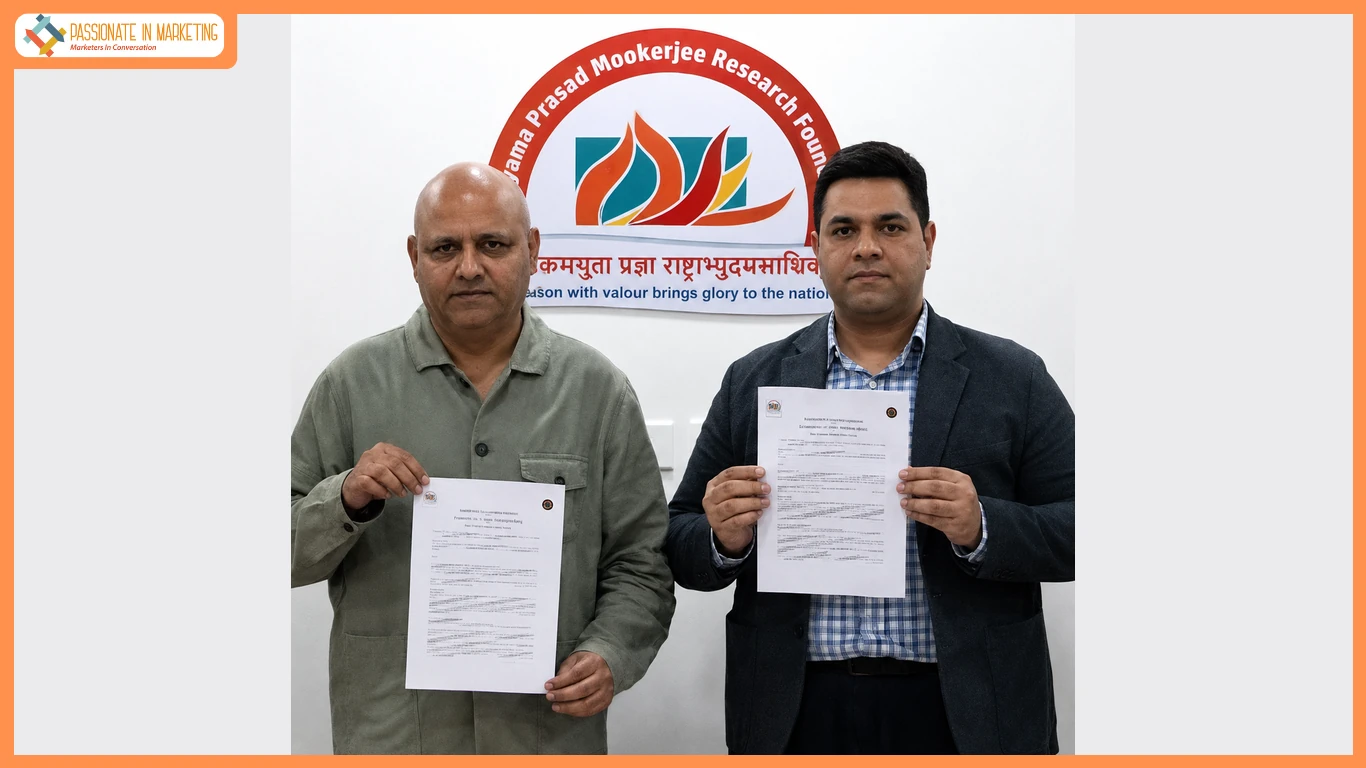
New Delhi, September 3: Public policy think tank Dr Syama Prasad Mookerjee Research Foundation (SPMRF) and background verification company Millow on Thursday signed a memorandum of understanding to develop a comprehensive framework for credible verification and background checks of workers engaged in the quick commerce and wider digital platform economy.
The study follows concern over the pace at which workers have entered the sector. Large numbers have been onboarded in a short period without adequate verification or due diligence, particularly in roles that involve direct interface with citizens in metros and Tier 1 cities. These include ride hailing and passenger transport, food delivery, quick commerce and grocery delivery, household help and home services, and online marketplaces through which services are booked and delivered at the doorstep. In many of these roles a worker enters the home or handles assignments late at night.
The study will look at secure onboarding, identity verification, periodic revalidation of credentials, authenticated worker records and the prevention of account misuse, with consumer safety as the central concern.
The proposed framework recommends a dual verification process at the point of onboarding. Building on the principle of the Code on Social Security, 2020, it suggests that the Ministry of Labour and Employment may issue guidelines for secured onboarding and worker verification by digital platform operators. Alongside Aadhaar, PAN or driving licence checks, it proposes that a second government issued document such as the Elector Photo Identity Card be verified digitally, with the verification supplemented and certified by state law enforcement agencies.
For industry, the framework recommends that platforms maintain authenticated worker records and auditable onboarding processes, carry out periodic revalidation of credentials, and submit verification reports to designated authorities every quarter. This is intended to ensure that only verified and authorised individuals undertake platform work. It also recommends internal protocols to investigate and suspend accounts promptly where unauthorised account sharing or misuse of identity is found.
Binay Kumar Singh, Director, SPMRF, said the question was not one of restricting work but of knowing who is at the door.
“A very large number of people have come into this economy in a very short time, and in many cases nobody has checked who they are,” he said. “Once a worker is entering homes, driving passengers or handling deliveries at night, verification stops being a private matter between a platform and its workforce. That is where the state has to lay down a minimum standard.”
Karan Bhatty, Founder, Millow, said much of the verification done at onboarding is never revisited.
“Unfortunately, employee verification at companies can become a checkbox exercise, where the priority is onboarding quickly and at the lowest possible cost. For roles where individuals enter homes, deliver food and groceries to households, work at construction sites or operate in other sensitive environments, that is simply not enough. We need to move from superficial, one-time verification to deeper and continuous due diligence, where identity is validated against multiple authoritative records, credentials are periodically revalidated, relevant antecedents and background are examined, and there is an auditable trail of who was verified and how. Some platforms already use measures such as periodic selfie or facial verification to help prevent account sharing and impersonation, which is an important safeguard, but authentication is only one part of the solution. We also need confidence that the individual behind that account was adequately verified in the first place. There is a further gap at the vendor level, since recruitment and onboarding of blue-collar and gig workers may be outsourced to third parties, making vendor due diligence and visibility into the original source of recruitment equally important.”
SPMRF is currently providing inputs to a high level committee constituted by the Government of India and intends to take up the study as part of that work.
Millow is a background verification and risk intelligence company founded in 2018 and operating across India. It runs an automated verification platform covering employee background checks, identity and address verification, tenant and household staff screening, criminal record checks and integrity due diligence for companies and investors. Its client base spans corporates, banks and non banking financial companies, along with individual users. The company is led by founder and chief executive Karan Bhatty.

