


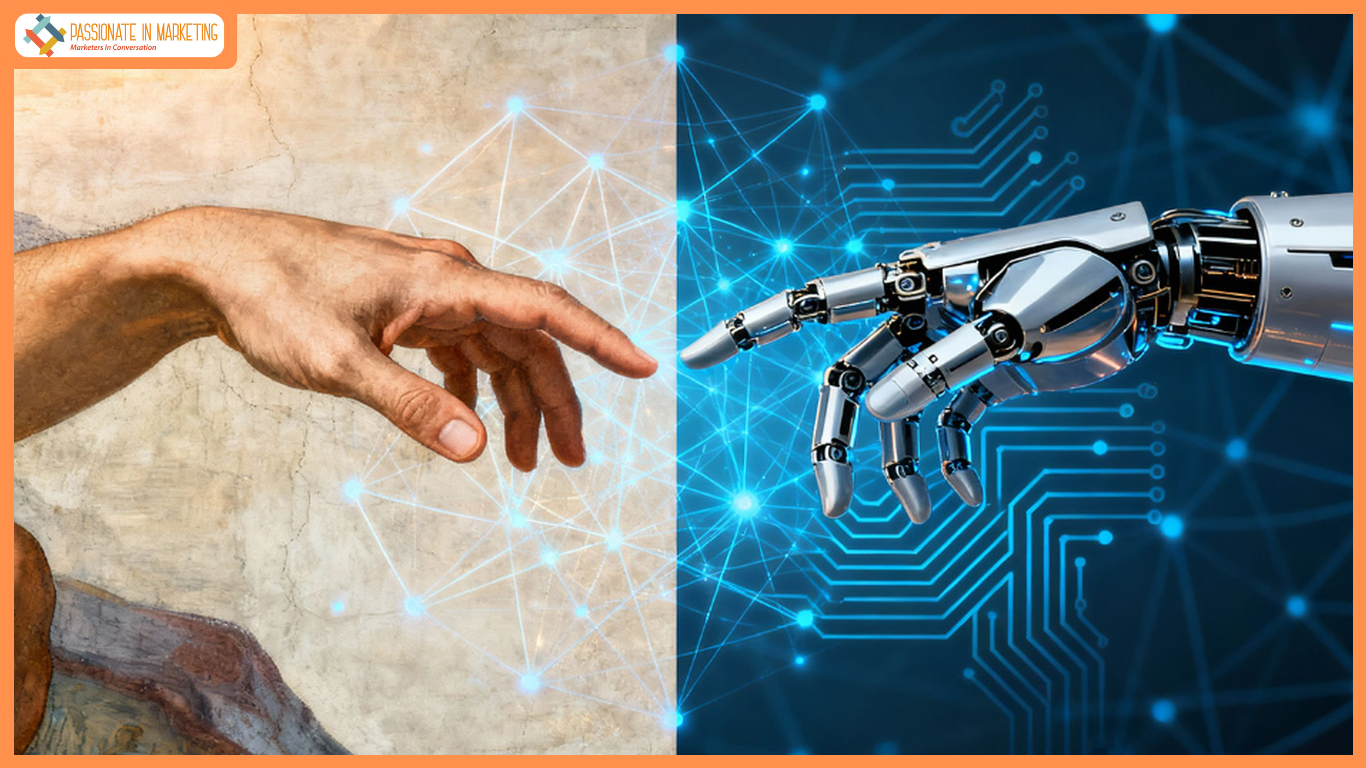
As artificial intelligence reshapes how brands connect with consumers, Singapore businesses face a critical choice: embrace the technology or risk obsolescence. But the real question isn’t whether to adopt AI but how to maintain authentic brand connections in an increasingly automated world.
The marketing landscape has witnessed seismic shifts before: the digital revolution, social media emergence, mobile-first consumer behaviour. Yet the current AI transformation feels different. It’s not merely changing how we execute marketing; it’s fundamentally altering what consumers expect from brand interactions.
Recent research from McKinsey suggests that 70% of companies will adopt at least one type of AI technology by 2030, with marketing and sales leading adoption rates. In Singapore’s hyper-competitive market, this timeline is accelerating rapidly. The question facing brand leaders isn’t whether AI will impact their business but whether they’ll harness it strategically or be disrupted by it.
The Paradox of AI-Driven Personalisation
As AI enables unprecedented personalisation at scale, consumers are becoming increasingly discerning about authenticity. They can sense when interactions feel genuinely human versus algorithmically generated. This creates the “personalisation paradox”: technology that promises deeper connections while potentially creating greater distance.
Consider Singapore’s banking sector. DBS Bank’s AI-powered customer service can handle thousands of queries simultaneously, yet their most successful campaigns still centre on deeply human stories. The AI handles efficiency; the brand strategy handles emotion.
This reveals a crucial insight: AI amplifies brand strategy rather than replacing it. The most successful implementations combine technological sophistication with strategic clarity about brand purpose and human connection.
Three Strategic Imperatives for AI-Enhanced Branding
- Define Your Human Core
Before implementing AI, organisations must crystallise their fundamental human value proposition. Working with brands across Southeast Asia through Vantage Branding, we observe that the most resilient brands establish their human essence first, then layer AI capabilities to amplify it.
- Master Context-Aware Automation
Generic personalisation is becoming table stakes. The advantage lies in contextual intelligence—understanding not just what customers do, but why they do it within their cultural framework. AI can analyse behavioural patterns, but strategic guidance ensures cultural sensitivity and relevance.
- Build Adaptive Brand Architecture
AI-driven interactions require more sophisticated frameworks—systems that can maintain voice consistency, adapt tone to customer context, and scale personalisation without losing authenticity.
The Trust Factor in AI Branding
Consumer trust becomes exponentially more critical in AI-driven environments. Companies that address privacy concerns and maintain transparent AI practices build stronger confidence. Clear communication, tangible value from data, and escalation paths to human help all reinforce brand reliability.
Conclusion: Strategy First, Technology Second
The AI revolution in branding is inevitable, but its impact is not predetermined. Companies that approach AI with clear strategy, cultural sensitivity, and commitment to customer value will find tremendous opportunities. The key insight: AI is not about replacing human connection but scaling and enhancing it.
**’The opinions expressed in the article are solely the author’s and don’t reflect the opinions or beliefs of the portal’**

