


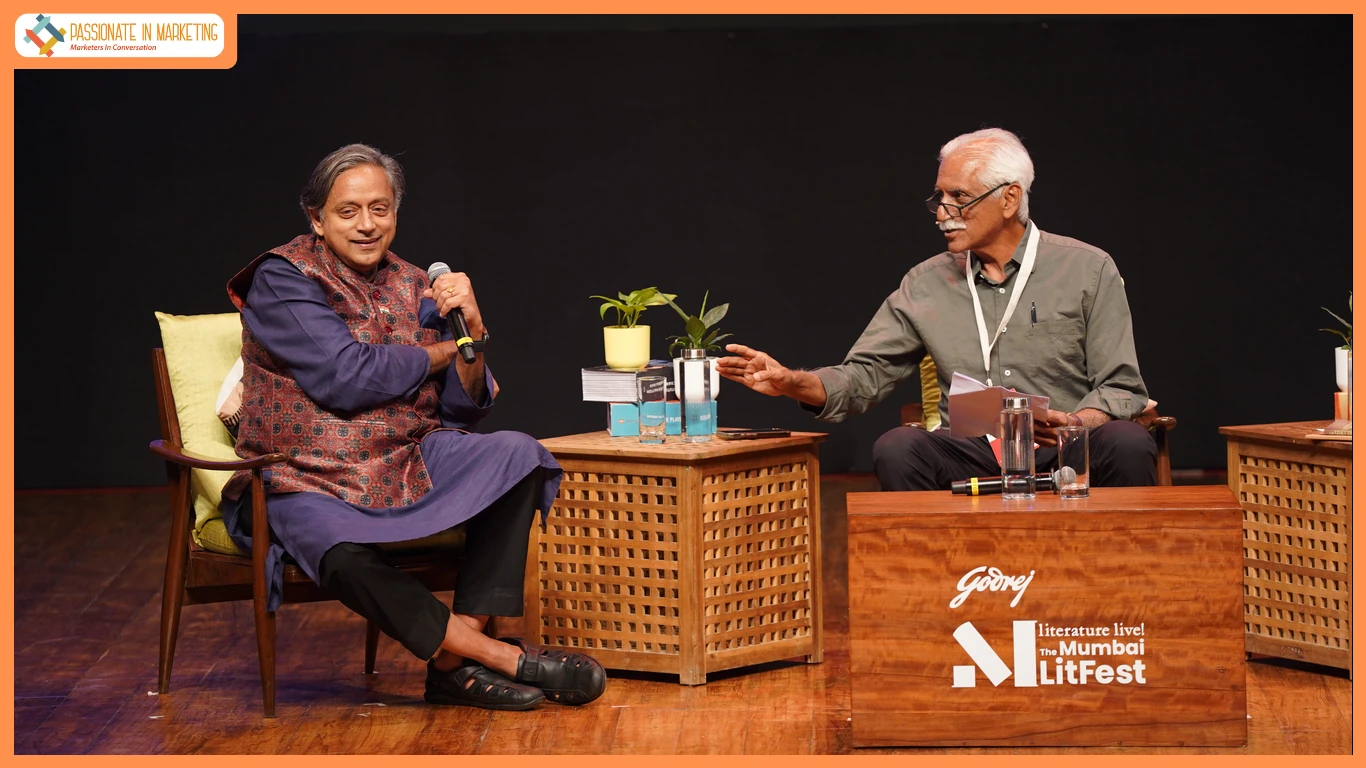
Cricket has always been more than just a sport for Indians. It’s a lifestyle, a religion, a festival. What is it about cricket that makes us want to read about it beyond just scores, highlights and stats? This year, Godrej Literature Live! The Mumbai LitFest’s LINES AT LENGTH session on day two brought together cricket super-fan Shashi Tharoor and former cricket correspondent-turned-author Rahul Bhattacharya with veteran sports journalist Ayaz Memon to explore why, even in today’s era of highlight reels, writing about the poetry of the cover drive, or the whirr of the seam, remains unbeatable. Some excerpts:
Ayaz Memon opened the session by quoting a Nobel-winning writer who called cricket “the greatest thing created on earth, certainly greater than sex,” Dr. Tharoor replied by explaining the game’s pull. He said, “There’s something about cricket that really resembles life. You are timing the ball well and hitting it off the middle of the bat, and then the unpredictable, ungaugeable weather, or rainstorm, or a dry pitch comes along. Life does that to you, and it happens in cricket as well. There is so much about cricket that fits into what you can understand about life. It’s a metaphor.”
The conversation turned to India’s growing dominance in world cricket and the financial power that has accompanied the rise of the IPL and franchise cricket. Questioning whether the concentration of money and influence was healthy for the sport, Bhattacharya said, “This kind of centralisation of cricket, I think, is not healthy. I find India’s dominance in world cricket now uncomfortable; a franchise cricket that has that kind of money. India were the underdogs at one point. I just feel India is shortsighted with all its money and resources.”
Reflecting on the evolution of the Indian team, Dr. Tharoor spoke about its changing social composition. Where earlier teams drew heavily from urban, affluent backgrounds and royal families, players from smaller towns and more modest circumstances increasingly came into the game, with MS Dhoni’s early career as a railway ticket collector becoming a striking example. Dr. Tharoor said, “The sociological transformation of the cricket team also reflected the way in which India’s evolution had gone beyond the big cities, and the possibility of change all over the country.”
While explaining the game’s appeal to writers, Bhattacharya pointed to the tension between individual ambition and collective responsibility, and the possibilities this creates for storytelling. He mentioned, “It’s the particular relationship between the individual and the team. It gives you more dramatic struggle than anything else. Growing up, I thought it was everything. I don’t think you need anything else to understand what the outside world is.”
Reflecting on a passage from J. M. Coetzee’s Boyhood, which depicts a boy facing a cricket ball, Bhattacharya spoke about failure as a shared experience for cricketers, sportspeople and writers. He added, “It really talks about failure. And that’s something cricketers and sportspeople deal with all the time. And writers do too.”

