


Gurugram | 28 July 2026 — Consumers today scrutinise almost everything that enters their homes. They read food labels, install water purifiers, invest in air quality monitors and increasingly make choices around cleaner living. Yet one of the most frequently used surfaces in every household remains largely unquestioned: the cookware that touches every meal, every single day.
Every day, millions of Indian families cook breakfast, lunch and dinner without ever asking one simple question – What is my cookware adding to my food—and what is it taking away?
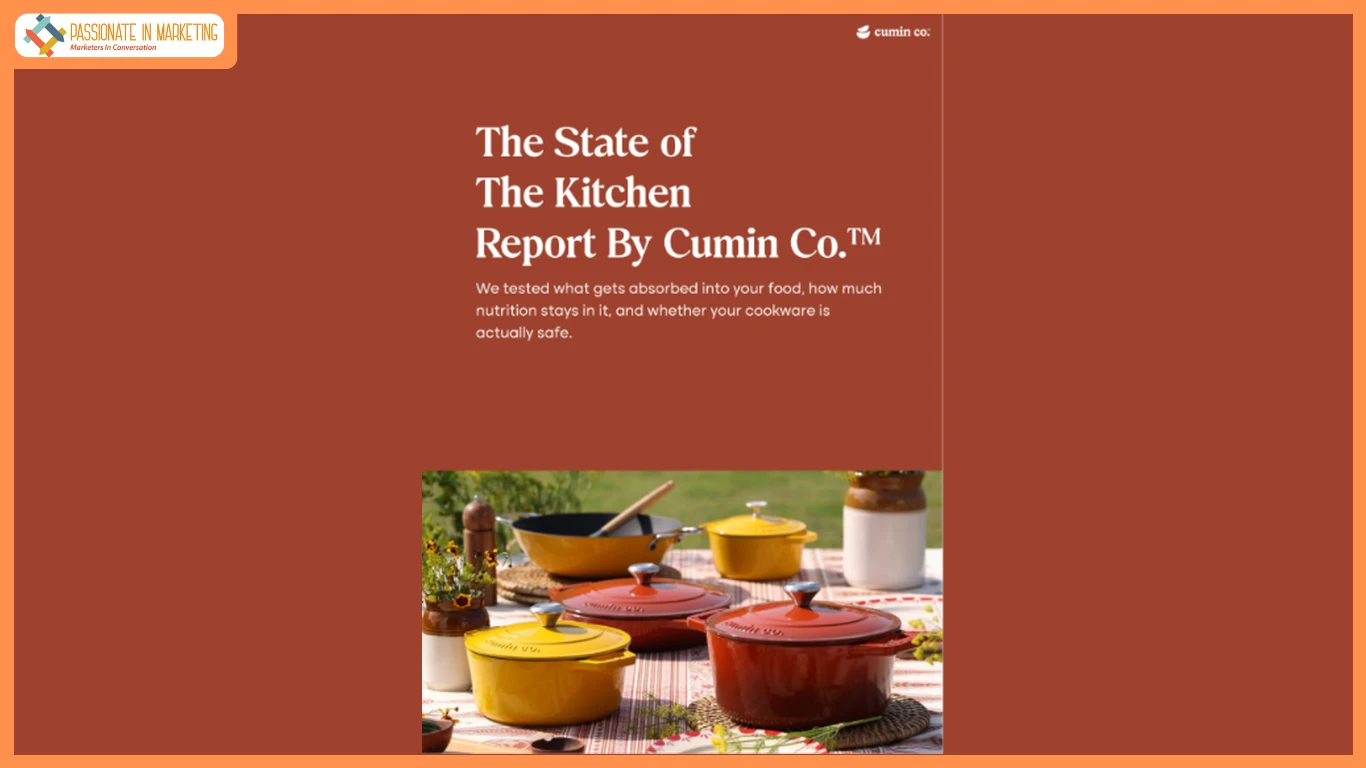
To answer that question, Cumin Co today released The State of the Indian Kitchen Report, an independent study designed in partnership with SAGE Sustainability and tested by one of the world’s leading accredited testing laboratories. Rather than relying on product claims, the report compares seven of the most commonly used cookware materials under identical laboratory conditions to understand their impact on food safety, nutrient retention and long-term sustainability.
The study compared:
- Cumin Co Enviromax™ Enamel Cast Iron
- Stainless Steel Triply
- Brass
- Ceramic-Coated Aluminium
- Pre-seasoned Cast Iron
- Raw Cast Iron
- Teflon Non-Stick
The report arrives at a time when cookware itself is becoming part of a much larger global health conversation. Around the world, regulators are tightening scrutiny around PFAS chemicals, researchers continue to study the long-term impact of microplastics, and consumers are becoming increasingly conscious of the hidden materials they interact with every day. Yet while conversations around food quality have evolved significantly, comparatively little attention has been paid to the surfaces on which that food is prepared.
“We’ve spent years becoming conscious of what goes into our food,” said Niharika Joshi, Founder, Cumin Co. “But what about the surface it is cooked on? We believed consumers deserved answers backed by science—not marketing. This report wasn’t created to validate our assumptions. It was created because we genuinely wanted to understand whether cookware could influence what reaches our plates, and we committed ourselves to publishing the findings transparently, whatever they revealed.”
To ensure the findings were independent, Cumin Co. partnered with SAGE Sustainability, which helped conceptualise the research framework, while all laboratory testing was conducted independently.
The research partner, SAGE Consulting, stated, “We collated the impact of the cookware based on evidence. We are pleased to share that the cookware is rigorously tested and the cooking surface is nourishing, safe and long-lasting.”
How the study was conducted
An independent laboratory evaluated all seven cookware materials using two separate laboratory protocols.
The first examined food safety, exposing cookware surfaces to acidic cooking conditions designed to simulate prolonged stress before screening for the migration of sixteen heavy metals, including lead, cadmium, arsenic and mercury.
The second examined nutrient retention, preparing the exact same tomato paneer curry recipe across all cookware types under controlled cooking conditions before comparing nutritional values between the raw ingredients and the finished meal.
What the report found
Among the report’s key findings:
- Food Safety: Independent laboratory testing found that Cumin Co’s Enviromax enamel cookware met safety specifications for all 16 regulated heavy metals, with no harmful migration detected even under a harsh acidic stress test (95°C for 2 hours).
- Nutrient Retention: Cumin Co’s Enviromax™ enamel cookware recorded the highest nutrient retention among the seven cookware materials tested, far outperforming the average across protein, fibre, Vitamin A, Vitamin D, Vitamin E and Vitamin B3 in an identical cooking trial.
- No Chemical Absorption: Cumin Co’s cookware is made of a non-reactive, glass-based coating with no fluoropolymers, which means no forever chemicals like PTFE, PFOA and PFAS are added to your food.
- Durability: Cumin Co. cookware is engineered for more than 10 years of regular use, compared with the estimated 2–5 year replacement cycle of conventional coated cookware, supporting longer product life and lower replacement frequency.
- Environmental Impact: By combining a recycled cast iron base with a durable enamel surface engineered to last decades, Cumin Co. reduces the need for frequent cookware replacement, helping lower material waste and landfill impact compared with coated cookware.
At the centre of Cumin Co’s cookware range is Enviromax™, a proprietary triple-patented enamel technology built using a four-layer glass-based coating fused onto recycled cast iron at 750°C. Unlike fluoropolymer-based coated cookware, Enviromax™ contains no PTFE, PFOA or PFAS, while complying with internationally recognised food-contact standards, including FDA (USA), LFGB (Germany) and EC 1935/2004 (Europe).
Udit Lekhi, Co-Founder, Cumin Co, said, “For years, cookware has largely been sold on convenience, aesthetics or price. We believe it’s time consumers had access to something equally important—evidence. By publishing the complete findings of this report, our hope isn’t simply to demonstrate how our own cookware performs. It’s to encourage a broader industry movement towards greater transparency, stronger testing standards and better-informed consumer choices.”

