


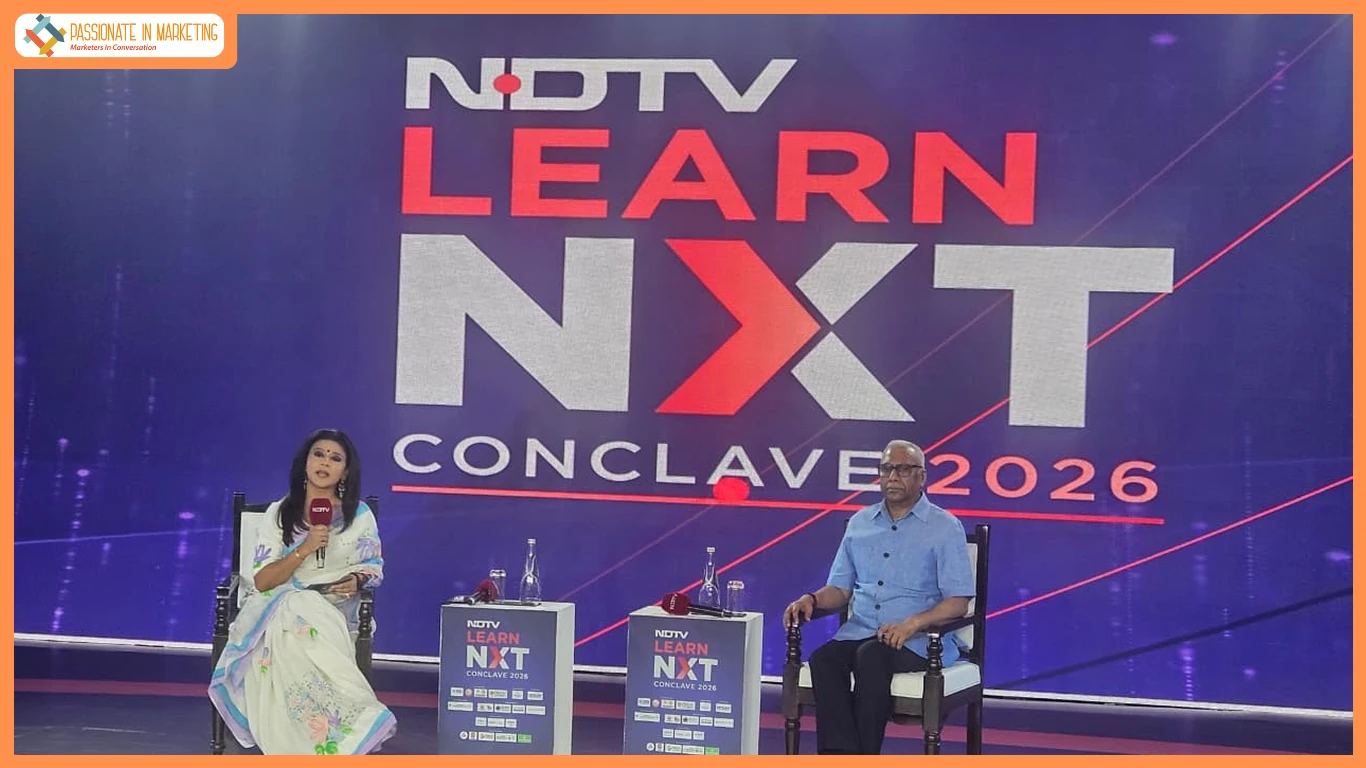
New Delhi, May 26, 2026: NDTV LearnNXT Conclave 2026 successfully concluded in New Delhi today after bringing together some of the country’s leading policymakers, educators, academic leaders, entrepreneurs and industry voices for wide-ranging discussions on the future of education, learning and employability in India. The conclave emerged as a major platform for conversations around AI-led disruption, foundational learning, inclusion, entrepreneurship and the urgent need to redesign India’s education system for a rapidly changing world.
The day-long conclave featured prominent speakers including NCERT Director Prof Dinesh Prasad Saklani; Deepak Bagla, Mission Director at Atal Innovation Mission, NITI Aayog; Ira Singhal from the Ministry of Education; Dr Rukmini Banerji of Pratham, and leaders from global universities, startup founders and education experts, among others.
One of the strongest themes to emerge from the conclave was the shift away from rote learning towards critical thinking, experiential learning and adaptability. NCERT Director Prof Dinesh Prasad Saklani defended the implementation of the three-language model under the National Education Policy (NEP) 2020 and described it as an important step towards reconnecting students with Indian languages, culture and knowledge systems while preparing them for global opportunities.
“The colonial system of education continued and its hangover is still there. Rote learning is a hallmark of the colonial system of education,” Prof Saklani said while stressing that learning multiple languages improves cognition and broadens cultural understanding. He acknowledged implementation challenges but said schools, communities and parents would all need to work together to make the transition successful.
Artificial Intelligence and its impact on jobs, learning and society remained another major focus area at the conclave. Deepak Bagla, Mission Director at Atal Innovation Mission, NITI Aayog, said entrepreneurship was no longer an alternative career option in India but was increasingly moving to the centre of the country’s growth story.
Highlighting the scale of India’s startup ecosystem, Bagla said over two lakh startups are now registered with the government while more than 1.1 crore students have moved through Atal Tinkering Labs since the initiative was launched. He argued that India’s younger generation is uniquely placed to adapt to the AI era because of its entrepreneurial mindset and ability to reinvent itself.
“AI has completely democratised knowledge,” Bagla said, while also cautioning that the current generation is facing rising anxiety because of the speed of technological disruption and information overload.
Several speakers at the conclave stressed that India’s education system must now prioritise foundational skills such as critical thinking, communication, creativity and adaptability over narrowly defined academic achievement. Dr Anirudh Gupta, CEO of DCM Schools, said education should not be reduced to examinations and syllabus completion alone. “Whatever is left in the child’s personality after subtracting all that learning is what education is,” he said while calling for an ecosystem that creates “job providers, not job seekers”.
Kunal Mehra, Regional Director MENA and India CEO at Crimson Education, echoed similar concerns and said many jobs students are preparing for today may not even exist a decade later, making foundational learning and adaptability more important than ever before.
Disability inclusion emerged as one of the most important discussions of the conclave. Ira Singhal, Deputy Secretary in the Department of School Education and Literacy at the Ministry of Education, announced that the ministry will mandate disability screening for every child in India’s school system and launch sensitisation training for one crore teachers nationwide.
Calling India’s current disability identification rate of 0.89 per cent among school children “not credible”, Singhal said accessibility could not remain limited to ramps and compliance checklists. “We have a list of schools with ramps. We have a list of schools with accessible toilets. But we do not have a school which has actually followed the whole of the accessibility code,” she said.
The conclave also saw repeated emphasis on strengthening early childhood learning. Deepika Mogilishetty from EkStep Foundation said India must invest in the first eight years of childhood “as if our life depended on it”. Siddhant Sachdeva, Co-Founder of Rocket Learning, described India’s Anganwadi network as the country’s “secret superpower” and highlighted the role of community-led learning systems in improving foundational education outcomes.
Dr Rukmini Banerji, CEO of Pratham, pointed to the varied learning backgrounds children come from before entering formal schooling and stressed the importance of strengthening Balvatikas and Anganwadi systems under NEP 2020.
The discussions also addressed gaps between classrooms and industry requirements. Dr Arvind Kumar Pandey of Echelon Institute of Technology said institutions needed to move beyond conventional teaching methods and focus more deeply on psychomotor and affective learning alongside cognitive development.
Professor Bhagwati Prakash Sharma of Pacific Group of Universities raised concerns over outdated infrastructure in several state universities, saying many institutions still lack modern computer systems required to effectively adopt AI-enabled learning tools.
Global education standards and international learning models were also featured in the discussions. Professor Eloise Phillips from the University of Southampton said students at the university’s Delhi campus receive the same academic modules and learning experience as students studying at campuses in the UK and Malaysia.
The conclave concluded with a broader consensus that the future of Indian education will depend not only on policy reforms but also on implementation, teacher readiness, infrastructure development, parental participation and the ability of institutions to prepare students for an uncertain and technology-driven future.

