


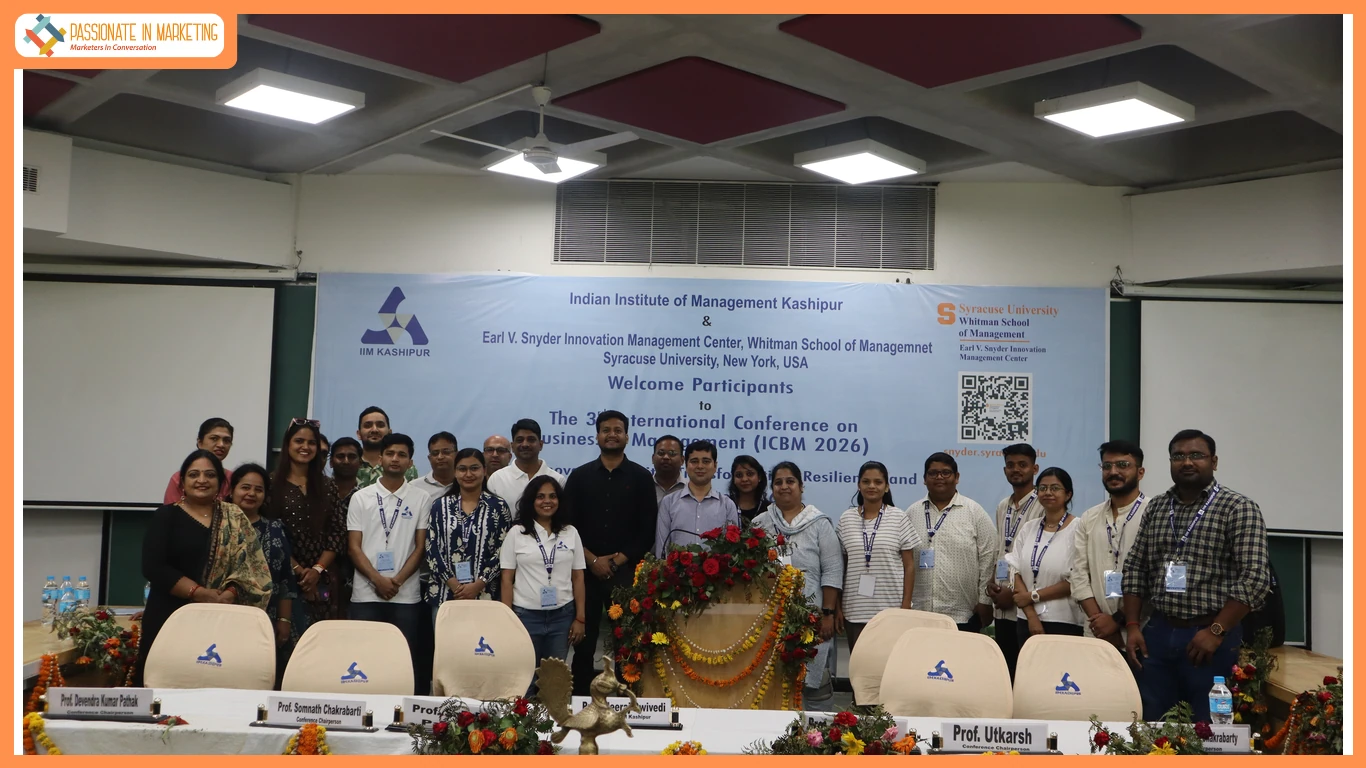
15th June 2026: The International Conference on Business Management (ICBM 2026) on driving Innovation, Digital Transformation, Resilience, and AI, hosted by the Indian Institute of Management (IIM) Kashipur, concluded successfully after three days of insightful discussions, cutting-edge research presentations, and meaningful academic exchange. The conference brought together over 80 researchers, academicians, industry practitioners, and scholars from India and across the globe, featuring more than 60 research presentations across 11 diverse tracks, fostering meaningful dialogue around the four transformative themes of ICBM 2026.
The valedictory day witnessed thought-provoking keynote sessions by globally renowned scholars who explored the transformative impact of Artificial Intelligence, innovation, governance, and emerging business paradigms.
Prof. Satish Nambisan, Professor, Western Reserve University, USA, delivered a compelling address. He examined the limitations of conventional governance frameworks in addressing AI-driven challenges and highlighted the need for integrated governance capabilities that combine policy mandates with organizational preparedness. He further emphasized anticipatory governance, architectural flexibility, and embedded governability as critical pillars for managing emerging AI risks.
Prof. Venkatesh (Venky) Shankar, Southern Methodist University, USA, presented a futuristic perspective. Highlighting the rapid evolution of humanoid systems, multimodal assistants, and AI-enabled customer operations, he discussed India’s unique opportunity to emerge as a global AI leader through digital public infrastructure, financial innovation, industrial transformation, and public-sector modernization. He also outlined multiple scenarios that could shape the world by 2030.
Addressing the practical implications of AI in academia and research, Prof. K. Sivakumar, Lehigh University, USA, encouraged participants to embrace AI as a tool for productivity, preparation, participation, and possibility. He underscored the importance of human judgment in an AI-enabled world and demonstrated how platforms such as Gemini, NotebookLM, AI Studio, and Perplexity can support learning, teaching, and scholarly research.
Prof. Anand Kumar Jaiswal, Professor, IIM Ahmedabad shared insights on AI’s Transformative Impact on Marketing, highlighting how artificial intelligence is revolutionizing product recommendations, pricing strategies, and customer engagement. He also showcased AI-driven innovations in healthcare, including advanced diagnostic technologies such as NIRAMAI’s breast cancer screening solution.
Adding a perspective on innovation management, Prof. Frank T. Piller of RWTH Aachen University, Germany, discussed the Double Diamond Model of innovation and emphasized the importance of cultivating a digital mindset and open innovation culture. He highlighted how AI is expanding opportunities to explore both problem and solution spaces, thereby accelerating innovation processes.
The conference was also graced by the presence of Prof. Neeraj Dwivedi, Director, IIM Kashipur; Padma Shri Prof. Anil Gupta, Distinguished Retired Professor, IIM Ahmedabad; Prof. Ankur Sinha, Professor, IIM Ahmedabad; Prof. S. P. Raj, Professor, Syracuse University, New York, USA; Prof. Somnath Chakrabarti, Prof. Utkarsh, Prof. Devendra Kumar Pathak, and Prof. Jimut Bahan Chakrabarty, Professors at IIM Kashipur. Their participation further enriched the academic discourse and scholarly engagements, fostering meaningful exchanges of ideas among participants from diverse academic and professional backgrounds.
Throughout the conference, participants engaged in rich discussions around the four central themes of ICBM 2026, exploring the intersection of technology, management, sustainability, innovation, and business transformation. The research presentations and scholarly interactions provided a vibrant platform for knowledge exchange and collaborative learning.
The successful conclusion of ICBM 2026 reaffirmed IIM Kashipur’s commitment to fostering global academic engagement and advancing research that addresses contemporary business and societal challenges, while supporting the national aspiration of Viksit Bharat 2047. The conference concluded with a vote of thanks to all speakers, delegates, researchers, industry participants, and organizing teams for their invaluable contributions to the event’s success.

