


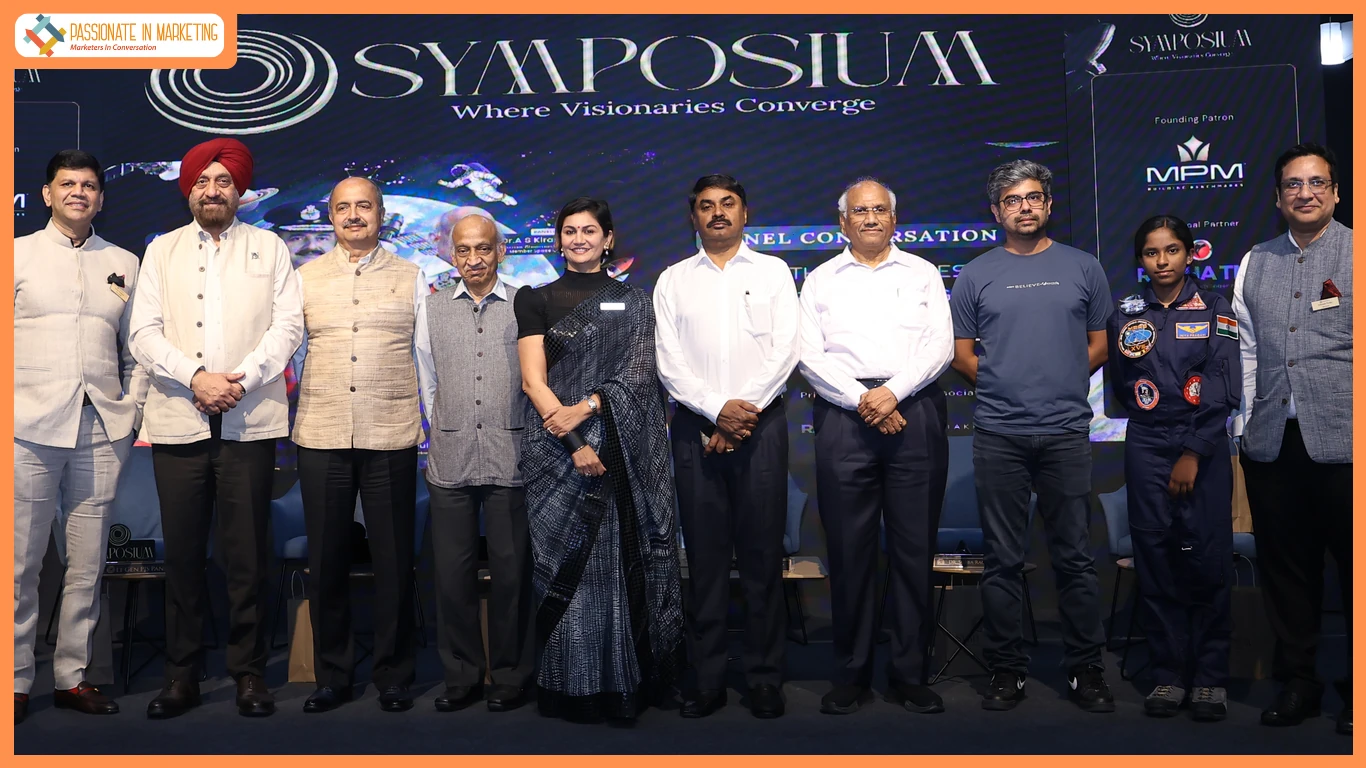
Hyderabad, May 30, 2026: India possesses world-class space and defence technologies but must urgently build scale, private-sector capacity, capital access and supportive policy frameworks if it is to emerge as a global leader in the era of space-driven warfare and strategic competition, according to some of the country’s foremost defence and aerospace leaders.
This consensus emerged at the third edition of the Symposium, titled “The Day the Sky Goes Dark: Warfare in the Age of Satellite Dependence”, held till late Friday night at T-Hub, Hyderabad.
The high-level discussion brought together former ISRO Chairman Dr A.S. Kiran Kumar, former DRDO Chairman Dr G. Satheesh Reddy, former Chief of the Air Staff Air Chief Marshal Vivek Ram Chaudhari, Ananth Technologies Chairman & Managing Director Dr Subba Rao Pavuluri, TakeMe2Space Founder & CEO Ronak Kumar Samantray and moderator Lt Gen PJS Pannu PVSM AVSM VSM (Retd).
Opening the discussion, Symposium Founder Mr Girish Mallpani posed a provocative question that resonated throughout the evening: “Why can’t India build its own Starlink?”
The question triggered a candid discussion on India’s ambitions in space, satellite infrastructure, launch capabilities and strategic self-reliance.
A key message emerging from the discussion was that India does not suffer from a technology deficit. Instead, it faces a capacity challenge.
Referring to India’s achievements, including Chandrayaan, Mangalyaan, Aditya-L1, and Mission Shakti, Dr A.S. Kiran Kumar said India has repeatedly demonstrated technological excellence. The next challenge, he said, is creating capacity through larger satellite constellations, greater launch capability and stronger private-sector participation.
“India has the capability. The challenge now is capacity. We need not just satellites but constellations; not just launches but a launch pipeline,” he observed.
Former DRDO Chairman Dr G. Satheesh Reddy said India’s defence technology ecosystem is significantly stronger than generally perceived and stressed that greater collaboration between government institutions and private industry will be essential to accelerate growth.
He further added that space has become the fourth dimension of warfare… A lot of work is going on globally. Our country also would be getting prepared for it…”
Dr Subba Rao Pavuluri argued that satellites should no longer be viewed as specialised assets but as integral components of modern weapon systems, adding that India’s private sector already possesses the engineering talent and manufacturing capability required to compete globally.
He further stated that “The demand for defence-specific satellites is growing rapidly, and Indian industry must step forward to build the required capacity. Producing more indigenous satellites is critical to strengthening India’s defence preparedness, strategic autonomy and national security.”
Highlighting another critical challenge, Ronak Kumar Samantray said future leadership in space will belong to countries that can launch satellites rapidly, repeatedly and at scale.
“We need more rockets,” he remarked, stressing that launch cadence will become a key strategic advantage in the years ahead.
Former Air Chief Marshal Vivek Ram Chaudhari underlined that information dominance has become as decisive as conventional firepower. He observed that a nation’s ability to restore degraded satellite capabilities rapidly may prove more important than the size of its existing fleet during future conflicts.
The discussion also focused on the need for structural reforms. Referring to the fact that nearly 90 per cent of defence and civilian space procurement in the United States and Europe is routed through private industry, participants called for procurement reforms, larger order flows and greater access to growth capital for Indian space and defence companies.
Moderating the session, Lt Gen PJS Pannu urged India to think beyond domestic requirements and position itself as a global provider of space technologies and services.
“Why limit our ambition to India? We should aspire to serve the world, shape the diplomacy of space and build resilience that ensures India’s sky never goes dark,” he said.
India’s defence architecture will become increasingly dependent on space-based capabilities in the years ahead. Future military networks will be a blend of terrestrial and non-terrestrial systems, making investments in Cyber and Electromagnetic Activities (CEMA), smart satellites, secure data centres and resilient communications infrastructure absolutely critical. If India is to achieve true strategic self-reliance, we must have complete control over the foundational technologies of Power, Materials and Electronics (PME). These are the building blocks of national security in the space age.”, he further added.
One of the highlights of the evening was the participation of 13-year-old Iniya Pragati Martian, Commercial Astronaut Candidate and India’s youngest Analog Astronaut. Her interaction with the panel and audience served as a powerful reminder that the next generation of India’s space leadership is already taking shape.
The event also witnessed the presentation of the white paper from the previous Symposium edition by Founder Mr Girish Mallpani and CEO Ms Asha Vashist to Sri Jayesh Ranjan IAS, Special Chief Secretary, Government of Telangana, reaffirming Symposium’s commitment to translating high-level dialogue into actionable policy recommendations.
More than 100 guests from defence, aerospace, startups, academia, research and public policy attended the invitation-only event.
The overarching message from the symposium was clear: India does not have a space technology problem. It has a scale problem, a capital problem and a policy problem. The technology foundation is strong. The challenge now is to build the capacity required to compete and lead globally.
Some of the key takeaways
India has a “capacity problem, not a capability problem
India’s sky must never go dark: Defence and Space leaders call for urgent action
Future wars may begin in Space, say former ISRO, DRDO and Air Force Chiefs
Why can’t India build its own Starlink?
A satellite should be an integral part of every weapon system.
Information dominance is now as important as firepower.
India should not merely serve itself but aspire to serve the world through space technologies.
The room was ‘shaken into deeper awareness’ of India’s vulnerabilities and opportunities.
Iniya Pragati is the symbol of India’s future space generation.
Need for more rockets and launch capability, rather than just satellites
90% of defence and space procurement in the US and Europe comes from the private sector,
The private sector needs steady orders and capital, not just encouragement.
White paper submitted to Jayesh Ranjan, IAS

