


The 17th edition of KASHISH Pride Film Festival – South Asia’s Biggest and India’s first mainstream LGBTQ+ film festival – is celebrating June Pride Month with on-ground from June 3–7, 2026 across three South Mumbai venues — the iconic Liberty Cinema throughout the festival, along with Alliance Française de Bombay and the newly added National Gallery of Modern Art from June 4–7.
Founded in 2010, and earlier known as KASHISH Mumbai International Queer Film Festival, and now as KASHISH Pride Film Festival since 2024, it was the first Indian LGBT festival to be held with approval by the Information & Broadcasting Ministry, Government of India. It has risen to become South Asia’s Biggest Film Festival. It was also voted as one of the Top 5 LGBT Film Festivals in the World by Movie Maker magazine. And recently named one of the “Top 15 International Film Festivals Worth Travelling The World For” by Travel & Leisure magazine!
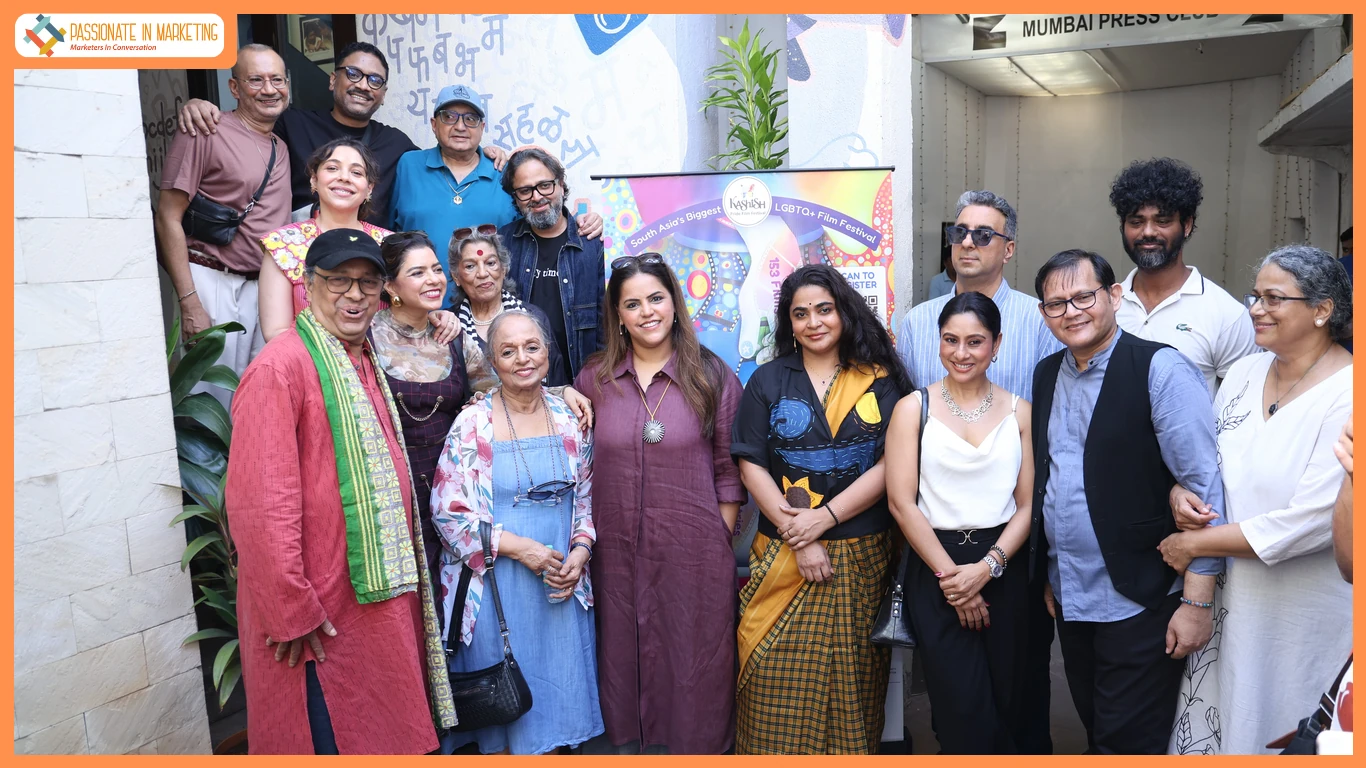
A press conference was held to introduce the festival on 28th May 2026, where festival directors Sridhar Rangayan and Saagar Gupta welcomed their esteemed guests to share a few words regarding their involvement.
Reflecting on Queer Storytelling Through This Year’s Festival Line-Up
Filmmaker Sai Deodar introduced her film Na Aavadti Goshta, sharing that the project emerged from a desire to spark conversations around LGBTQ+ identities within Indian families. She noted that even in progressive homes, queer relationships are often met with silence rather than dialogue, and wanted to create a warm, accessible film families could watch together. Emphasising that “love is the most universal emotion,” she said the film hopes to gently normalise queer love across generations.
Filmmaker Rohan Kanawade spoke about Sabar Bonda, a tender romance between two men set during a ten-day mourning period in a village. While rooted partly in his own experiences of returning to his father’s village and navigating conversations around marriage, he described the film as ultimately being about intimacy, longing, and emotional honesty. Kanawade shared that audiences — including many heterosexual viewers — connected deeply with the love story, adding that he was especially excited to screen the film before a packed 1000+ theatre audience for the first time.
Filmmaker and actor Ashish Sawhny discussed his documentary The Sailor and the Chef, which follows an older gay couple who met by chance at a movie theatre more than three decades ago, long before apps, support systems, or visible queer networks existed. He explained that he was drawn to stories of older LGBTQ+ individuals whose resilience and courage often go unrecognised. Reflecting on his own journey with nonfiction cinema, Sawhny described filmmaking as both a personal and political act shaped by family values rooted in honesty and social consciousness.
Advisory Board Members Celebrate KASHISH’s Legacy of Inclusion
Members of the KASHISH advisory board reflected on the festival’s long-standing role in building visibility, empathy, and community through cinema.
Veteran filmmaker Arunaraje Patil reflected on her long association with KASHISH and praised the festival’s spirit of acceptance and inclusivity. Speaking about the power of cinema to challenge prejudice and encourage empathy, she described KASHISH as a celebration of life itself and congratulated the organisers for steadily building it into such a meaningful cultural platform.
Actor and media personality Dolly Thakore spoke affectionately about her years with KASHISH, calling the festival “family.” She reflected warmly on the many friendships she has built within the queer community and expressed admiration for the openness, warmth, and connection she has experienced through those relationships, while extending her continued support to the festival and its organisers.
Meghna Ghai Puri spoke about her decade-long association with KASHISH and the meaningful partnership the festival shares with Whistling Woods International. Highlighting the school’s experience welcoming its first transgender student from the KASHISH community, she described the student as both a gifted filmmaker and an inspiring representative for the cause. Meghna stressed the importance of spaces like KASHISH in encouraging young filmmakers to tell deeply personal stories and called for stronger institutional and financial support for such initiatives.
Delivering one of the evening’s most impassioned speeches, Viveck Vaswani traced KASHISH’s journey from an educational support platform to a globally recognised film festival. He described its evolution in three stages — education, enlightenment, and now empowerment — arguing that the next chapter must focus on helping queer individuals take up leadership roles and participate fully in public life. Vaswani repeatedly stressed the need for financial backing and corporate support, arguing that KASHISH is far more than a film festival: it is a vital platform for community-building, visibility, and long-term social change.
Jury Members Highlight the Importance of Inclusive Storytelling
Members of this year’s jury panels reflected on storytelling, representation, and the growing responsibility of the entertainment industry to create more inclusive spaces.
Ashwiny Iyer Tiwari, reflecting on storytelling as both a responsibility and a purpose, spoke candidly about reassessing the kinds of stories she wanted to tell after the passing of her mother, and returning to more socially conscious narratives similar to Nil Battey Sannata. In a deeply personal moment, she also shared her pride when her daughter independently chose to research digital spaces for transgender communities as part of a school project.
Filmmaker Nikkhil Advani praised KASHISH for championing deeply personal storytelling and giving filmmakers the freedom to be emotionally vulnerable through their work. Reflecting on how audience sensitivities around LGBTQ+ representation have evolved over the years, he acknowledged that many portrayals once normalised in mainstream cinema would no longer feel acceptable today. Speaking about projects like Mumbai Diaries, Advani explained how productions now actively involve community consultants and sensitivity advisors to ensure more authentic and respectful representation, while also stressing the need for the mainstream industry to financially support queer cinema and independent voices.
Filmmaker Jaydeep Sarkar spoke about the political and emotional significance of KASHISH at a time when queer identities continue to be marginalised globally. Reflecting on growing up without queer representation in cinema, he said the festival offers audiences “different possibilities of happiness” and expands conventional ideas of love, joy, and connection. For Sarkar, KASHISH is not simply a film festival, but a sharing of queer joy, imagination, and possibility.
Actor Rajshri Deshpande emphasised the importance of taking conversations around LGBTQ+ inclusion beyond metropolitan spaces and into smaller towns, tier-3 cities, and villages across India. Drawing from her own experiences growing up outside big cities and working closely with rural communities, she expressed hope that festivals like KASHISH could create greater awareness and acceptance across the country. She also encouraged stronger corporate support and shared her enthusiasm for helping the initiative expand its reach.
Ashish Sawhny also reflected on the legacy of his grandmother, legendary writer Ismat Chughtai, whose groundbreaking 1942 story Lihaaf explored lesbian desire and faced severe backlash and censorship. He shared how her courage shaped his own journey toward coming out decades ago and stressed that diversity and inclusivity must move beyond token gestures to become genuine industry practices. Sawhny added that queer communities possess immense artistic potential, and that mainstream spaces only grow richer when LGBTQ+ voices are welcomed fully.
Student Jury Members Speak About Representation and Access
Members of the Student Shorts Jury reflected on why meaningful representation and institutional support remain essential for the future of queer cinema. Filmmaker Shazia Iqbal, who is part of this year’s jury panel, was not present at the press conference.
Actor Maanvi Gagroo spoke about how meaningful it felt to join the KASHISH jury, describing the festival as a space that practices genuine inclusivity rather than symbolic diversity. Reflecting on her earlier experiences attending the festival and working on projects such as 377 Ab Normal, she spoke about the importance of listening to marginalised voices and creating equal space for them. She also noted the deep connections between women’s rights and LGBTQ+ rights, describing both as struggles against similar systems of discrimination.
Rahul Puri spoke about the need to create stronger pathways for queer filmmakers to move beyond the festival circuit and into the mainstream film industry. Drawing from his work at Whistling Woods International, he highlighted the increasing number of LGBTQ+ students eager to tell deeply personal stories through cinema, praising both their originality and honesty. Puri emphasized that educational institutions and the industry alike must actively support inclusive storytelling so that these films are able to reach audiences far beyond niche spaces.
The press conference concluded with a shared sense of optimism and urgency around the future of queer storytelling in India. As the festival enters its 17th edition, the conversations at the press conference reinforced a collective call for greater inclusion, stronger institutional support, and more opportunities for LGBTQ+ voices to thrive both within and beyond the film industry.

