


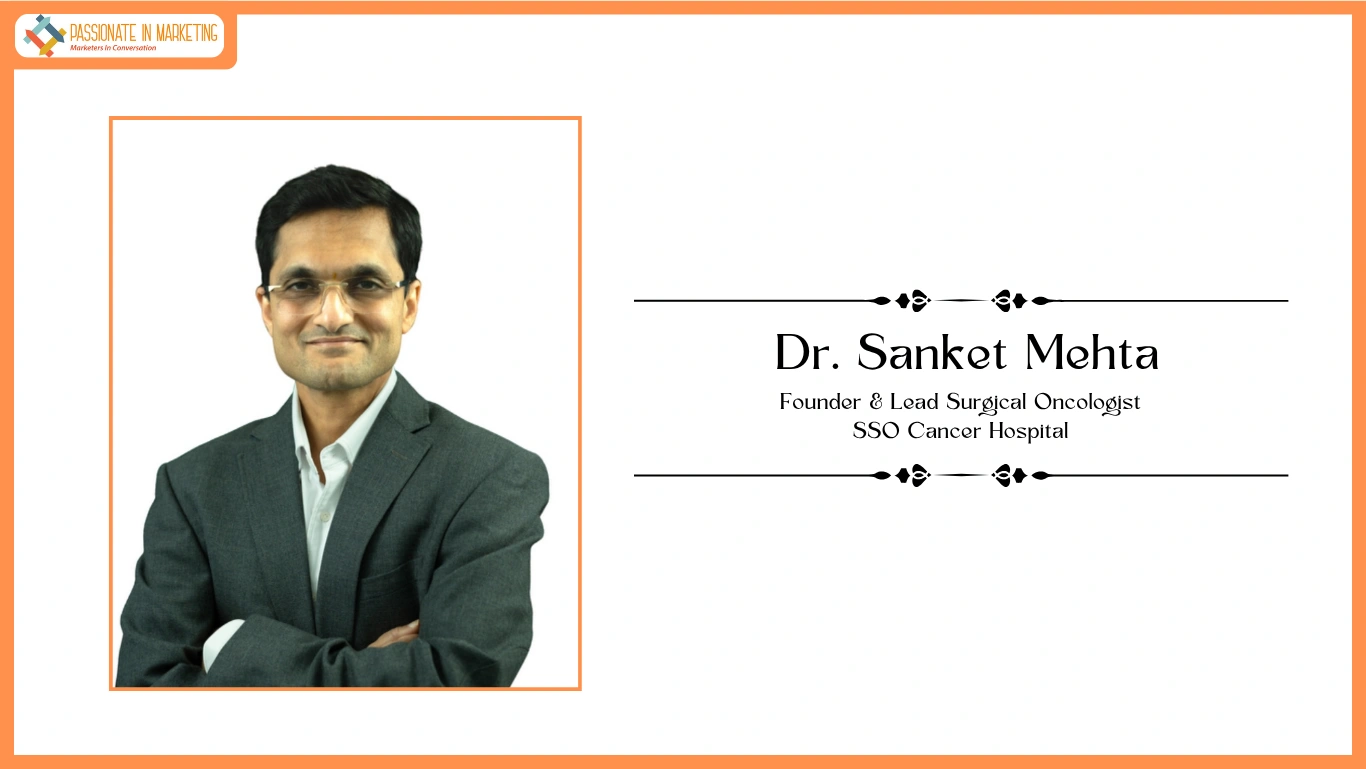
1. You have trained at some of the world’s leading cancer institutes across India, France, South Korea, and the US. How have these global experiences influenced your approach to cancer care in India?
My international training in oncology taught me that excellence in is not built by exceptional surgeons alone, but through exceptional systems, multidisciplinary collaboration and a commitment to continuous innovation. Training across India, France, South Korea and the United States exposed me to advanced techniques that I later helped introduce and advance in India, including Cytoreductive Surgery (CRS), HIPEC, and Intra-Operative Ultrasound-guided liver surgery for complex abdominal cancers. However, technology alone does not improve outcomes. It must be supported by careful patient selection, organ-specific expertise and evidence-based decision-making. That philosophy became the foundation of SSO Cancer Hospital. My experience also strengthened my belief that India has no shortage of clinical talent. Our greatest opportunity lies in building centres that are a combination of global best practices with Indian realities making specialised, technology-driven, organ-specific cancer care accessible while maintaining the highest standards of ethics, quality and patient-centred care.
2. You have performed more than 2,500 CRS-HIPEC procedures. For readers unfamiliar with this treatment, how is it changing outcomes for patients with advanced abdominal cancers?
For decades, cancer that had spread within the abdominal cavity was largely considered incurable, with treatment focused on symptom control rather than long-term survival. Cytoreductive Surgery (CRS) with HIPEC has fundamentally changed that outlook for carefully selected patients.
The procedure combines meticulous removal of all visible tumour deposits with the circulation of heated chemotherapy within the abdomen to eliminate microscopic disease. It is one of the most complex operations in surgical oncology, demanding not only surgical expertise but also rigorous patient selection, multidisciplinary planning and specialised peri-operative care.
Having performed over 2,500 CRS-HIPEC procedures, I have seen firsthand how this approach can significantly improve survival and, in selected cases, offer the possibility of cure. The biggest shift is not just technical it is conceptual. We have moved from asking, “Can we do anything?” to asking, “Can we offer this patient a meaningful chance at long-term disease control?” That is the true impact of CRS-HIPEC.
3. Minimally invasive and robotic surgeries are increasingly becoming part of oncology care. How are these technologies transforming surgical oncology in India?
The conversation around robotic surgery should move beyond the robot itself. The real transformation is that technology is allowing us to perform increasingly complex cancer operations with greater precision while preserving function and improving recovery. In cancers of the rectum, oesophagus, stomach, liver and pancreas, enhanced visualisation and instrument dexterity help surgeons operate safely in anatomically challenging areas, often reducing blood loss, post-operative pain and hospital stay without compromising oncological outcomes.
Equally important, patients recover faster and can proceed to chemotherapy sooner when required, which is critical in comprehensive cancer care. However, robotic surgery is not a substitute for surgical judgement. The technology is only as good as the team using it. The future of oncology lies in combining advanced surgical platforms with personalised organ-specific expertise, interdisciplinary planning and evidence-based patient selection. Innovation should never be about adopting new technology for its own sake, it should be about delivering safer surgery, better quality of life and improved long-term outcomes for patients.
4. Despite growing awareness, many cancer patients still reach hospitals at advanced stages. What are the biggest reasons behind delayed diagnosis, and how can this be addressed?
Delayed diagnosis is rarely caused by one event; it is usually the result of multiple small delays. Patients often ignore persistent symptoms such as unexplained weight loss, rectal bleeding, abnormal bleeding or a breast lump because they assume it is something minor. Fear also prevents many people from seeking medical advice early. Even after consulting a doctor, delays can occur if appropriate investigations or specialist referrals are postponed.
Financial constraints, travel distances and limited access to specialised cancer centres further compound the problem. The solution goes beyond awareness campaigns. We need stronger primary care referral systems, organised screening programmes for common cancers, better public education on warning signs and easier access to specialist care.
In oncology, timing changes everything. Detecting cancer early often means simpler treatment, better quality of life, lower costs and significantly improved survival. Early diagnosis remains our most powerful weapon against cancer.
5. What are some of the most common myths and misconceptions around cancer treatment that continue to impact patient outcomes?
The biggest misconception about cancer today is not medical, it’s behavioural. People often delay seeking expert care because they first seek reassurance from family, friends, social media or the internet. By the time they reach a specialist, the disease may have progressed significantly.
Other myths continue to persist: that cancer is always a death sentence, that surgery causes cancer to spread, or that alternative therapies can replace evidence-based treatment. None of these are supported by science. Equally concerning is the belief that the latest technology whether robotic surgery or precision medicine is automatically the best option for everyone. Cancer treatment is never one-size-fits-all; it must be individualised based on the tumour biology, stage of disease and the patient’s overall condition.
The greatest advancement in oncology is not just better technology, it’s timely, evidence-based decision-making. My advice is simple: seek expert opinion early, ask questions, and let science not fear or misinformation guide your treatment journey.
6. Personalized medicine and precision oncology are gaining momentum globally. How do you see these approaches shaping the future of cancer treatment in India?
Precision oncology is often equated with genetic testing, but it is much broader than that. It is about selecting the right treatment for the right patient based on tumour biology, imaging, pathology, stage of disease, overall health and multidisciplinary clinical judgement. As a surgical oncologist, I believe precision also means choosing the right operation, not necessarily the biggest or the most technologically advanced one, but the one that offers the best long-term outcome and quality of life.
India is steadily adopting molecular diagnostics and targeted therapies, but accessibility and affordability remain as challenges. Over the next decade, I expect precision medicine to become more integrated into routine oncology practice as diagnostics become more accessible. However, technology should not replace clinical judgement. The future of cancer care lies in combining scientific innovation with experienced multidisciplinary decision-making to truly personalise treatment for every patient.
7. As Co-founder of the Indian HIPEC Registry, how important is data and collaboration in advancing cancer care?
Medicine progresses when experience becomes evidence. As Co-founder of the Indian HIPEC Registry, I have always believed that meaningful advances in cancer care require collaboration, not competition. India has unique disease patterns, patient demographics and healthcare challenges that cannot always be addressed using international data alone.
National registries allow us to generate evidence that is relevant to Indian patients, helping improve patient selection, standardise treatment protocols and evaluate long-term outcomes. Equally important, they encourage institutions to learn from one another rather than work in isolation.
Collaboration also accelerates research, improves quality benchmarks and promotes transparency in complex procedures like CRS and HIPEC. The future of oncology will increasingly depend on robust clinical databases and multicentre research. Better data leads to better decisions, and ultimately, better outcomes for patients. That is how we collectively raise the standard of cancer care across the country.
8. Cancer treatment often focuses on clinical outcomes, but the emotional and psychological journey of patients is equally important. How can hospitals deliver more holistic care?
Cancer affects far more than the body; it impacts families, careers, finances and emotional well-being. The treatment journey begins the moment a patient hears the diagnosis, not when surgery or chemotherapy starts. Hospitals therefore need to move beyond disease-centred care towards person-centred care. This means integrating psychologists, nutritionists, physiotherapists, pain specialists, palliative care experts, specialised nurses and rehabilitation teams into routine cancer management.
Equally important is communication. Patients may not remember every medical detail, but they always remember whether they felt heard and supported. Good medicine is not only about removing a tumour; it is about helping patients regain confidence and quality of life. At SSO, we believe multidisciplinary care extends beyond tumour boards to include emotional support and survivorship planning. The future of oncology will be defined not only by better survival rates but by helping patients live well after treatment.
9. What are the biggest opportunities and challenges in making advanced cancer treatments accessible beyond metropolitan cities in India?
India’s biggest oncology challenge is not a shortage of expertise but its uneven distribution. Advanced cancer care is still concentrated in metropolitan cities, forcing many patients to travel long distances and often delaying treatment. The opportunity lies in developing strong regional cancer centres supported by organ-specific expertise, standardised protocols and multidisciplinary teams. Not every hospital needs to perform highly complex procedures, but every patient should have access to expert evaluation and evidence-based treatment.
Technology can bridge this gap through telemedicine, virtual tumour boards and digital pathology, allowing specialists to collaborate across cities. We also need greater investment in training surgeons, oncology nurses and allied healthcare professionals. The goal should not simply be expanding infrastructure but ensuring consistent quality wherever care is delivered. Access to advanced cancer treatment should depend on clinical need not on a patient’s postcode.
10. Looking ahead, what is your vision for the future of cancer care in India over the next decade, and what changes do you hope to see in early detection, treatment, and patient outcomes?
I believe the next decade will be defined less by building better systems. My vision is for building stronger screening programmes, greater public awareness and faster referral pathways so fewer patients reach the advanced disease stage. Cancer care should become increasingly organ-specific, with multidisciplinary teams managing complex diseases in high-volume centres where expertise translates into better outcomes. Technology including minimal invasive surgeries like robotics and advanced imaging will continue to improve precision, but it must be supported by good clinical governance, research and Indian data. Equally important is making these advances accessible beyond metropolitan cities. Success in oncology is a combination of survival statistics and how well patients live after treatment. The future of cancer care lies in the fact that every patient receives the right treatment at the right time regardless of where they live.

