


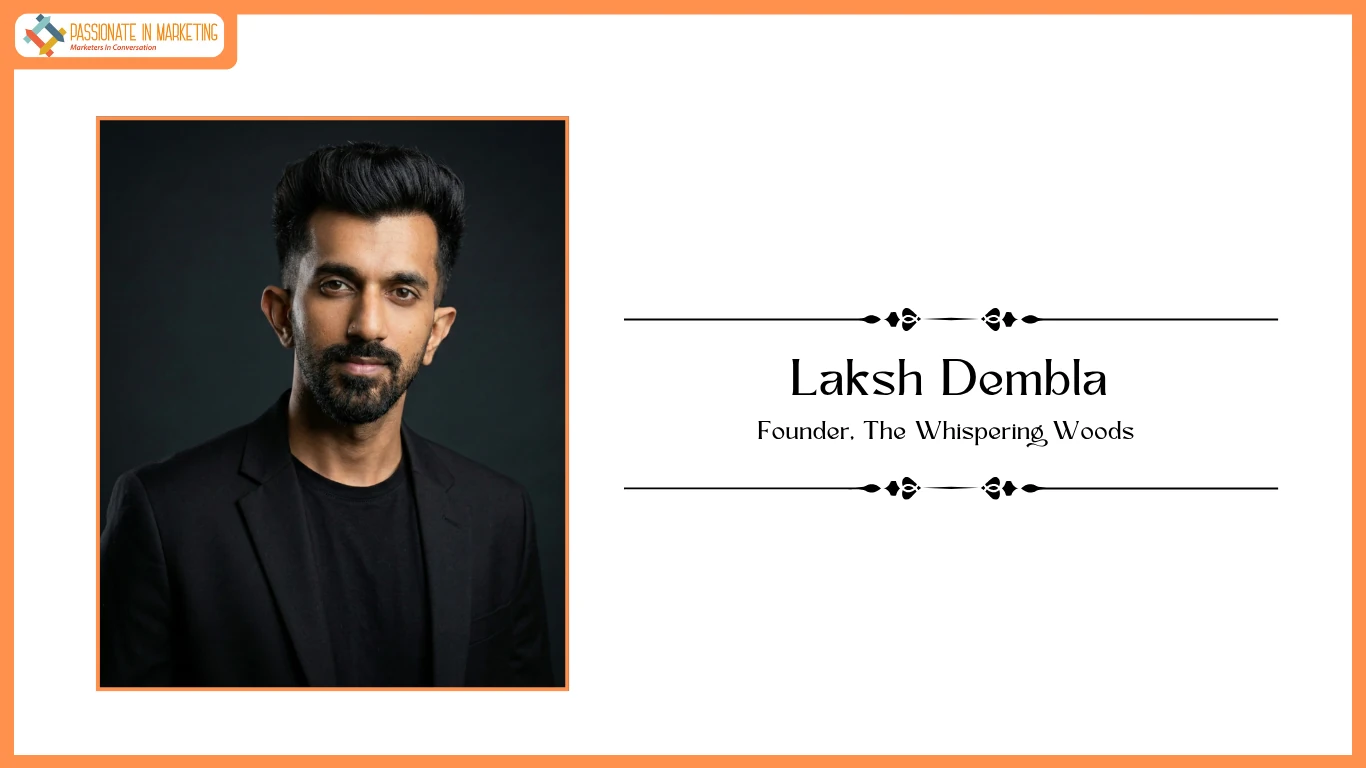
- What led you to believe that the traditional resort model was no longer enough for today’s urban traveller, and how did that thinking shape Whispering Woods?
The guest behaviour that we were observing over recent bookings was a big marker. People would check in, settle down, and within an hour ask what else there was to do. That question used to be rare. It became the first question. A room, a pool and a buffet was once a complete answer to a weekend. It stopped being one somewhere around the time the city itself became very good at comfort. Nobody is really booking a getaway for a different bed. They are buying a different rhythm, a different vibe, a different quality of attention. So we stopped thinking of the stay as the product and began treating it as the framework. Whispering Woods was built backwards from that idea rather than forwards from a room count.
- What are you seeing in consumer behaviour that tells you people are increasingly prioritising experiences, privacy, wellness and meaningful time over conventional notions of luxury?
Three things, consistently. The most private inventory moves first, almost regardless of price. A guest will pay more to see fewer people. People really value that intimate, secluded comfort of solace. Second, wellness has quietly stopped meaning spa menus and started meaning sleep, silence, more green is your vision and food that does not leave you heavy on Monday. Third, people are booking around other people. Groups of friends, three generations of a family, couples who have not had an uninterrupted conversation in months. The occasion is the reason and the property is the setting.
3. Whispering Woods is positioned as more than just a place to stay. How do you approach building a destination where hospitality, design, nature, entertainment and community come together?
Nature came first and is the only element we did not create, so everything else has to behave like a guest in it. That would mean that we design around it and not over it. Then hospitality, which is mostly about removing friction nobody should have to notice. Entertainment sits on top, and this is where most properties overreach. The test we use is simple. Can a guest fill two days without repeating themselves and without being managed. That means a court to play on, a little baking workshop, some board games on the lawn, and also the freedom to do none of it. Community is the last layer, and it is the one you cannot install. It shows up on its own once people begin coming back.
- How important is proximity to a major city like Mumbai in the rise of short-format luxury and weekend travel? Do you see the ‘drive-to destination’ becoming a bigger category in India?
We are two hours from Mumbai, and that number does more work than anything else we could put in a brochure. The constraint on Indian travel is no longer money, it is the calendar. People have the means for a fine weekend and no leave for a long one. A two hour drive fits inside a Friday evening, which turns two days into a real trip rather than a logistical exercise. That said, closeness is only an advantage if the destination earns the drive. If it does not, you are simply the nearest option, and the nearest option always ends up competing on price. The category is already large. It is just not an organised one yet. Over the next five years I expect the belt around every major city to consolidate around a handful of operators who treat it as hospitality rather than as real estate with beds on it.
- From Kayu Villas and Signature Wooden Cabins to Bambusa Sanctum, your accommodation concepts have a strong design and experiential element. How do you think architecture and design influence the way people experience hospitality?
Architecture decides how a guest behaves before hospitality gets a chance to. A low ceiling makes people quieter. A long verandah makes them sit longer. The direction a window faces determines what time they wake and in what mood. That is why the concepts are not variations of one another. Kayu borrows from Bali because that language suits a slower, more sensual kind of stay. Bambusa Sanctum uses bamboo because the material does something to light and sound that concrete cannot imitate. The wooden cabins are deliberately simpler and more grounded, and Oakhaus, which has just opened, takes that further into something quieter and more contained. The other consideration is age. We choose materials that look better after three seasons of rain rather than worse, which rules out a great deal of what photographs well on day one.
- You have also built ventures such as After8 and Sets in the City. What have these experiences taught you about bringing people together physically in an increasingly digital-first world?
Sets in the City is my father’s legacy which I now have the privilege to contribute to alongside him. 85 studio sets and more, built over decades for films, advertising, television commercials and music videos make for beautiful, instagrammable backdrops. A set is an empty volume engineered to make an audience feel a specific thing, and once you have watched that done professionally you cannot look at a hotel lobby the same way again. Every one of our guests is taken through it as part of their stay, because seeing how a mood gets constructed is genuinely fascinating. After8 came from a different observation. People in cities have hundreds of contacts and very few real conversations, so we began curating small gatherings where strangers meet properly. What it taught me is that curation is the product. Who is in the room does more work than anything spent on the room. Community certainly lies at the centre of everything we do and talk about at Whispering Woods.
- Do you believe the future of hospitality will be less about selling rooms and more about building communities, experiences and reasons for people to return?
Largely, yes, but the room still has to be impressive. Community is not a substitute for a good mattress, quiet air conditioning and hot water at seven in the morning, and I would be wary of anyone who suggests otherwise. But the room is the reason for the first visit and very rarely the reason for the fourth. Nobody drives back for the same bedside lamp. They return for a feeling they associate with the place, and for the people they associate with it. So the room is the entry price, not the proposition. What you are actually building is a reason for someone to say let us go there again, without needing an occasion to justify it.
- India’s weekend travel market is expanding rapidly. Where do you see the biggest business opportunity in this space over the next five years, and what do you think the industry is still getting wrong?
The opportunity is in organised, consistently run inventory within a few hours of the metros. There is no shortage of beautiful properties in that belt. There is a serious shortage of ones that operate the same way in September as they do in December. Consistency is the gap, and consistency is a business problem long before it is a design one. The second opportunity is midweek, which most of the industry has quietly given up on. What we get wrong is building rooms faster than we build reasons, then discounting when the rooms do not fill. Discounting is not a strategy, it is a confession. Food is the other blind spot. Guests remember three meals a day far more vividly than they remember a lobby.
- As travellers become more conscious about how they spend their time, what do you think the next generation of luxury hospitality will look like, particularly for consumers in cities like Mumbai?
I think luxury is going to become much quieter.
For a long time, hospitality has equated luxury with more. More amenities, more activity, more things to do, more people around. I see the next phase moving in the opposite direction.
For someone living in Mumbai, space itself is a luxury, both the physical volume of space and mental space. A weekend where you are not rushing, not stuck in traffic. So I think people will increasingly pay for quaint escapes, better sleep, good food, clean air, privacy, nature and places that simply function well.
I also think Indian travellers are becoming more confident in what they consider aspirational. We will not necessarily need a property to look like Bali, Spain or somewhere in Greece. A place that understands its own landscape, uses local materials intelligently and has a strong Indian point of view will probably feel far more relevant in the years ahead.
- Looking at your journey across hospitality, events and lifestyle, what is the larger vision you are building towards, and what would you like Whispering Woods to represent in the Indian hospitality landscape?
My engineering background has probably shaped the way I think about hospitality more than I realised.
I tend to look at the property as a system. It is relatively easy to create one brilliant weekend. The real test is whether the experience is still good on the fiftieth weekend, the ninetieth weekend, on a quiet Tuesday, or when something has gone wrong behind the scenes.
That is where our focus has been.
We are not trying to maximise the number of people we can bring onto the property. We are trying to create a place people genuinely want to return to. Once you make that the objective, a lot of decisions change. How densely you build. How you price. How much you programme. How you train the team. Even how quickly you choose to expand.
It is certainly a slower way to build a hospitality business, but I think it creates something far more lasting.
For Whispering Woods, I would like the reputation to be quite simple: a contemporary Indian destination with a clear point of view, a high level of comfort and an experience that remains dependable over time.
India already has extraordinary hospitality instincts. Warmth comes naturally to us, and we have no shortage of remarkable locations. The opportunity now is to combine that with consistency, restraint and stronger design thinking. That is the space I would like Whispering Woods to occupy.

