


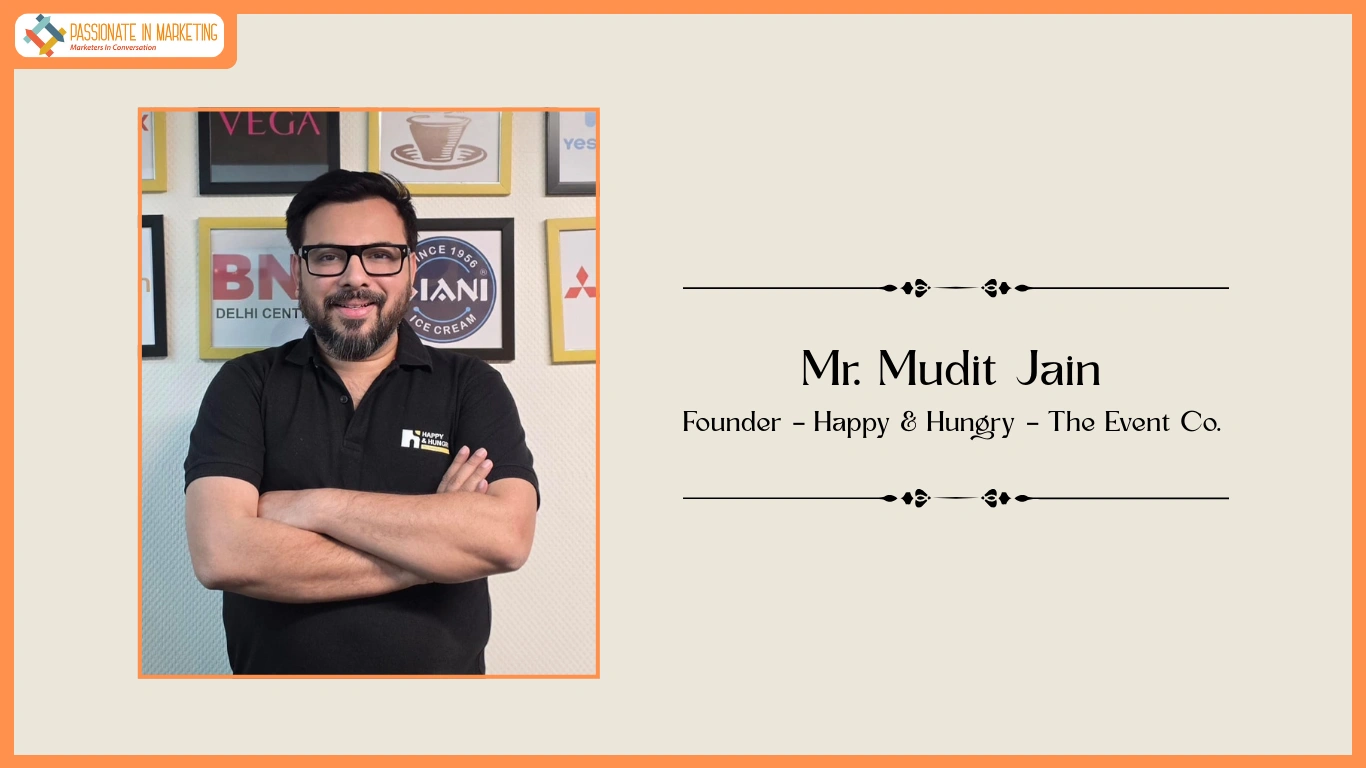
- Experiential marketing is becoming a key strategy for brands today. How have you seen this space evolve in India over the past decade, and what role do immersive experiences play in modern brand communication?
Over the past decade, experiential marketing in India has evolved from being largely event-led or promotional to becoming a strategic pillar of brand communication. Earlier, brands focused on visibility and reach, but today the focus has shifted to engagement, participation and emotional connection.
Consumers today are far more informed and selective about the brands they interact with. Traditional advertising still plays a role, but immersive experiences allow brands to move beyond messaging and actually demonstrate their values, products, and stories in a tangible way.
At Happy & Hungry – The Event Co., we see experiential marketing as an opportunity to create meaningful moments between brands and audiences through thoughtfully designed events environments. When people interact with a brand through a thoughtfully designed experience, it becomes memorable, shareable and far more impactful than a passive advertisement.
- With audiences increasingly seeking experiences over traditional advertising, how can brands effectively use events, exhibitions, and on-ground activations to build deeper emotional connections with consumers?
Events and Exhibitions provide brands with something that traditional formats often cannot direct human interaction.
The key is to move beyond just showcasing a product and instead focus on storytelling and participation. When audiences are invited to engage, explore, and experience a brand in an interactive way, they naturally build a stronger emotional connection with it.
Experiential formats allow brands to combine design, environment, sensory engagement, and technology to bring their narrative to life. Whether it’s a thoughtfully designed exhibition space or a large-scale event experience, the goal should be to create an environment where the audience feels like they are part of the story rather than just observers.
- Your agency focuses on blending design, sustainability, craft and technology in event experiences. How do these elements come together to create meaningful and memorable brand interactions?
At Happy & Hungry – The Event Co., we believe that meaningful experiences are created when multiple disciplines come together with intention.
Design helps shape how people move through and interact with a space. Craft brings authenticity and detail, often connecting experiences with local culture and creativity. Sustainability ensures that while we create impactful experiences, we are also mindful of our
environmental footprint. Technology then acts as an enabler that enhances engagement and interactivity.
When these elements are thoughtfully integrated, the result is an experience that feels immersive, responsible, and memorable. It’s not just about creating something visually appealing, but about building an environment where audiences can engage, explore and connect with the brand in a deeper way.
- In an era dominated by digital engagement, how important is it for brands to create physical experiences that are also shareable on social media?
Physical experiences and digital engagement are no longer separate – they complement each other. A well-designed physical experience often becomes the most authentic content for digital platforms.
When audiences attend an event or activation, they naturally capture and share moments that resonate with them. This extends the life of the experience far beyond the physical venue and allows brands to reach wider audiences organically.
So today, when we design experiential campaigns, we think about both the on-ground engagement and the digital amplification. Spaces that are visually compelling, interactive, and emotionally engaging tend to naturally encourage social sharing without feeling forced.
So today, when we design experiential campaigns and events or exhibition environments, we think about both the on-ground engagement and the digital amplification.
- What are some of the key principles you follow when designing an experiential campaign that truly resonates with audiences and encourages participation?
For us, the starting point is always the brand story and the audience insight when designing events and exhibitions.
Key principles include:
- Clarity of narrative – The experience should clearly reflect the brand’s identity and message.
- Audience participation – Experiences should invite people to interact rather than just observe.
- Thoughtful design – Spatial design and flow should guide the audience journey naturally.
- Multi-sensory engagement – The more senses an experience engages, the more memorable it becomes.
- Authenticity – Experiences should feel genuine rather than overly promotional.
When these elements come together, audiences feel more inclined to engage and share the experience.
- Sustainability is becoming an important consideration across industries. How can event and experiential marketing agencies incorporate sustainable practices while still delivering high-impact experiences?
Sustainability is becoming a critical conversation across the events and exhibitions industry. As creators of large-scale physical environments, agencies have a responsibility to design experiences that are impactful while also being environmentally responsible.
At Happy & Hungry – The Event Co., we follow the 3Ps framework of sustainability – People, Planet and Profit. This ensures that events and exhibitions not only deliver strong brand impact but also create value for communities and minimize environmental footprint.
From a practical standpoint, sustainability can be implemented through modular booth designs, reusable structures, recyclable materials, energy-efficient lighting, and optimized logistics planning. Even small decisions in material sourcing and production planning can significantly reduce the environmental impact of events and exhibitions.
In fact, sustainability often drives better innovation in experiential design. When teams are encouraged to design responsibly, they create smarter, more efficient, and more meaningful experiences.
“The future of events and exhibitions will not just be about scale and spectacle, but about how responsibly those experiences are created.”
- Technology is increasingly shaping audience engagement at events. What role do tools like AR, anamorphic content, interactive installations, and humanoid robots play in enhancing brand storytelling today?
Technology is rapidly transforming the way audiences engage with brands. Tools such as augmented reality, anamorphic video content on exhibition facades, interactive installations, and humanoid robots designed for audience engagement are redefining experiential storytelling.
For instance, anamorphic video content displayed on exhibition structures or event stages can create striking 3D visual illusions that capture immediate attention and become highly shareable moments on social media.
At the same time, humanoid robots are increasingly being used at events to greet visitors, guide attendees, interact with guests, and create futuristic engagement experiences that leave a strong brand recall.
These technologies help transform static environments into dynamic, interactive brand experiences where audiences actively participate instead of simply observing.
However, the key principle remains that technology should enhance the brand narrative rather than overpower it. When used strategically, it elevates storytelling and creates immersive moments that audiences remember long after the event ends.
- Looking ahead, what trends do you believe will define the future of experiential marketing in India over the next few years?
The future of experiential marketing in India will be shaped by a few key trends.
Firstly, we will see a much deeper integration of AI and advanced technologies into event environments, enabling smarter, data-driven and more personalized audience interactions.
Secondly, sustainability will become a defining factor in the design and production of events and exhibitions, with brands increasingly prioritizing responsible materials, modular builds and environmentally conscious event planning.
Thirdly, technology-led engagement formats such as immersive installations, intelligent displays, humanoid robots and AI-powered interactions will become more common as brands look to create memorable and shareable experiences.
Finally, events and exhibitions will continue evolving into powerful storytelling platforms, where brands move beyond promotion and focus on building authentic emotional connections with audiences.

