

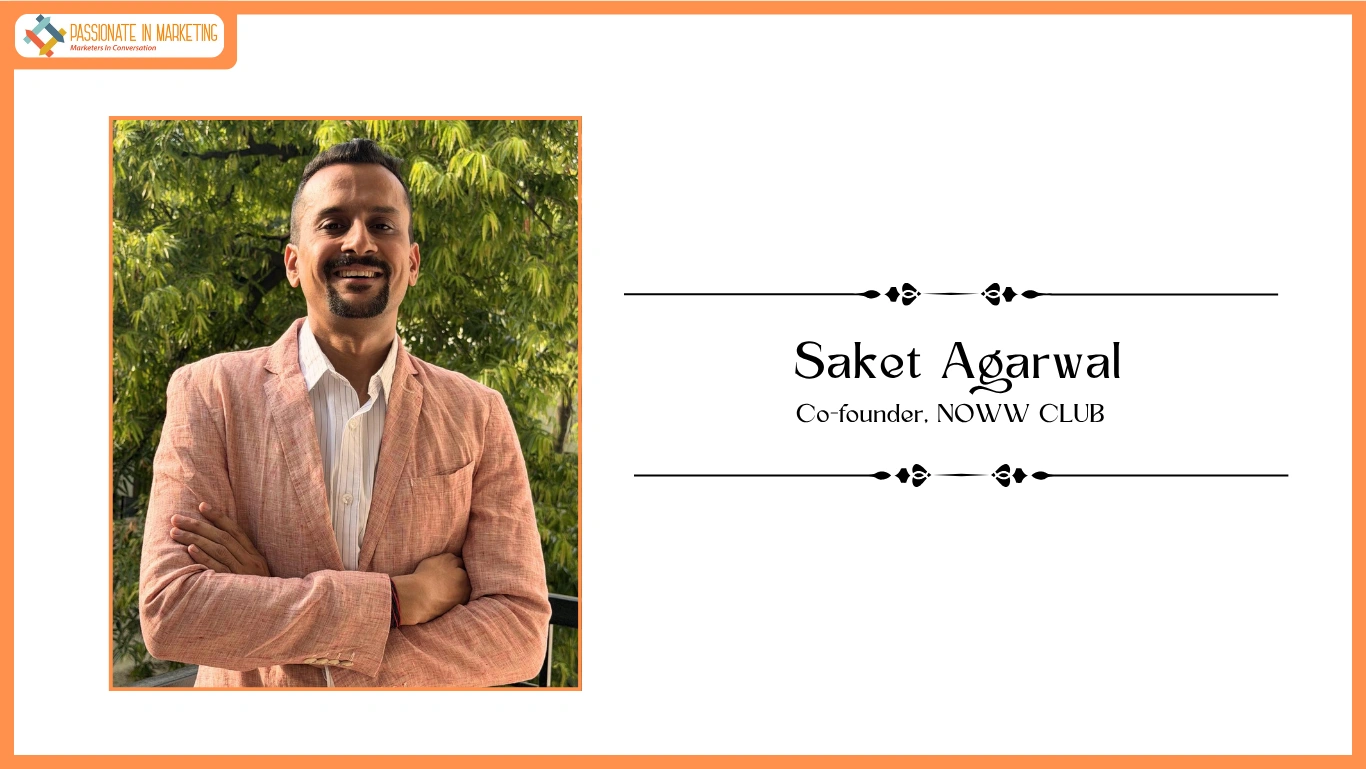
- What disruption is NOWW Club trying to bring to the wellness industry? What gap did you see that existing wellness platforms weren’t addressing?
Most wellness platforms are built around fixing something: stress, sleep, weight, anxiety and then handing you a library of content to sort through on your own. What I kept seeing, in myself and in the people I spoke to while building this, was different: people weren’t broken, they were just disconnected from who they were becoming, and no app was addressing that directly. Noww isn’t a library of meditations or workouts to choose from, it’s one ritual a day, built around who you actually are, that keeps you close to yourself. It’s working: 70% of our members are still active at Day 30, in a category that loses 80% in the first week. That’s the gap: retention in this category is broken because relevance is broken and we built for relevance first.
- Everyone talks about stress and burnout today. What do you think is the biggest reason so many high-performing professionals are struggling?
I don’t think burnout is always the honest word for what’s happening. I’ve sat across from founders and senior executives who weren’t burned out by any clinical definition they were performing well, sleeping fine, hitting their numbers and still felt strangely absent from their own lives. The real issue is that high performance today is measured entirely by output so you can be excelling by every external metric while having no idea who you’re becoming in the process. That’s a quieter, harder problem than burnout and it’s the one most wellness platforms aren’t built to see, let alone solve.
- How is NOWW Club using AI differently from other wellness platforms, and what does the future of AI in wellness look like?
Most wellness AI is used to recommend more content: the next meditation, the next workout, an endless feed to keep you engaged. We use AI to interpret, not recommend. Noww reads three signals about a member’s state: how aligned they feel, how their body is doing, and how their rituals are landing and turns that into one plain sentence about what today actually calls for, not three charts to decode yourself. The design principle we hold to internally is one number, two states, one sentence; the member should never have to do the interpreting themselves. I think that’s where AI in wellness needs to go more broadly: less dashboard, more judgment. The technology should do the work of noticing the pattern, so the person can just live, instead of asking them to become their own data analyst.
- There are already meditation, fitness and habit-tracking apps in the market. What makes NOWW different?
Almost every app in this category is a library: dozens of meditations, workouts, or habits to choose from, which quietly puts the burden of figuring out what you need back on you. NOWW gives you one ritual a day, built around who you are, not a catalogue to browse. We also don’t treat this as therapy or a fix, the goal isn’t to correct something wrong with you, it’s to help you become more yourself. And unlike most of the category, we have real retention data behind the approach: 70% of members are still active at Day 30, against an 80% first-week drop-off that’s normal everywhere else in wellness.
- Who is NOWW Club built for? Who do you see as your ideal member?
Noww is built for people who look like they have it together and, by most external measures, genuinely do and who still feel a quiet gap between how their life looks and who they’re actually becoming. It’s less about a job title or income bracket and more about a particular kind of self-awareness: someone who’s stopped assuming a good external outcome automatically means a good life and wants a daily practice that keeps them accountable to who they actually are, not just what they’re achieving.
- Why did you choose a private membership model instead of making the platform open to everyone?
It’s genuinely market-by-market rather than a fixed philosophy. In India, membership stays invite-only because the depth of the experience depends on the quality of the cohort, open it up too fast and you dilute the thing that makes it work in the first place. In the UAE, we’ve already opened it to everyone, because we’ve proven the model holds at scale there. So the honest answer is: we open access market by market, once we’re confident it won’t cost us the quality of the practice itself, not because exclusivity is the point.
- Do you think companies today focus too much on productivity and too little on employee well-being? What needs to change?
I’d put it slightly differently: most companies aren’t ignoring wellbeing, they’re just still measuring it the way they measure productivity: attendance, engagement scores, benefits utilisation. Those numbers can look healthy while people are quietly disconnected from themselves the whole time. What needs to change is the assumption that wellbeing is something you fix with a benefit, rather than something you build daily, the same way you build any other skill or habit. That’s the same gap we’re trying to close on the consumer side, it doesn’t disappear just because someone’s at work.
- What personal experience or observation inspired you to build NOWW CLUB? Was there a defining moment that made you realise this problem needed solving?
Yes and I remember it precisely. I was sitting alone in a hotel room in Dubai, laptop open, every metric exactly where it was supposed to be: the company was doing well, the team was growing, everything was on track by any measure that’s supposed to matter. And I was staring at a note I’d written to myself: ‘why does nothing feel like enough.’ I wasn’t unhappy or burned out in any way I could name, I was just absent from my own life, without the language for it. That feeling didn’t go away, so I started talking to people instead of looking for an app to fix it. Over the next year, I had some version of that same conversation in 30 cities across three continents, and kept hearing the same thing from people who looked like they had it together: they didn’t know who they were becoming either. Noww came out of that not a market opportunity I spotted, but a question I couldn’t answer for myself.
- If you could change one thing about the way society defines success and high performance today, what would it be?
I’d want us to stop treating ‘becoming’ as something that happens automatically once you’ve achieved enough. Right now, success is measured almost entirely by outcomes: revenue, title, followers on the assumption that who you are will simply take care of itself along the way. It doesn’t. If I could change one thing, it would be building in some expectation that people check in with who they’re becoming as deliberately as they check in with their goals, instead of treating that as a nice-to-have you get to once everything else is handled.

