


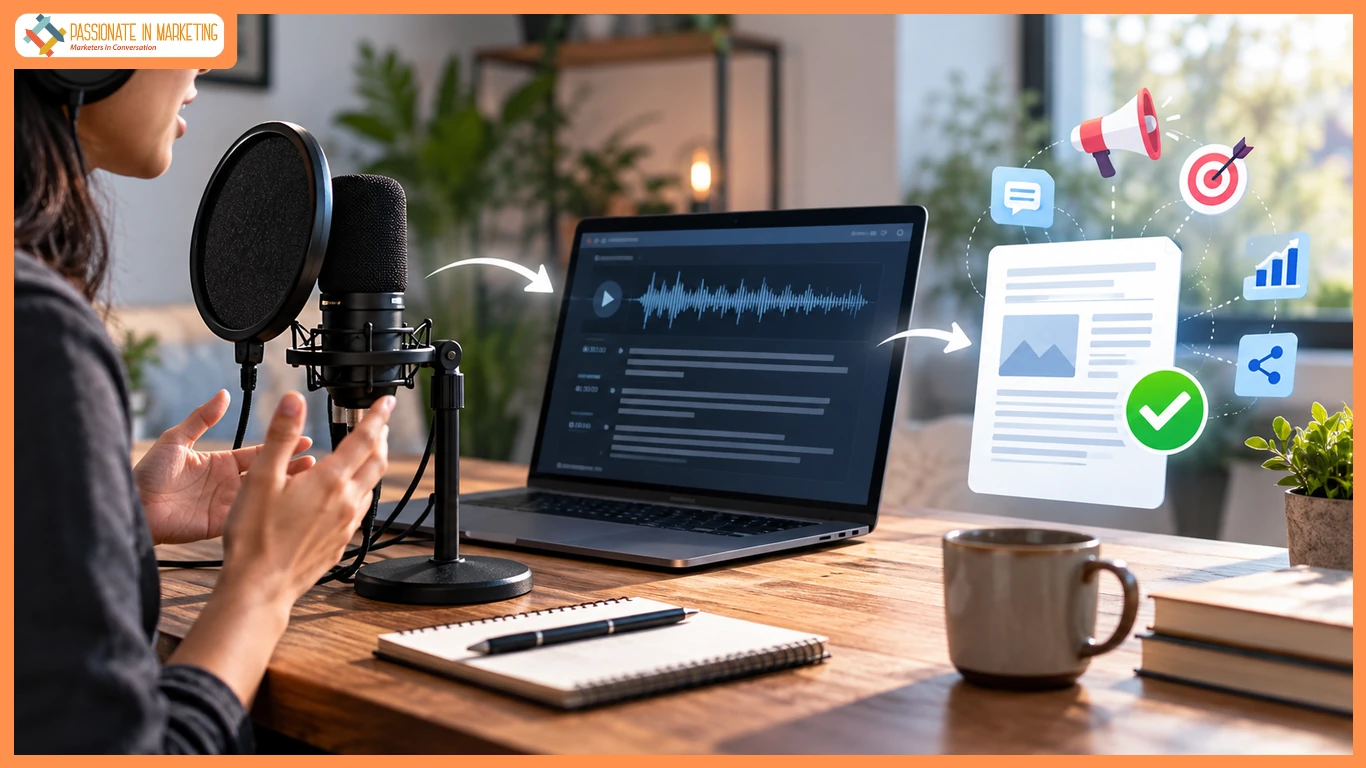
Podcast transcription gives marketing teams a searchable draft they can turn into articles, newsletters, and social posts. Before reusing a guest’s words, check the recording and preserve the context that made those words meaningful.
For a team producing interviews regularly, an audio transcription tool can handle the first text draft. VOMO accepts uploaded audio and provides editable transcripts; the editorial decisions still belong to the people preparing the campaign.
What should podcast transcription produce for marketers?
Create a reliable transcript with a clear route back to the audio. Keep the episode title, date, guest name, and original file together, adding timestamps to reusable passages. Decide whether a full public transcript is needed. W3C guidance says transcripts should include speech, relevant non-speech audio, and spea W3C transcript guidance
A practical project folder should contain the recording, checked transcript, and campaign drafts, with clear file names so anyone can find the source.
How do you turn an interview into a useful content brief?
Start with an audience question, then find the passage that answers it. For each candidate, record the audience question, source timestamp and speaker, claim type, missing context, intended use, and review owner.
Avoid choosing quotes just because they sound punchy. Keep necessary qualifications, paraphrase when needed, and verify unsupported statistics before use.
Which transcript details need an audio check?
Check every published quote, name, number, and claim that could change meaning. Listen to the lead-in for context such as country, audience, or timeframe.
Keep a correction log with the timestamp, draft wording, and correction. If audio is unclear, exclude the passage. Distinguish direct quotes from paraphrases, and ensure edits preserve meaning and context.
For commercial interviews, also check the guest agreement and review permissions before using remarks in advertising.
How should each marketing format change the source?
Adapt the structure to the reader while preserving meaning. Articles need a clear question, explanation, and supporting sources. Newsletters need context, one useful point, and a relevant link. Social posts should focus on one idea while retaining important conditions.
Longer resources may combine several interviews, but editors should reconcile conflicting advice, identify speakers, and check translations against the source.
What belongs in the approval handoff?
Include the draft, source references, and unresolved questions. Clearly label checked quotes, paraphrases, and claims needing verification.
Assign one person to approve final wording and save it beside the checked transcript. Measure each asset by its purpose, not by the number of derivatives produced.
Before publishing, replay the source timestamp once more. If the final wording makes a stronger claim than the guest did, narrow it.
**The opinions expressed in the article are solely the author’s and don’t reflect the opinions or beliefs of the portal**

