


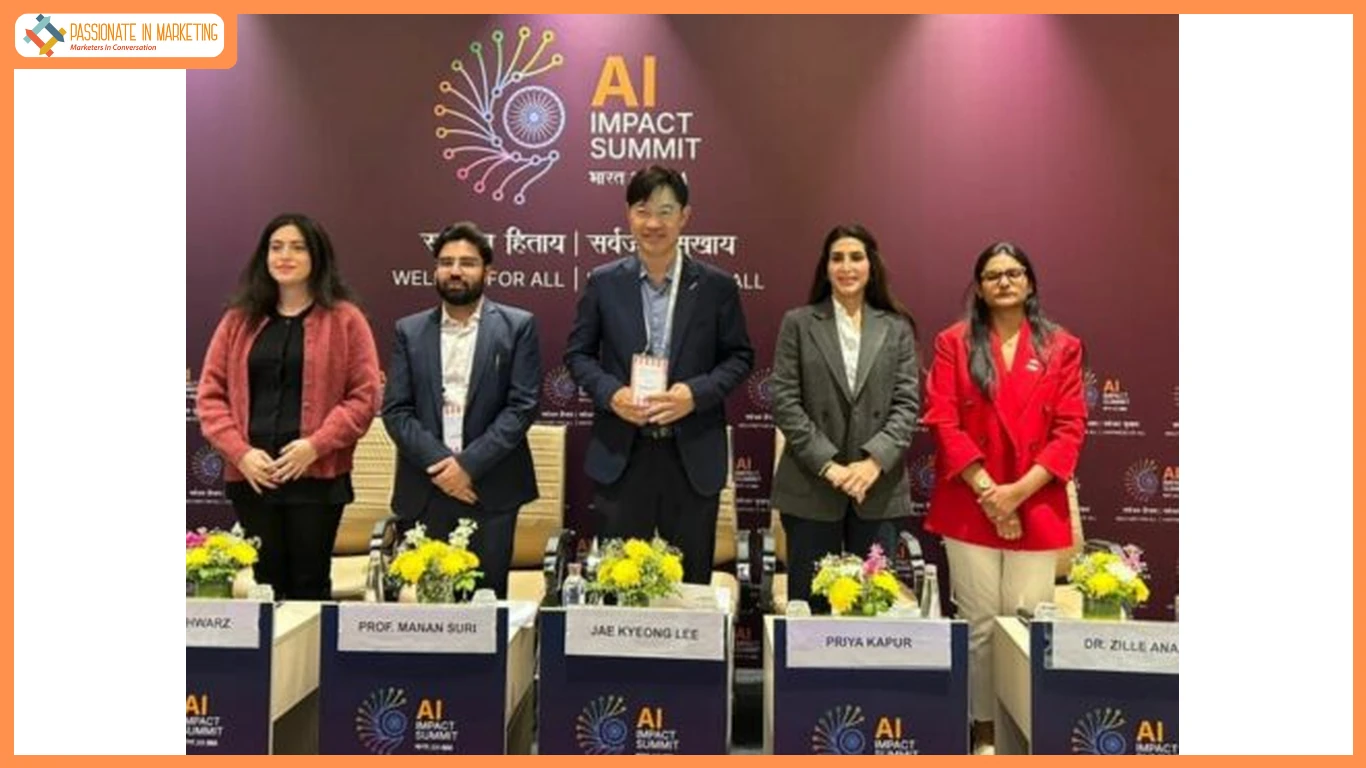
New Delhi, 18 February 2026: At the AI Impact Summit 2026, Primus Partners hosted a high-level panel discussion titled “From AI User to Creator: The Next Leap of India’s AI Innovation” at Bharat Mandapam, convening leaders from government, industry and the startup ecosystem to deliberate on India’s pathway toward building indigenous and globally competitive artificial intelligence capabilities.
India has rapidly emerged as one of the world’s largest adopters of artificial intelligence, powered by the scale of its data, digital public infrastructure and enterprise digitisation. The session focused on the next strategic shift, moving beyond adoption toward developing home-grown models, infrastructure and applications aligned with domestic as well as Global South requirements. The dialogue connected research, compute, policy and enterprise execution with real deployment challenges and opportunities.
Delivering the keynote address, Shri Jitin Prasada, Hon’ble Minister of State for Electronics & IT and Commerce & Industry, emphasised the urgency of preparing India’s talent ecosystem for the next phase of AI. He stated,
“India currently enjoyed a significant demographic and educational advantage, but this window would not remain open indefinitely as other countries rapidly built their AI capabilities. A holistic approach to AI education, one that equipped students with relevant skills while empowering teachers, researchers and institutions, would be critical to ensuring India remained globally competitive in AI over the next five to ten years.”
He further noted,
“The AI Impact Summit marked an important milestone in India’s technological transformation journey. The focus must go beyond expanding access toward making AI scalable and impactful, while bridging the digital divide so that the AI revolution creates inclusive growth rather than ‘haves’ and ‘have-nots.’”
During the discussion, participants highlighted the importance of scalable innovation models, startup enablement and responsible AI governance.
Santosh Vishwanathan observed,
“India’s success had always come from its ability to scale technology and innovation at population level. The need of the hour is a ‘Frugal AI’ approach, reimagining digital infrastructure and applications so AI could be efficient, affordable and widely deployable.”
Pratyush Kumar said,
“The first priority should be making AI accessible to everyone, followed by enabling deep-tech innovation and AI startups that could build on that foundation.”
Navrina Singh remarked,
“India’s opportunity lay in leading with trustworthy AI, and governance thinking needed to be embedded from the outset so that responsible AI systems were built, not retrofitted.”
The discussion examined India’s readiness to build indigenous AI systems, identified gaps across talent, infrastructure and data ecosystems, and highlighted sectoral opportunities where the country can lead globally including healthcare, agriculture, governance, language technologies and enterprise use cases. The session generated practical insights on enabling indigenous innovation and strengthening India’s transition from an AI user to an AI creator.

