


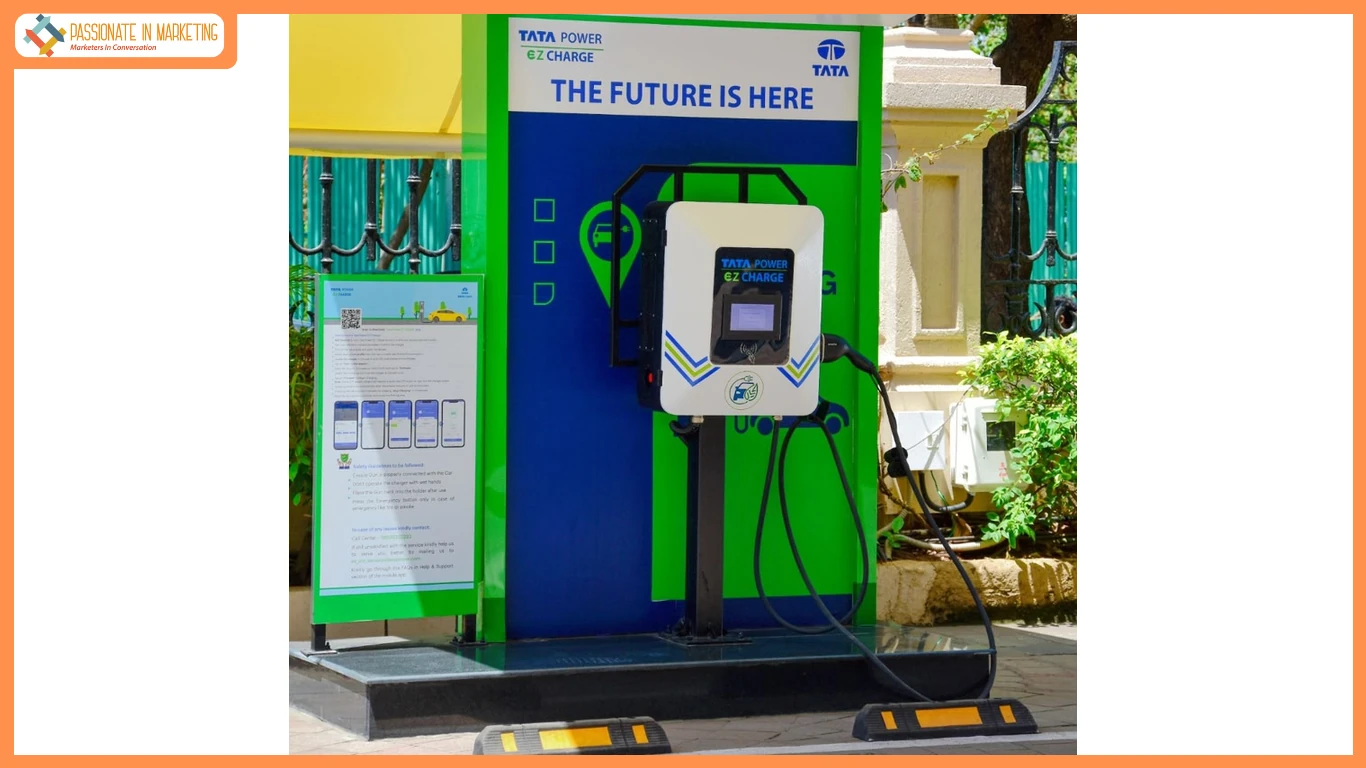
Bangalore: India’s energy future is being shaped not just by policy ambition, but by the everyday choices of millions of citizens increasingly aware of the cost and consequences of conventional fuel dependence. As running costs continue to favour electric mobility, India’s EV adoption is moving from the margins to the mainstream and the latest industry numbers make the shift unmistakable.
Tata Power, one of India’s largest Integrated Power Companies and the operator of one of India’s largest EV charging networks, is enabling this transition at scale. Through its expanding charging infrastructure, the company has facilitated over 7.5 lakh charging sessions and 414 million green miles across the country, while helping avoid approximately 50,000 tonnes of CO₂ tailpipe emissions.
Today, Tata Power’s EV charging ecosystem spans more than 5,500 public charging points across over 700 cities and towns, making EV charging increasingly accessible across urban centres, highways, workplaces, commercial destinations and residential communities. In partnership with leading automotive OEMs, the company has also introduced end-to-end home charger installation services and has installed over 2.3 lakh home chargers across India, supporting a seamless charging experience for EV owners and strengthening the country’s overall EV charging ecosystem.
Further strengthening its EV charging footprint across key mobility corridors and urban centres, Tata Power EZ Charge will inaugurate new charging stations at Kopa Mall in Pune, IOCL locations on both sides of the Ahmedabad–Vadodara Expressway, and a Shapoorji Pallonji Mini Hub in Kolkata equipped with six charging guns. These additions are aimed at enhancing charging accessibility across city hubs and high-traffic travel routes, supporting a more convenient and reliable EV ownership experience for both daily commuters and long-distance travellers.
EV sales in India surpassed 2.55 million units in FY2026, with all four vehicle segments registering double-digit growth. Demand for zero-emission passenger vehicles was especially strong, with retail sales rising significantly during the year.
As more Indians look toward electric mobility for both environmental and economic reasons, Tata Power’s charging network is ensuring that the infrastructure keeps pace with intent. From residential communities and commercial campuses to highways and urban hubs, the company’s charging footprint is helping create a future where mobility is cleaner, smarter, and more resilient.
About Tata Power
The Tata Power Company Limited, a vertically integrated power company and part of the Tata Group, India’s largest multinational business conglomerate, has built a diversified portfolio across the entire power value chain, with its total operational and pipeline capacity surpassing 26 GW. This includes approximately 17.5 GW of clean and green energy capacity (including projects under construction) and around 8.9 GW of thermal generation capacity, ensuring a balanced and resilient energy mix. The Company also has a strong transmission and distribution footprint, with over 7,400 circuit kilometres of transmission lines, including pipeline projects, and serves nearly 13 million customers across its distribution businesses, making it one of India’s largest private power distribution companies.
Further strengthening its leadership in future-ready energy solutions, Tata Power has established 4.9 GW of integrated solar cell and module manufacturing capacity, signed 2.8 GW of pumped hydro storage projects, and expanded its EV charging network to over 7.000 public charging points across 706 cities and towns in India.
As a pioneer in India’s clean energy transition, Tata Power remains committed to achieving Net Zero by 2045 and continues to partner with public and private stakeholders to deliver reliable, sustainable, and technology-led energy solutions across the country.

