


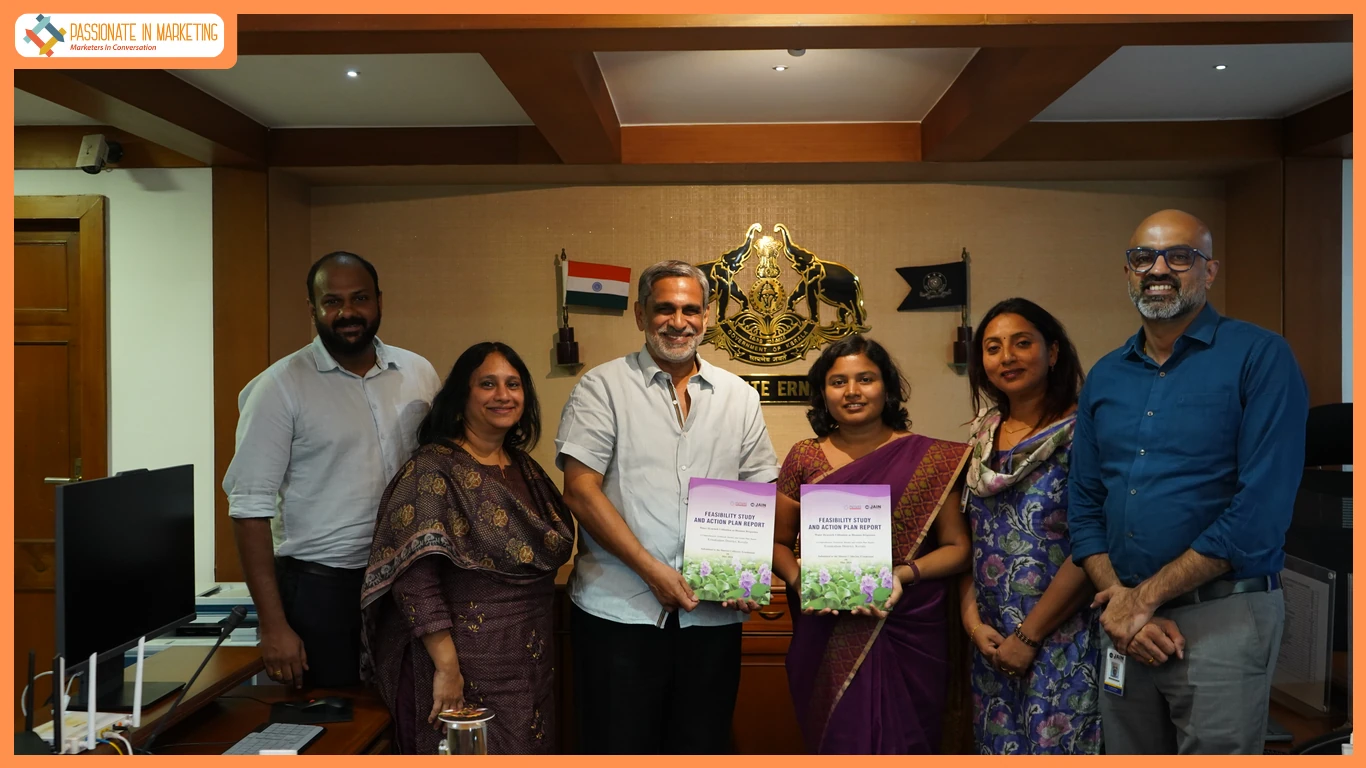
The Future Kerala Mission (FKM) of JAIN (Deemed-to-be University), Kochi, has officially submitted a comprehensive feasibility report on transforming water hyacinth into biomass briquettes to the Ernakulam District Collector, Ms. Priyanka G. The study was conducted by FKM at the specific request of the District Collector to address the invasive aquatic weed menace affecting Kerala’s inland waterways. The FKM delegation that presented the report included Ambassador (Retd) Venu Rajamony, Chairman, FKM; Jyothsnna Vishud, Chief Coordinator, FKM; Dr. Simmy Kurian, Deputy Director, Business School; Dr. Girish S. Pathy, Associate Professor; and Dr. Libin Thomas, Assistant Professor.
The report outlines the findings of a rigorous three-phase study examining the technical and commercial viability of using water hyacinth as a raw material for industrial fuel applications. Biomass briquettes are an eco-friendly fuel produced by compressing organic waste. The scope of the study encompassed a market survey of 50 industrial stakeholders, field visits to manufacturing units including Nalkara Wood Industries and Poonkavanam Biomass Briquettes Pvt. Ltd., and experimental prototype production and testing. The findings confirmed substantial industrial interest in water hyacinth-derived biomass briquettes, noting that raw materials are available in plenty and the technology is proven. However, the study identified the high moisture content of freshly harvested weeds—approximately 85–92%—as a primary logistical challenge for transportation. Following the presentation, the District Collector reviewed the proposed interventions and announced that a pilot implementation program would be initiated shortly to address the peak season of water hyacinth infestation.
The JAIN Business School study concludes that a critical gap remains in the supply chain infrastructure. If this gap is closed through targeted investment and coordinated efforts, biomass briquettes could become a sustainable solution to Kerala’s water hyacinth infestation. Mitigating the ecological, economic, and social impact of water hyacinth is a flagship initiative for FKM, which approaches the problem through policy development, technology (including drones and robotics), community empowerment, and business/marketing. As part of this initiative, FKM has published a detailed discussion paper and had organized “HyaCon 1.0,” a three-day international conference in January 2026.
The conference resulted in detailed policy recommendations submitted to the Union and State Governments, as well as various political leaders. Additionally, a pilot project in collaboration with MPEDA will be launched soon in Kochi to train 120 members of the scheduled caste community in water hyacinth processing and sustainable product development. The Future Kerala Mission represents JAIN University’s commitment to building a better future for Kerala through social impact initiatives and institutional partnerships.
The report outlines the findings of a rigorous three-phase study examining the technical and commercial viability of using water hyacinth as a raw material for industrial fuel applications. Biomass briquettes are an eco-friendly fuel produced by compressing organic waste. The scope of the study encompassed a market survey of 50 industrial stakeholders, field visits to manufacturing units including Nalkara Wood Industries and Poonkavanam Biomass Briquettes Pvt. Ltd., and experimental prototype production and testing. The findings confirmed substantial industrial interest in water hyacinth-derived biomass briquettes, noting that raw materials are available in plenty and the technology is proven. However, the study identified the high moisture content of freshly harvested weeds—approximately 85–92%—as a primary logistical challenge for transportation. Following the presentation, the District Collector reviewed the proposed interventions and announced that a pilot implementation program would be initiated shortly to address the peak season of water hyacinth infestation.
The JAIN Business School study concludes that a critical gap remains in the supply chain infrastructure. If this gap is closed through targeted investment and coordinated efforts, biomass briquettes could become a sustainable solution to Kerala’s water hyacinth infestation. Mitigating the ecological, economic, and social impact of water hyacinth is a flagship initiative for FKM, which approaches the problem through policy development, technology (including drones and robotics), community empowerment, and business/marketing. As part of this initiative, FKM has published a detailed discussion paper and had organized “HyaCon 1.0,” a three-day international conference in January 2026.
The conference resulted in detailed policy recommendations submitted to the Union and State Governments, as well as various political leaders. Additionally, a pilot project in collaboration with MPEDA will be launched soon in Kochi to train 120 members of the scheduled caste community in water hyacinth processing and sustainable product development. The Future Kerala Mission represents JAIN University’s commitment to building a better future for Kerala through social impact initiatives and institutional partnerships.

